Category Archives: Spanish life

A year abroad in Austria and Spain

Former Spanish and German student, Eliza, looks back at her year abroad experience.

I’m not sure I’ve ever felt as apprehensive about the “unknown” as I did while waiting to board the flight that marked the beginning of my year abroad. Looking back, what strikes me most is the peculiarity of putting down roots in a foreign country, only to dig them up again a few months later. You navigate paperwork you thought you’d completed twice before, new phone contracts and bank accounts, tours for visiting friends and family, unfamiliar supermarket layouts, and mini culture shocks of “we don’t do that in the UK” – only to return to “normal” university life a few months later.

Before I scare anyone, I should say that as an introvert who loved second year at Oxford and felt settled, moving abroad wasn’t the easiest. It’s tempting to scroll through idyllic photos and gloss over the fact that a year abroad is a character-building experience. Yes, it’s a once-in-a-lifetime opportunity, but it’s not a year-long holiday. That said, the real-world experience, the places I visited, and the renewed respect for anyone moving abroad, have shaped me profoundly.

Vienna had been on my bucket list for years, so I jumped at the opportunity of an eight-month British Council placement. In the wake of Brexit and the visa chaos that followed, I was attracted not only by the destination but by the stability and support the British Council offered. Austria also offered a competitive salary and relatively few working hours (13 per week), leaving ample time for travel. On one memorable occasion, I spent a couple of days on a boat hotel overlooking the Hungarian Parliament in Budapest, only to take the wrong bus back and somehow end up in eastern Slovakia! Again, character building.
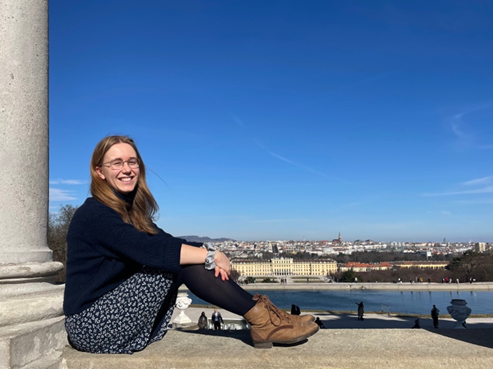
A favourite spot overlooking Schönbrunn Palace, Vienna

I chose to live in student accommodation about 45 minutes from the schools where I taught English. That way, I could be closer to the city centre and in housing where I could easily make friends. The placement itself was invaluable: I taught 3-4 upper school classes a day and, unless given a specific topic, had the freedom to design my own lessons. We covered everything from British dialects and traditions to globalisation and the environment. I also formed meaningful relationships with teachers: one even invited me to boat trips and Christmas wreath-making with her family.

Views over the Donau on my morning commute

One challenge, however, was the lack of formal opportunities to speak German. Teachers often introduced me to their students as having no speaking ability to prevent students from defaulting to German. As a result, I struggled with the unsolvable question: “How much should I be speaking?” My advice to anyone considering British Council would be to plan ways to increase language exposure, whether through hobbies, volunteering, tutoring, or, as I did, taking a language course alongside your placement.
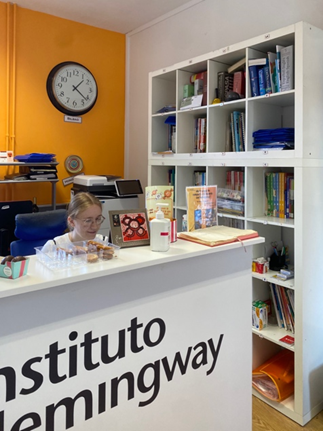
Working in reception at Instituto Hemingway, Bilbao

By contrast, my three-month internship in the office/reception of a language school in Bilbao was a Spanish-speaking baptism of fire. Within a week, I was answering client phone calls in Spanish, and the combination of administrative tasks and face-to-face interaction rapidly improved both my fluency and confidence. My internship probably doesn’t sound the most exciting, but speaking Spanish confidently in a professional environment was incredibly satisfying. The school’s activities schedule also meant regular boat trips and excursions to pintxos (Basque tapas) bars, churros cafés, and museums. So in short, I really can’t complain!
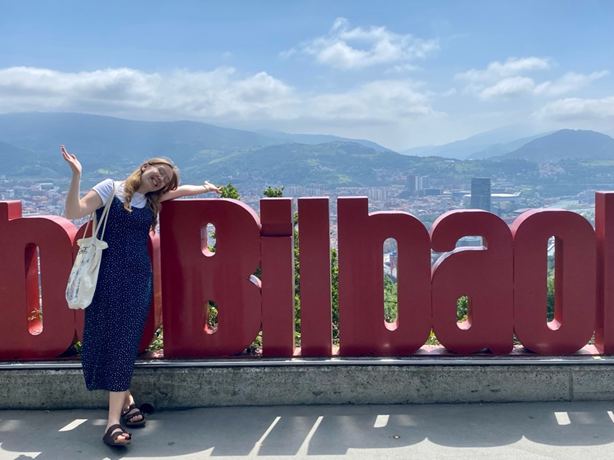
I was fortunate enough to find a central shared flat, complete with balcony overlooking a colourful Basque street. From June to August, I explored museums, beaches, and surrounding towns – San Sebastián and San Juan de Gaztelugatxe were particular favourites. In August, the annual Aste Nagusia (“The Great Week”) festival provided endless entertainment, with a nightly international firework competition which felt like a fitting way to end my year abroad chapter.
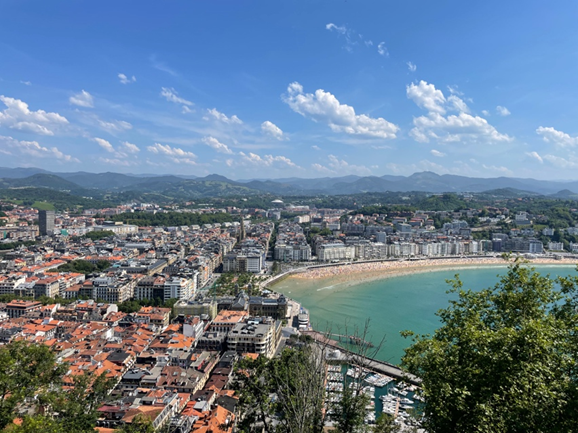
View over San Sebastían

My advice for prospective year abroad students is to think carefully about the type of environment in which you thrive. Consider your personality, interests, and goals. Do you want an experience that strengthens your CV? Do you need structured opportunities to practise the language? Would you feel more comfortable living with locals, students, or alone?

That said, the memories that have stayed with me were the unplanned ones: the view over the Danube on my morning commute, a crowd of dancing Bolivians celebrating 199 years of independence, debutantes at a Viennese ball. Wherever you go, and however you find your experience, I guarantee you’ll come away with memories like these too.
A year abroad in Spain and Portugal

This week’s post was written in April 2026 by finalist, Georgia, who tells us all about year abroad.

Hola y olá! I’m Georgia and I am currently in my fourth and final year of study at the University of Oxford, reading for a degree in Spanish and Beginners’ Portuguese at Merton College.

My planning for the year abroad began during my second year at Oxford, although not everything quite went to plan! I applied for a study exchange, offered by the university for multiple languages including French, Spanish, German and Italian, for the Spanish part of my year abroad. The process was relatively straight-forward as I had to write a personal statement explaining my motivations for wanting to study at my chosen institution, the University of Oviedo in northern Spain, before having it signed off by my main tutor.

Thankfully, I was successful in my application and began my visa application relatively soon before I left the country in December 2024. Since I would be staying in Spain for approximately six months, I had less requirements to fulfil for the student visa. I didn’t have to provide my personal health records, although I did have to supply evidence of funds, acceptance letter to the institution, and a DBS check. Furthermore, I also had to travel to London to attend my visa appointment at the authorised centre, although there are other sites in Manchester and Edinburgh if you’re not local! The visa came back relatively quickly within two weeks of submission, and I left for Oviedo in January 2025.

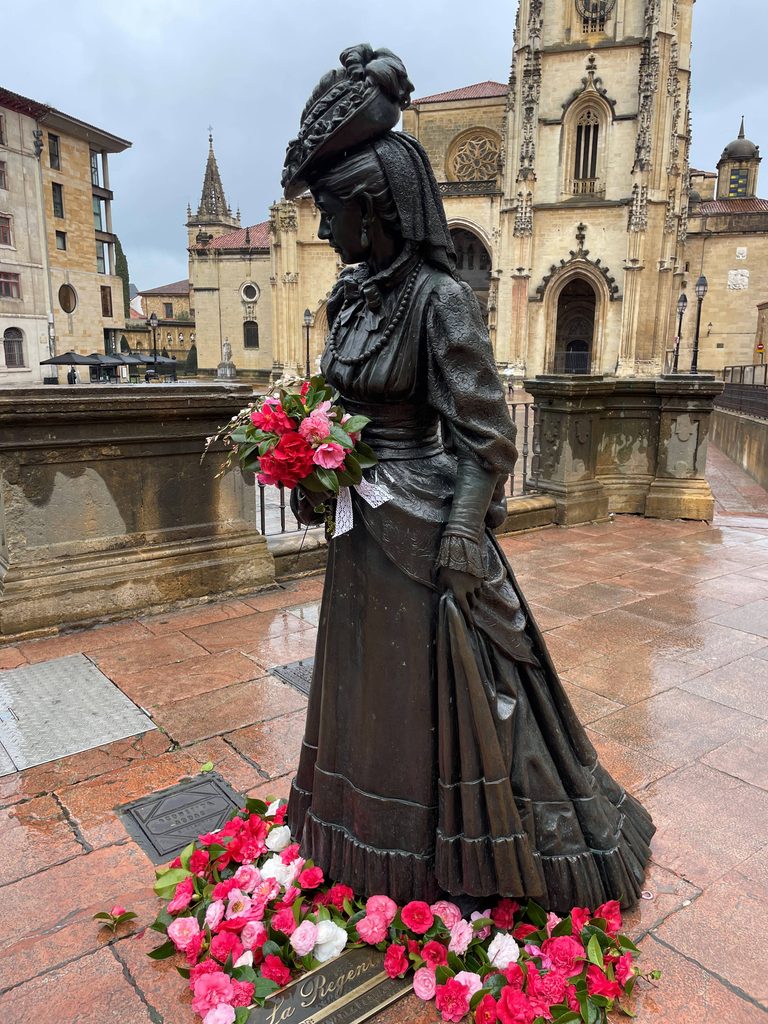
La Regenta (Ana Ozores) located in the Plaza de Alfonso II el Casto in front of the Oviedo Cathedral

The benefits of doing a study exchange are that there are a lot of students in a similar position to you. There was a fantastic Erasmus network in the city (as in other Spanish university towns) and made friends with people from Burgos to Brazil! If you do visit the country, I would recommend taking full advantage of the transport network, as buses and trains were regular and cheap. I was able to take a direct high-speed train to Madrid and travel extensively throughout Asturias. Moreover, most study visas allow for unlimited travel in and out of the country within the visa period, and I was able to return home for the Easter break. By the end of my stay abroad, I’d made firm friends and substantially improve my Spanish.

As I mentioned previously, my year abroad didn’t always go to plan! For the Portuguese side, I had initially applied to a Portuguese university as part of a free mover scheme (as the university currently does not have any exchange agreements with Portuguese universities), although this was scuppered due to the expensive cost of tuition, which is not covered by the UK government’s Turing scheme. I took advantage of a year abroad grant offered by my college to undertake a language course in Faro, travelling without a visa on the 90 days per every 180 days visa-free travel available to British citizens in the European Union.

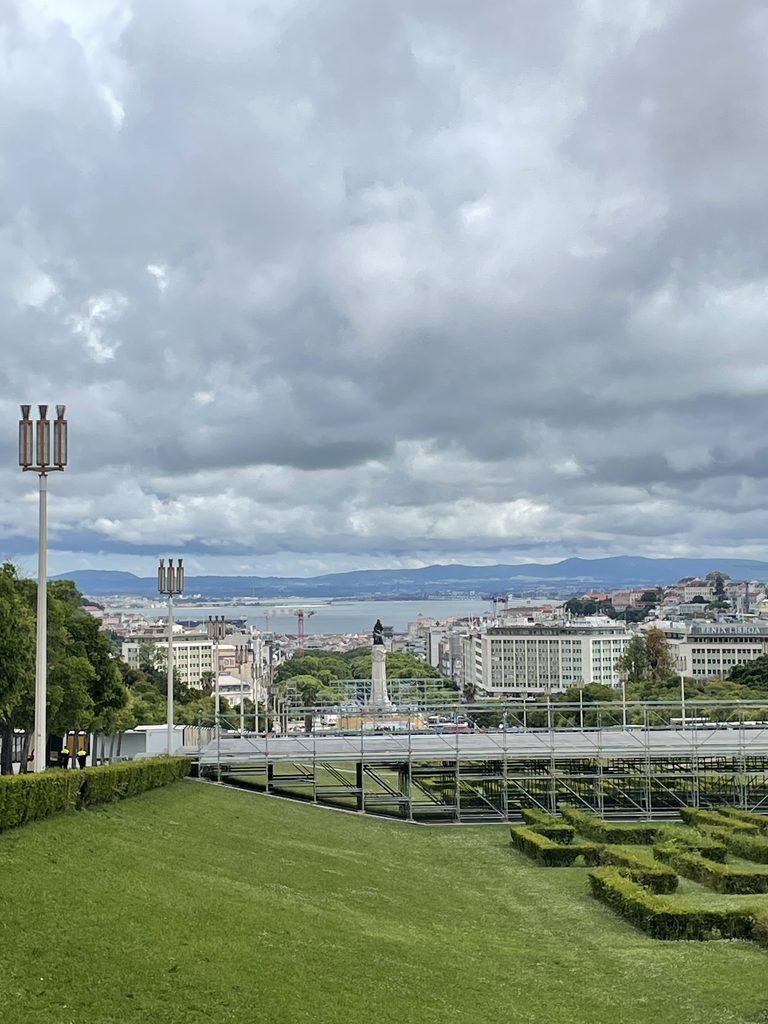
The view looking down from Parque Eduardo VII towards Marquês de Pombal Square and the River Tagus in Lisbon, Portugal.

I also volunteered at a food bank in Lisbon through simply emailing them and asking to come.  Never underestimate the power of getting directly in contact with someone and knowing the local lingo! I finished the Portuguese side of the year abroad in a city called in Viseu in central Portugal, studying another language course in September 2025. Whilst splitting the Portuguese side of my year abroad wasn’t the ideal situation, my language ability wasn’t affected, illustrating that if things didn’t quite go right, there was always a solution.

Finally, in terms of funding, I would recommend applying for the Turing grant, offered by the UK government, for people either studying or working abroad. Whilst it didn’t cover study fees, it was incredibly useful for living costs and other miscellaneous fees. I’m also lucky enough to go to Merton, who offer a generous year abroad grant, and I would encourage anyone planning on going on the year abroad to explore any funding avenues they can on a college level to supplement your own funds and other sources of income.

The year abroad, for me, was a transformative experience, allowing me to live and study abroad and independently, whilst also developing my linguistic capacities. I hope (and expect!) that others after me have a similarly wonderful adventure!

From Texas to Oxford via Oviedo

Katerina Levinson, who is currently studying for an M.St. in Spanish and English at The Queen’s College, shares an insight into the year she spent living in Spain.

The blank page of my journal stared up at me, as it sat on the plane’s tiny folding desk. I looked out my window, filled with butterflies and nervousness. I was leaving my hometown of Austin, Texas and moving to Oviedo, Asturias, a rainy, mountainous region in northern Spain.

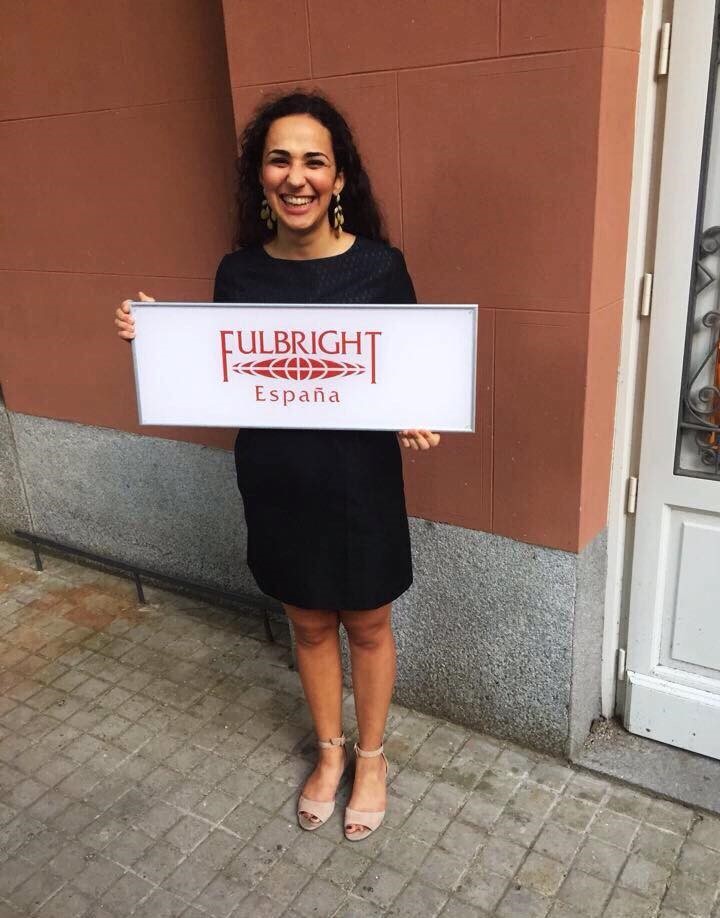
At the Fulbright España welcome reception.

‘I am moving to a place where I know absolutely no one and where no one knows me. I have never been in front of a classroom before. Castellano is extremely different from the Venezuelan Spanish I learned to speak at home’, I began to write in my journal, as I thought of all of the obstacles that awaited me.

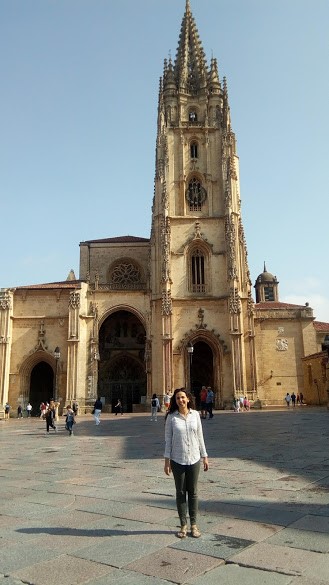
The cathedral in Oviedo

It was September 2017, and I had just graduated with my B.A. from Baylor University in Texas. I had received a U.S. student Fulbright grant to work as an English teaching assistant for 12-18 year-olds for one year. I had turned down a permanent teaching job offer in Texas, which would have allowed me to stay close to my family and live with my friends. Instead, I chose to move to a place where it would rain more in one week than it would in three months in my hometown; where it was impossible to find any of the Mexican cooking spices from home that I loved; and where I had to change the Venezuelan vocabulary I grew up with so that I could be understood.

‘Have I made the wrong decision?’ I went on to write.

When I arrived in Oviedo, I had found a place to live with a few girls who were around my age. The same night I moved in, they invited me to dinner with their friends. As I began to feel pangs of hunger, we finally left for dinner around 10:30 pm, the normal time when young people would eat in Spain. The group we met up with immediately adopted me as a friend, and I found that it was easier to make friends in Spain that it was at home because of how friendly the culture is. We finished dinner around 1 am, and we walked home through streets filled with people who were eating tapas and drinking cañas as if it was 1 pm.

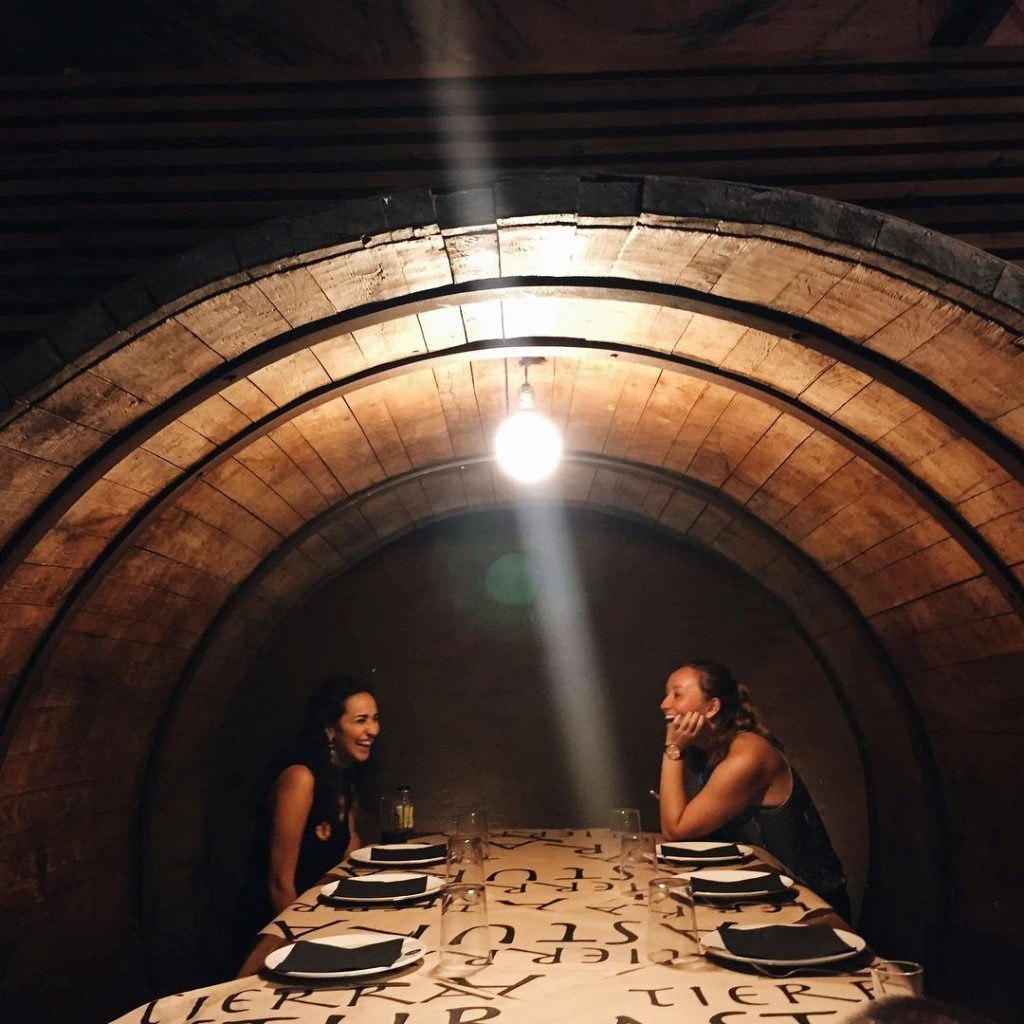
My friend and I celebrating at an espicha. The restaurant is decorated with barrels because it pours cider for its guests directly from the barrel.

I came to love Spain because there was always an occasion for a fiesta and for socialising. My friends and I would often have long dinners at my house: even after the food was gone, we would continue sharing stories at the table for several hours (the after-dinner conversation is called the sobremesa). There were also many local Asturian holidays and frequent religious holidays that would call for celebration with wine, typical foods, and street parades. I would even walk into the teachers’ lounge at school to be regularly greeted by one of my colleagues pouring me a glass of wine before class because it was a local holiday.

While in Spain, I discovered how distinct each region’s culture is. Asturias is heavily influenced by the Celts, so its cuisine is filled with hearty stews and its cultural music features the bagpipes. The most typical alcoholic beverage of the region is Asturian sidra, cider made from locally grown apples. This drink is poured—escanciado—from as high as your arm can possibly reach. The season for tasting cider is celebrated at special festivals called espichas. Guests drink the cider poured directly from the barrel and stand at long tables filled with typical Asturian platters—cured meats, Asturian cheeses, Spanish omelettes, and more—socialising, while listening to Asturian folk music.

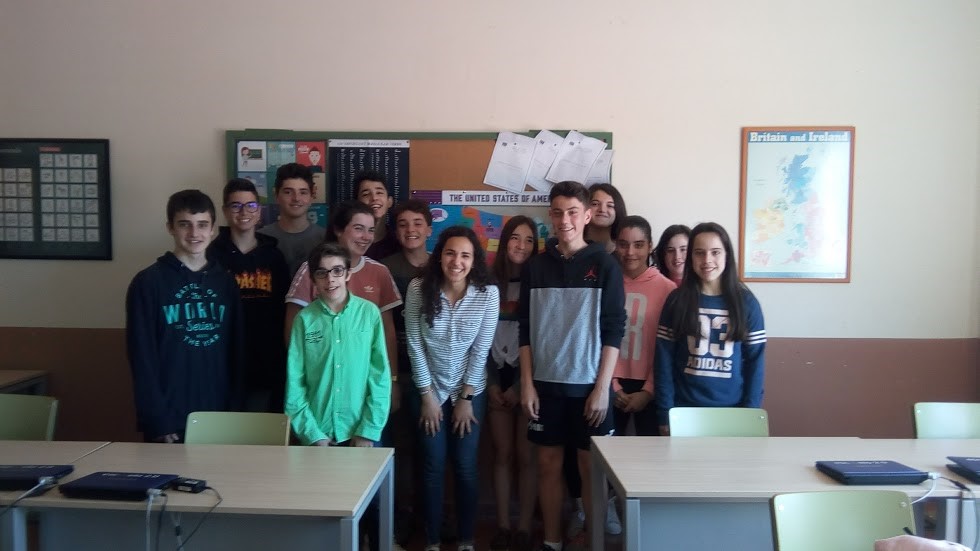
One of the English classes I taught.

When I was in the classroom, I found teaching to be a meaningful time of cultural exchange with my students. My students were very interested in the culture of English-speaking countries. I tried to introduce them to American popular culture by holding debates in English on controversial topics, introducing them to Michael Jackson’s ‘Thriller’ for Halloween, and giving them sorting hat quizzes from Harry Potter. I also started an English poetry club for my students outside of class. At our first poetry meeting, my students said they found poetry ‘boring’. But as we discussed how Maya Angelou or Wendell Berry related to Spanish culture and ate American baked goods cross-legged outside, I found that the numbers only multiplied with every meeting.

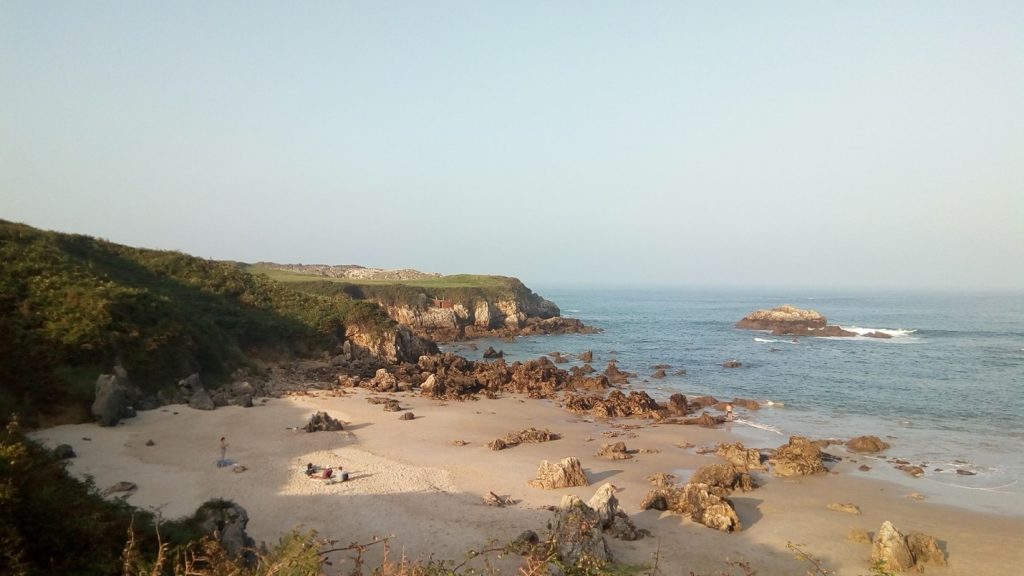
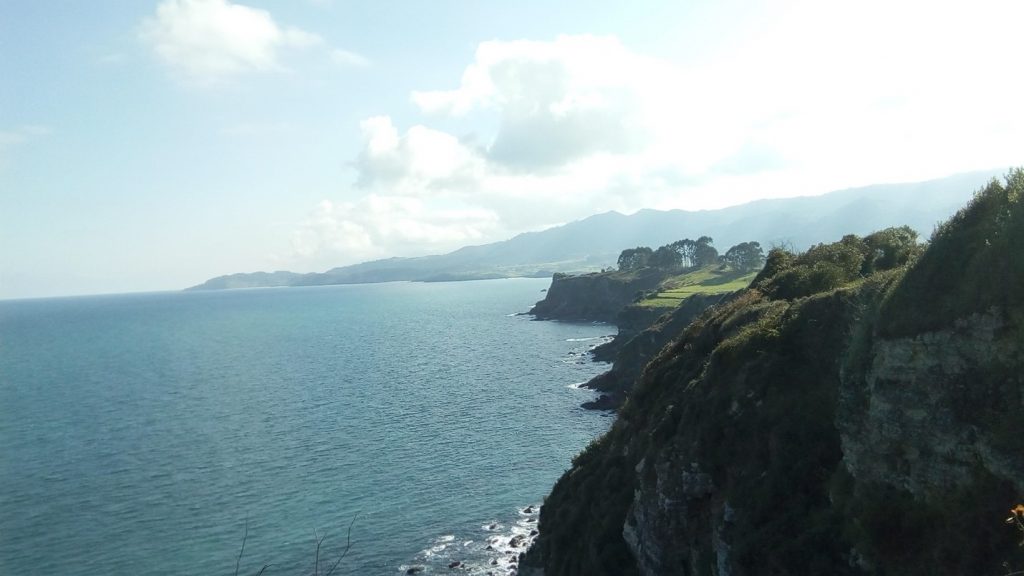
Nonetheless, our outdoor gatherings were not always frequent; I was not prepared how wet the Asturian climate would be. In fact, Asturias resembles typical gloomy English weather. But because of the frequent rain, it boasts beautiful green mountains and hills, giving it the nickname, El paraíso natural (the natural paradise). It is home to beautiful seaside villages on the Bay of Biscay, where green coastal walking paths undulate along its hilly coastline. When the sun is out, the glory of Asturian nature is iridescent.

After many late-night dinner outings, meaningful cultural conversations with my students, and adventures in the mountains and on the coast of Asturias, I realised I certainly had not made the wrong decision about moving to Spain. As I am now studying Spanish visual art and literature from the Golden Age at Oxford, my Spanish adventure had only just begun.

by Katerina Levinson

Image credits Katerina Levinson