Tag Archives: Spanish

SPANISH FLASH FICTION 2026: THE HIGHLY COMMENDED ENTRIES (Y10-11)

Following the publication of the winning and runner up entries, we are excited to present the highly commended entries for the Year 10-11 category of this year’s Spanish Flash Fiction competition!

A huge well done to all of our highly commended entrants!

****

Una primavera inglesa

Varias nubes bailan como algodón a través de un cielo cerúleo. El aire de la mañana es fresco; cada respiración es un recordatorio del invierno reciente.

Mis pies están húmedos por la hierba frondosa y mojada. El sol brilla suavemente en el cielo.

Las colinas me rodean por millas. Veo corderos rebotando alrededor, observados por ovejas cansadas. Los setos están bordeados por campanillas de nieve del mismo color que las nubes.

El primer narciso del año ya está aquí; es una corona naranja con una falda amarilla limón. El color del sol y la primavera inglesa.

– Jemima Tapp, Year 11

El piano

No soy un ser vivo, pero tampoco un objeto inerte. Doy vida a través de mis teclas. Soy el corazón del romance y el jazz. Soy como una máquina del tiempo; cada tecla que pulsas te transporta a un mundo aparte. Cada pieza musical evoca un momento histórico distinto. Mientras mi voz resuena con espléndido glamour, olvidas las preocupaciones de la vida y disfrutas del momento. Porque combino pasado y presente, fusionándolos en perfecta armonía. Puedo calmar la tormenta de emociones que hay en tu interior, mientras desentierras la cima de la alegría que ni siquiera sabías que existía.

– Clothilde Salord, Year 10

Nuestro cerebro siempre está procesando información.
Nuestras neuronas envían señales tan rápido como la luz. Viajan de un lado del cerebro al otro para que podamos chispear ideas en cualquier lugar en cualquier momento. Sin estas conexiones asombrosas, hablando, pensando y simplemente moviéndose sería imposible. Día a día todo el mundo olvida que su ordenador biológico nunca se queda sin batería. Pero, gracias a la inteligencia artificial, siguen deteriorarse sus caminos neurológicos hasta que finalmente la batería explote. Abruptamente, el cerebro se vuelve entumecido al mundo. Y tu no sabes que te está sucediendo hasta que estés sufriendo las consecuencias…

– Alexandros Pallett, Year 10

Deseo

Cerré los ojos.
El silencio ya no pervivía como antes:
ninguna silla vacía, ningún momento ausente
solo voces familiares que se entrelazaban mientras empezaba la canción.

El pastel era de chocolate, cálido y dulce,
De mamá, de anoche, con una copa de vino tinto en una mano y una manga pastelera en la otra.
Las migas se pegaban al borde del plato, un poco desordenado pero perfecto.

Era suficiente. Más que suficiente.

Sonriendo, abrí los ojos y apagué las velas.
Todos aplaudieron, sus vítores estallando en risas.
Mirando a todos a mi alrededor, mi deseo se había hecho realidad.

– Jasmin Leong, Year 10

La leña en la chimenea se ha reducido a cenizas blancas pero no voy a buscar más. Fuera, la lluvia ha convertido el mundo en una mancha gris y verde, un sonido implacable que llena cada hueco de la habitación. He estado sentada junto a la ventana durante horas, viendo cómo el agua se acumula en los surcos del camino de tierra. Hay una carta sobre la mesa, la tinta seca y el papel amarillento, esperando una respuesta que no tengo. La casa suspira con el viento a mi alrededor, una cáscara vacía que no contiene más que el frío.

– Malena Sievers Mayo, Year 10

El Límite de Su Luz

Soy la sombra que ella nunca ve. Camino a su lado, rozando sus pasos como un oscuro juramento, aunque insiste en creer que solo soy vacío. La observo mientras intenta inventar una identidad hecha de luz, sin darse cuenta de que su verdad respira en mis contornos.

Otros me perciben de manera diferente: para algunos soy una amenaza, para otros, un refugio. Ella, sin embargo, me teme porque no puedo mentirle.

A veces me pregunto quién imita a quién. Quizás no soy su sombra, sino el recuerdo de lo que quiere abandonar. Y, sin embargo, siempre la alcanzo.

– Maria Chowdhory, Year 10

La Muñeca de Porcelana

Yo miro. Miro a la gente. Miro a la gente caminar, desde la ventana todo el tiempo. Nunca entran. Las grietas en mi cara solo muestran mi vacío. El rojo en mis labios solo muestra la vida que una vez tuve. El polvo en mi cabeza me recuerda cuánto tiempo tengo aquí. Con el tiempo, mi ropa es más clara, y ahora no me acuerdo del color que tenía mi vestido antes. Ahora es tarde y la noche está ascendiendo. Escucho la puerta. Está abierta. Escucho a la niña. “Quiero la muñeca” ella dice.

– Sophie Blundell, Year 10

Se cierra la música

Oscuridad completa. Nadie dice ni mu. Las cortinas susurrantes por el escenario. La luz intensa inunda todo, revelando la figura. La tensión se corta con un cuchillo, y la función comienza, hipnotizando a la audiencia. Sus movimientos reflejan un cisne deslizándose sobre un océano infinito de hielo. Con el foco y su sombra son tres.

Una pirueta, ahora otra y otra. Saltos inimaginables, imposibles, inigualables. Pasos vívidos, casi mecánicos. Una música dulcemente estridente, casi enlatada, llena el aire. La cuerda se va acabando, ralentizando el tiempo, y sus movimientos se vuelven más restringidos gradualmente.

La caja se cierra de golpe.

– Siena Gurjar, Year 11

Océano

El océano como una alfombra de seda azules y verdes que se difuminan en oro en el horizonte. Una brisa salada enreda mi cabello, llevando el lejano grito de las gaviotas y el suave susurro de las olas. Me arrodillo en la orilla, dejando que la espuma roce mis pies, fría y fugaz, como recuerdos que no puedo retener.

 Un toque salado roza mis mejillas y no puedo saber si es el océano o la tristeza derramándose por pensar en irme.

El sol se pone, la débil esfera naranja en el horizonte se desvanece, mientras susurro un adiós.

– Anagha Abrol, Year 10

Sombras de Risa

Me siento sobre la fría piedra, las flores rozando mis rodillas. Su nombre está grabado aquí, pero todavía puedo escuchar su risa. Recuerdo las mañanas en su cocina, el olor del café y la canela, sus manos guiando las mías mientras aprendía sus viejas recetas. Le hablo sobre mi día, incluso las cosas pequeñas y tontas, esperando que me escuche. El viento se levanta, y lo siento cerca, como si se inclinara para observarme. Cierro los ojos y sonrío. Aunque ya no está, ella sigue aquí, y un pedazo de ella camina conmigo.

– Aisha Balde, Year 10

SPANISH FLASH FICTION 2026: THE HIGHLY COMMENDED ENTRIES (Y7-9)

Following the publication of the winning and runner up entries, we are excited to present the highly commended entries for the Year 7-9 category of this year’s Spanish Flash Fiction competition!

A huge well done to all of our highly commended entrants!

****

La naturaleza se abre como un lugar tranquilo, un refugio donde todo brilla suavemente. La mariquita, roja como una fresa; el pez payaso, naranja como un lirio tigrado; la bocaraca amarilla, moviéndose en silencio; la oveja de mar, brillando en el mar oscuro; la rana dardo
azul, viva como un zafiro; la mariposa índigo, posándose en mi dedo; y la flabelina violeta, bailando entre las olas.

Entonces abro los ojos: ese arcoíris de vida sigue latiendo en mi mente, como si el mundo aún respirara en colores.

– Lucio Angeli Stella, Year 8

Las llaves siempre hacían ruido. Sonaban cuando se abría la puerta, cuando se cerraba, cuando alguien se iba. El reloj las escuchaba desde la pared, marcando cada segundo con paciencia. La puerta esperaba, inmóvil, sosteniendo historias que iban y venían.

El suelo sentía los pasos, algunos ligeros, otros cansados. La casa respiraba lentamente, guardando cada sonido en sus paredes.

Un día, las llaves no sonaron. El reloj siguió marcando el tiempo, pero todo parecía silencioso. La puerta permaneció cerrada. La luz no entró.

La casa entendió que a veces el silencio significa el fin.

– Ashvy Sasikumar, Year 9

Mi Clase de Cocina, ¡Qué Flipa!
¡La clase de cocina es lo más TOP! Siempre hay un jaleo total. Nos ponemos delantales, ¡listos para la comida! La Sra. Ralston escribe la receta, y yo copio todo súper rápido, ¡tope de emocionado! Pillamos las cosas: harina, huevos. ¡A la carga! Corto cebollas (¡me hacen llorar!). El cuchillo hace “chop, chop”. Mezclamos, batimos y probamos, ¡a ver si está rico! Huele súper bien. Es alucinante ver cómo cosas normales se convierten en comida buenísima, ¡es magia! Cuando mi plato sale del horno, calentito y burbujeando, ¡me siento súper GUAY! Lo hice yo. Me mola ver a mis colegas probar lo suyo. Cocina es aprender cosas divertidas y, lo mejor, ¡siempre comemos algo súper rico!

– Ekamjot Kaur, Year 7

Largas dulces crujientes. Espeso rico delicioso. La frita masa de azúcar y mantequilla. La calidad del caliente chocolate. Solamente la estrella del recién cocinado chorro puede ir al lado del negro taza de sabor. Es tan delicioso. Tan rico, pero no raro ni caro. Hay una cosa que es tan buena como esto. Si quieres un sabor único para empezar tu día. Si quieres un desayuno rápido y delicioso de mucha energía. Esto es la única solución para ti. Comed unos increíbles churros con una más increíble copa de chocolate caliente. El sabor te espera.

Chocolate con churros.

– Denis Rodriguez Sanmartin, Year 7

Las Peonías

Bailaba en el prado mientras mi hermana, Valentina, corría. Entonces, tropecé y caí; lo último que vi fue una peonía brillante a mi lado.

Me arrastré por un pasadizo con suelos suaves y paredes cómodas: estaba dentro de un fuerte de cojines. Una luz apareció delante de mí: una peonía. Su dulce aroma me llamaba. Al tocar sus pétalos sedosos, aparecí en un prado soleado. El aire cálido del verano me rodeaba mientras saltaba feliz. Entonces alguien me llamó por mi nombre. Todo se desvaneció en la oscuridad.

“¿Marisol?”

Abrí los ojos.

“Marisol, has estado en coma durante tres años.”

– Tara Hayhoe, Year 8

La hermosa luna brillante que brilla en el cielo se esconde tras las nubes. Tiene miedo, pues siempre es menos preferida que el sol. Las estrellas susurraron su nombre, llamándola a salir. Pero la luna se sentía insegura. Una noche, un niño persigue algo en el bosque y se pierde. La luna lo ve y su luz tiembla. Pero decidió salir de las nubes y dejar que su luz brille, aunque no era tan fuerte ni tan querida como el sol. El niño entonces vio la luz brillante y la siguió a casa.

– Ruby Ayetigbo, Year 8

****

There were three highly commended entrants who did not consent to having their names and stories published on our blog.

SPANISH FLASH FICTION 2026: THE RUNNERS UP

We are delighted to publish the runner up entries for this year’s Spanish Flash Fiction competition! We’ll be publishing the runner up entries for German, as well as the highly commended entries for all three languages in each age category over the coming weeks.

Years 7-9 runners up

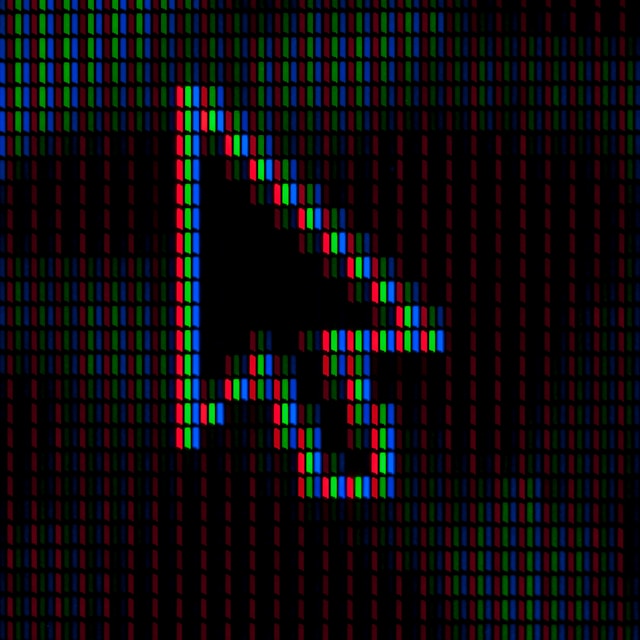
Píxeles

Photo by Umberto on Unsplash

Una combinación de rojo, verde y azul llena millones de pequeños cuadrados. Ocultos tras una pantalla de cristal, su trabajo pasa desapercibido. Cada batalla se libra para oír un toque en el cristal, alguien que finalmente les presta la atención que buscan. Sin embargo, con el paso de las horas, el miedo se apodera de ellos, todo se oscurece, la batalla ha terminado. Esta es la lucha a la que se enfrentan día tras día hasta que, finalmente, la batalla termina para siempre.

Caen en el olvido, o mejor dicho, son reemplazados.

– Rishaan Sharma, Year 9

Photo by Chris Lawton on Unsplash

El invierno, niña pequeña que aún no puede controlar su temperamento caprichoso causando frío y muerte cuando llora. La primavera, niña grande llena de esperanza y vida cuando renueva la naturaleza pero llora cuando llueve. El verano, mujer joven conquistando el mundo y trayendo el sol, pero también cruel e implacable causando olas de calor agobiante. El otoño, mujer que ha visto el mundo, feliz con lo que le traiga, lista para dejar su furia con el cambio de las hojas. Finalmente vuelve el invierno, mujer vieja a veces malévola pero tranquila cuando se convierte de nuevo en niña.

– Lilac Eis, Year 8

Years 10-11 runners up

Photo by NASA on Unsplash

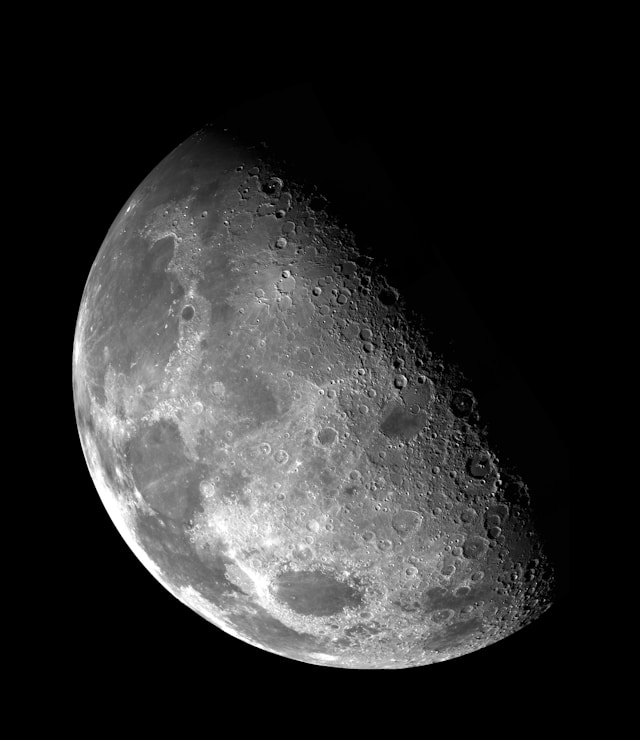
Querida luna

Estimados poetas,

Les escribo con urgencia y, si me permiten, con cierto agotamiento.

Llevan siglos usándome. Soy “plateada”, soy “melancólica”, el símbolo de todo amor no correspondido que no saben dónde colocar. Neruda me agotó. Lorca me dejó sin palabras. Y siguen.

¿Saben cuántos poemas he inspirado esta semana sola? Cuatrocientos diecisiete. Conté.

Tengo cráteres, grietas, polvo lunar. No soy romántica — soy geología.

Les pido, con toda la paciencia que me queda, que busquen otra metáfora. Un semáforo en rojo, quizás. También espera, también frustra, y nadie le dedica sonetos.

Atentamente, La Luna.

P.D. La marea también está harta.

– Amelie Rahman, Year 11

Un desconocido en el aeropuerto

Photo by yousef alfuhigi on Unsplash

En el aeropuerto
Veo a un hombre
Con una mochila morada.
Me cuenta, con todos los colores de su lengua,
La historia de su querencia,
Su país roto y su hermoso hogar.

No le entiendo en absoluto,
Pero el rojo de su ira
Y el azul de su dolor y
El verde de su tierra natal, su querencia
Me pintan un cuadro.
Tiene que buscar una vida nueva, y yo,
Tengo que coger un avión
Me sonríe con todos los colores de su historia.
Entiendo sus colores
Y traigo pensamientos de él de vuelta a mi propia querencia.

– Maya Maimaris, Year 10

Years 12-13 runners up

Photo by M K on Unsplash

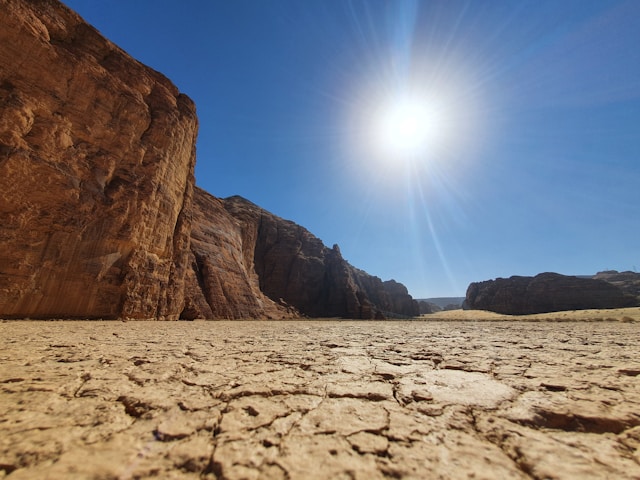
El sol convierte su poder en un arma, atacando al terreno seco que ansía saciar su sed. La moneda de oro en el cielo se derrite, quemando el cuello del señor. Cada rayo se transforma en una gota pesada de sudor que sangra al cuello de su camisa. Extiende la mano agarrando el pie de la planta de garbanzo y la arranca de la piel del mundo. Sus raíces respiran aire con necesidad. Las uñas del hombre están manchadas, testimonio de su trabajo duro. Una sola brisa lo recorre. Desanuda su espalda, relajándose para su escape glorioso.

– Celia Guasch Bloomer, Year 12

“El estómago no hace nada,” dijo la mano. “El corazón trabaja duro y la piel previene la infección. ¿En cuanto al estómago? Nada.” Las otras partes del cuerpo estaban de acuerdo. Era verdad: el estómago solo quería que fuera alimentado. Por eso no es de extrañar que las partes del cuerpo convocaron a huelga. Los ojos pararon de buscar los alimentos y los dientes pararon de masticar. Al principio, las partes pensaron que habían ganado la batalla. Pero pronto el estómago gruñó y el cuerpo se convirtió rápidamente gris. El estómago clamó venganza, castigando a los que lo habían abandonado.

Photo by julien Tromeur on Unsplash

– Nicole Kilby, Year 12

¡Felicidades a todos!

SPANISH FLASH FICTION 2026: THE WINNERS

We are delighted to publish the winning entries for this year’s Spanish Flash Fiction competition. We published the winning entries for French last week. The winning entries for German, as well as the runners up and the highly commended entries for all languages in each age category will be published over the coming months.

Thank you and huge congratulations to everyone who entered! The Spanish judging panel were extremely impressed with all the entries we received this year (over 350 of them!), and commented the following about the competition:

As in previous years, there were lots of very interestingly organized and thought-provoking entries. This year, we noticed quite a different at the level of theme – some were very funny, others, more sobering reflections on modern life. It was very difficult to decide the overall winners and runners up and there were a number of other stories that we would have liked to have commended too. The level of the Spanish seemed a little stronger than in previous years, which is testament to your hard work. ¡Seguid estudiando y escribiendo!

Without further ado, here are the winning stories! We hope you enjoy reading them as much as the judges did.

Years 7-9 winner

Photo by tabitha turner on Unsplash

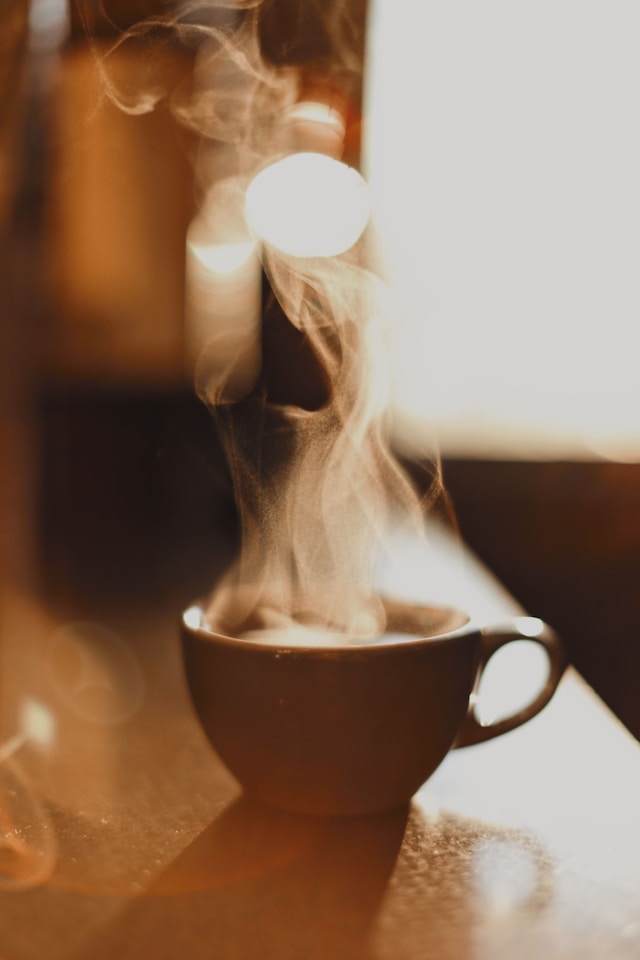
Una explosión de bronce desgarró el cielo tranquilo, enviando espirales furiosas hacia las profundidades. Una tormenta comenzó a gestarse. Volutas cobrizas se elevaron, deshaciéndose en una bruma de humo espeso, danzando con gracia a través de un mundo cristalino donde la luz se quebraba en destellos, dejando a su paso una suave neblina. De pronto, el desorden se disolvió en una serenidad apacible. La bruma castaña se aquietó, coronada por un leve vapor. La taza de té prefecta aguardaba el primer sorbo.

– Alessia Jain, Year 7

Years 10-11 winner

Photo by Etienne Boulanger on Unsplash

El peso de las palabras
Al principio, nadie se dio cuenta.
Las palabras siempre habían sido invisibles, soplos
que se desvanecían en el aire. Pero entonces,
empezaron a caer.
Una broma era un guijarro. Una mentira era una
piedra. Un insulto golpeaba con un crujido, dejando
huella.
Pronto, la gente se vio obligada a cargar con ellas.
Los comentarios descuidados pesaban sobre los
hombros. Las frases hirientes doblegaban las
espaldas. El peso se acumuló.
Algunas palabras se aferraban como cadenas. Otras
oprimían el pecho, asfixiando cada aliento.
Entonces, una frase cayó de forma distinta.
«Me importas»
Cayó con delicadeza… y lo alivió todo.

– Alfie Bailey, Year 10

Years 12-13 winner

Photo by Peter Herrmann on Unsplash

El polvo
El polvo cubre todo, pequeñas nubes suspendidas en la luz. Se posa en estantes, libros olvidados y marcos de cuadros. Se aferra a esquinas, alfombra bordes y se oculta en grietas. Cada mota es testigo de risas, ira, dolor y alegría: momentos vividos y olvidados. Cuando se agita, flota como un fantasma, atrapando la luz antes de caer. Espera escuchar otra
conversación, marcar otro paso o huella. Es un recordatorio de cada instante pasado, siempre presente aunque silencioso, dejando su huella en lo que olvidamos.

– Lila Rock, Year 12

¡Felicidades a todos los ganadores!

2026 Flash Fiction Competitions: The results

In December 2025, we launched our annual Flash Fiction competitions, which closed at the end of March. The competitions were open to students in Years 7 to 13, who were tasked with writing a short story of no more than 100 words in French, German and/or Spanish.

We had an incredible response, with entries coming in from all areas across the country! In total, we received over 1100 submissions across the three languages!

We would like to thank everyone who entered the competitions and commend you all for your hard work and creativity in writing a piece of fiction in a different language. This is a challenging exercise, and a significant achievement – congratulations all!

We are delighted to be able to announce the winners, runners up, and highly commended entries for each language below. We will be publishing the stories here on the blog over the summer so you can read them for yourselves.

French

In the Years 7-9 category, the winner is Cindy Li. The runners-up are Esme Pritchard and Shanzeh Masood.

The judges also identified the following entrants as highly commended: Ema Danileviciute; Mahek Amjad; Elisabetta Margherita Federici; Heritage Agbaje; Anah Imran; Iqra Zaheen; Veer Khanna; Eva Madan; Ayaan Banerjee; and Kimberley Woollard.

In the Years 10-11 category, the winner is Ranvir Sharma. The runners-up are Joseph Nebel and Honorée Wallis.

The judges also identified the following entrants as highly commended: Nandana Dhanabal; Henry Bodal Hansen; Myrtle  Mitchell; Yakshita Ramdhony; Victoria Wang; Chloe Shin; Djihane Ounissi; Aarush Lala; Aadi Jhawar; and Jack Bolton.

In the Years 12-13 category, the winner is Julia Lee. The runners-up are Salome Gvindadze and Francesca Bardou.

The judges also identified the following entrants as highly commended: Isla Thurlow; Jude Shalaby; Ines Amraoui; Isabelle Lake; Erin Grimsey; Alexander   Andrews; Caterina Ciniselli; Sherisa Johnson Rock; Henrietta Coningsby; and Sophie Agmen-Smith.

The French judging panel commented the following about all the entries:

We have been really impressed by the inventiveness, courage, and linguistic flair shown by this year’s Flash Fiction Competition entrants. The winners, runners up, and commended entries demonstrated imagination, advanced vocabulary, and precise grammar to craft engaging, moving, or suspenseful narratives, all within the limits of 100 words.

We encountered a crime-fighting guinea pig, a rebellious swarm of insects, time capsules, apocalypses, many Mona Lisas, croissants, Monet’s garden, sentient bacteria, Nemo’s adventures abroad, talking teddy bears, battlefields both metaphoric and real, acrobats, celebrity frogs, airport encounters, surprise birthday cakes, atmospheric descriptions of the moon, and divinely ordained bins.

Your entries were a pleasure to read, and we are delighted to commend each one of you for your hard work and creativity. Our warmest congratulations to everyone for taking part! 

German

In the Years 7-9 category, the winner is Rynad Mohudeen. The runners-up are Heritage Agbaje and Sophia Pfrang.

The judges also identified the following entrants as highly commended: Donald Kuhn; Eva Monica Buckingham; Eva Davies; Habibur Kazi; Kayden Jace Miraflor; Kenji Ronan; Lili May Kuhn; Muhammad Anwaar Ul Haq; Thomas Lawrance; and Vakish Indrajith.

In the Years 10-11 category, the winner is Mariia Slobodyanyuk. The runners-up are Amelia Sinclair and Anonymous.

The judges also identified the following entrants as highly commended: Ananya Patrick; Ananya Subramonian; Ariel Xu; Eleanor Ziegler-Tan; Elsa Rauschenbach; Eva Howells; Evelyn Roberts; Flora Boney; India Davie-Thornhill; and Luca Goolamali.

In the Years 12-13 category, the winner is Leah Holmes. The runners-up are Edith Taussig and Uma Ahluwalia.

The judges also identified the following entrants as highly commended: Alexander Howell; Alexandra Hampton; Ayaan Jilani; Charlotte Kenyon; Chloe Louet; Elisabeth Tillett; Ellis Underwood; Florence Datta; Isabella Young; and Tarannum Jayaswal.

The German judging panel commented the following about all the entries:

We were delighted to have received so many entries across a range of topics. Some stories led us into mystical realms and fairy-tale-like settings, while others offered new dimensions and dystopian glimpses at a future where robots and AI had taken over. At heart of all these often quite poetic stories was a deep emotional connection with the world, encompassing questions around the self and relationships with others, memories, hopes and dreams as well as the perspectives of animals. It was clear to see many entrants thinking carefully about the vocabulary and grammar structures they had been learning, and about how they could take risks with these to creative, poignant, or amusing effect. We found it heartening to see so many young Germanists engaging with fiction in such a palpably enthusiastic way, asking themselves how we narrate, how we connect with each other, and what we learn about German – and ourselves – in the process.

Spanish

In the Years 7-9 category, the winner is Alessia Jain. The runners-up are Rishaan Sharma and Lilac Eis.

The judges also identified the following entrants as highly commended: Lucio Angeli Stella; Anonymous; Anonymous; Ashvy Sasikumar; Ekamjot Kaur; Denis Rodriguez Sanmartin; Anonymous; Tara Hayhoe; and Ruby Ayetigbo.

In the Years 10-11 category, the winner is Alfie Bailey. The runners-up are Amelie Rahman and Maya Maimaris.

The judges also identified the following entrants as highly commended: Jemima Tapp; Clothilde Salord; Alexandros Pallett; Jasmin Leong; Malena Sievers Mayo; Maria Chowdhory; Sophie Blundell; Siena Gurjar; Anagha Abrol; and Aisha Balde.

In the Years 12-13 category, the winner is Lila Rock. The runners-up are Celia Guasch Bloomer and Nicole Kilby.

The judges also identified the following entrants as highly commended: Katerina Garcia; Olivia Slater; Paul Olusegun; Richard Hall; Sienna O’Keefe; Alexa Lewis-Banks; Ava Spillane; Anonymous; Bella Trafford-Barton; and Charles Romeu-Villalobos.

The Spanish judging panel commented the following about all the entries:

As in previous years, there were lots of very interestingly organized and thought-provoking entries. This year, we noticed quite a different at the level of theme – some were very funny, others, more sobering reflections on modern life. It was very difficult to decide the overall winners and runners up and there were a number of other stories that we would have liked to have commended too. The level of the Spanish seemed a little stronger than in previous years, which is testament to your hard work. ¡Seguid estudiando y escribiendo!

Huge congratulations everyone – you should be very proud of your achievement!

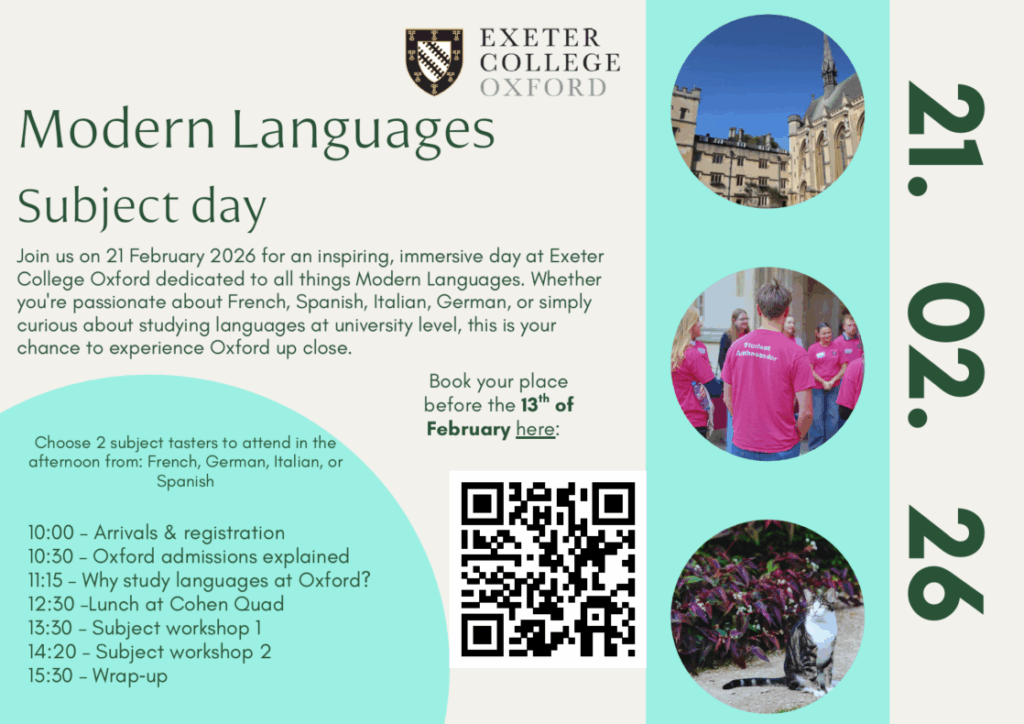
Modern Languages Subject Taster Day

Happy New Year everyone! We hope you had a wonderful time and enjoyed the festivities over the Christmas holidays.

A new year brings new opportunities to explore your options of studying Modern Languages at Oxford.

For example, on 21 February 2026, Exeter College is running an inspiring, immersive day dedicated to all things Modern Languages for Year 11 and 12 students.

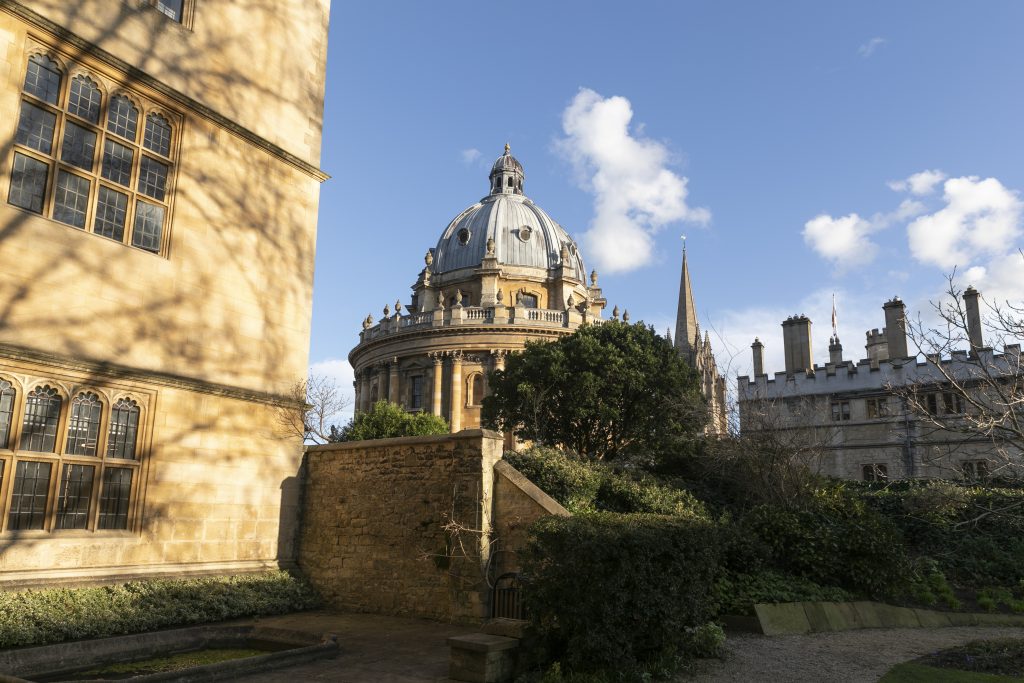
The Radcliffe Camera from Exeter College

Whether you’re passionate about French, Spanish, Italian, German, or simply curious about studying languages at university level, this is your chance to experience Oxford up close.

In the morning, you’ll explore the historic Turl Street site and gain a clear, insider’s view of the admissions process and what studying languages at Oxford is really like.

Across two afternoon sessions, you’ll take part in small‑group workshops led by Oxford tutors in French, Spanish, Italian, or German. Choose your languages, explore real academic material, and experience Oxford’s teaching style first-hand.

Apply here: Modern Languages Subject Day: Saturday 21 February 2026 – Fill in form. The form will close on 13 February 2026.

Subject Days are often oversubscribed and selection is based on academic merit and contextual factors. We warmly encourage applications from students who identify with any of the following criteria.

  • Students on Free School Meals.
  • Students from IMD Q1 and Q2 (*check your postcode at the link below)
  • Students who have been or are currently in care.

Please provide as many details about yourself to aid the shortlisting process.

The programme will be free of charge, lunch will be provided, and travel bursaries are available.

Questions can be directed to outreach@exeter.ox.ac.uk.

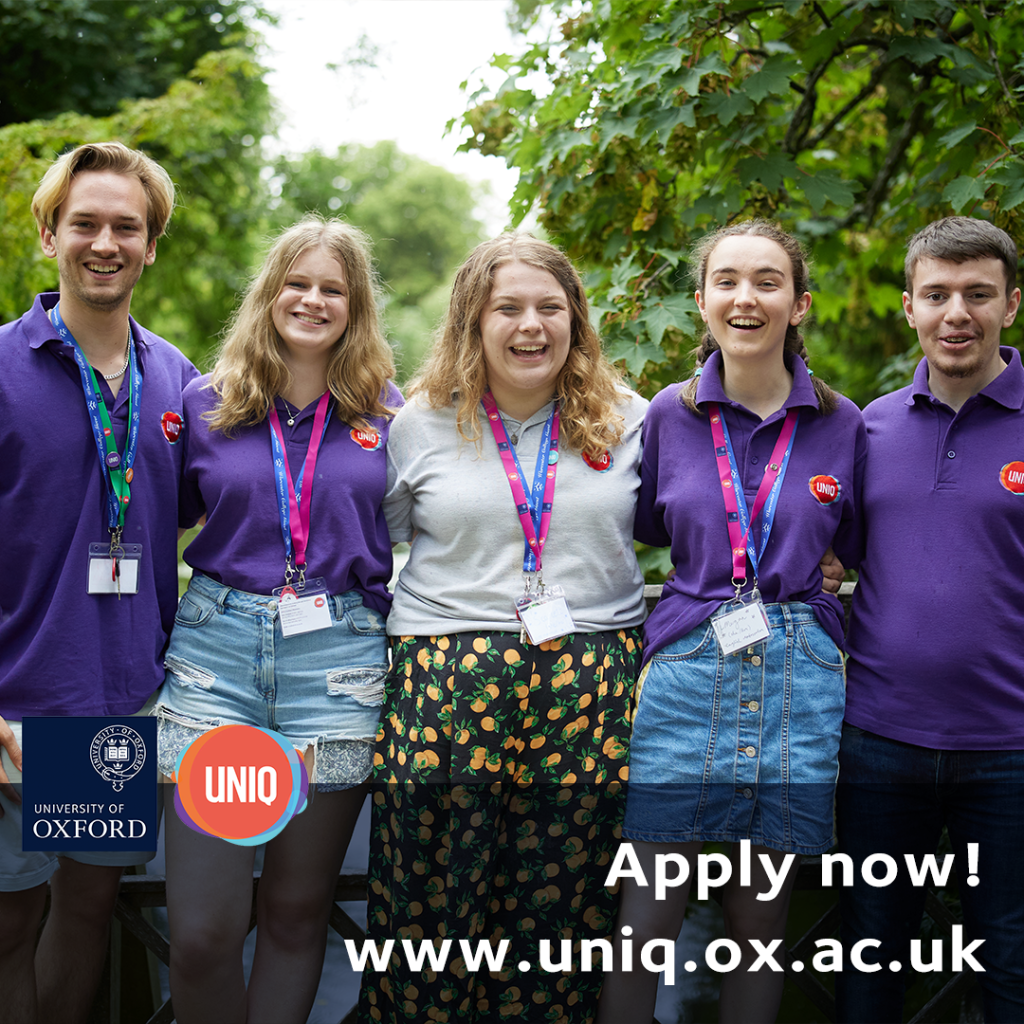
UNIQ 2026 – Applications now open!

Will UNIQ help you shape your future? Apply now and find out! 

What is UNIQ?

UNIQ is Oxford’s free access programme for UK state school students. Featuring a sustained contact programme and in-person summer residential, you’ll be taught by Oxford academics and explore subjects aligned with your academic interests. The programme encourages you to make friends with other UNIQ participants: you’ll meet them at regional events and live alongside them during the Oxford residential, where current undergraduates will also be supporting you and on hand to answer your questions about student life at Oxford. We’ll also support you to make a strong university application to a course at Oxford or elsewhere. 

What Modern Languages courses are available?   

For Modern Languages, there will be courses available for Spanish, French, and German taking place over the summer of 2026. Each varied course allows students to explore several exciting elements of degree-level language studies, such as language, literature, theatre, film, and linguistics, and provides the opportunity to experience a taster of two other European languages at beginners’ level.

How can I apply?

Applying is quick and simple – just register and fill out the form on the UNIQ website. It shouldn’t take you more than 15 minutes. Before you apply you should check that you meet our eligibility requirements and browse carefully the 30+ courses on offer to decide on your first and second choice.  
 
Applications close on 13 January 2026. You can find out more about the programme and selection criteria on the UNIQ website (www.uniq.ox.ac.uk) and by following us on Instagram (@OxfordUNIQ). If you have any queries about the applications process, check out our FAQs or contact us at uniq@admin.ox.ac.uk.   

*****

We’ll be back in January 2026 with more blog posts. In the meantime, we wish you a restful and peaceful festive period and a Happy New Year!

2026 Flash Fiction Competitions now open!

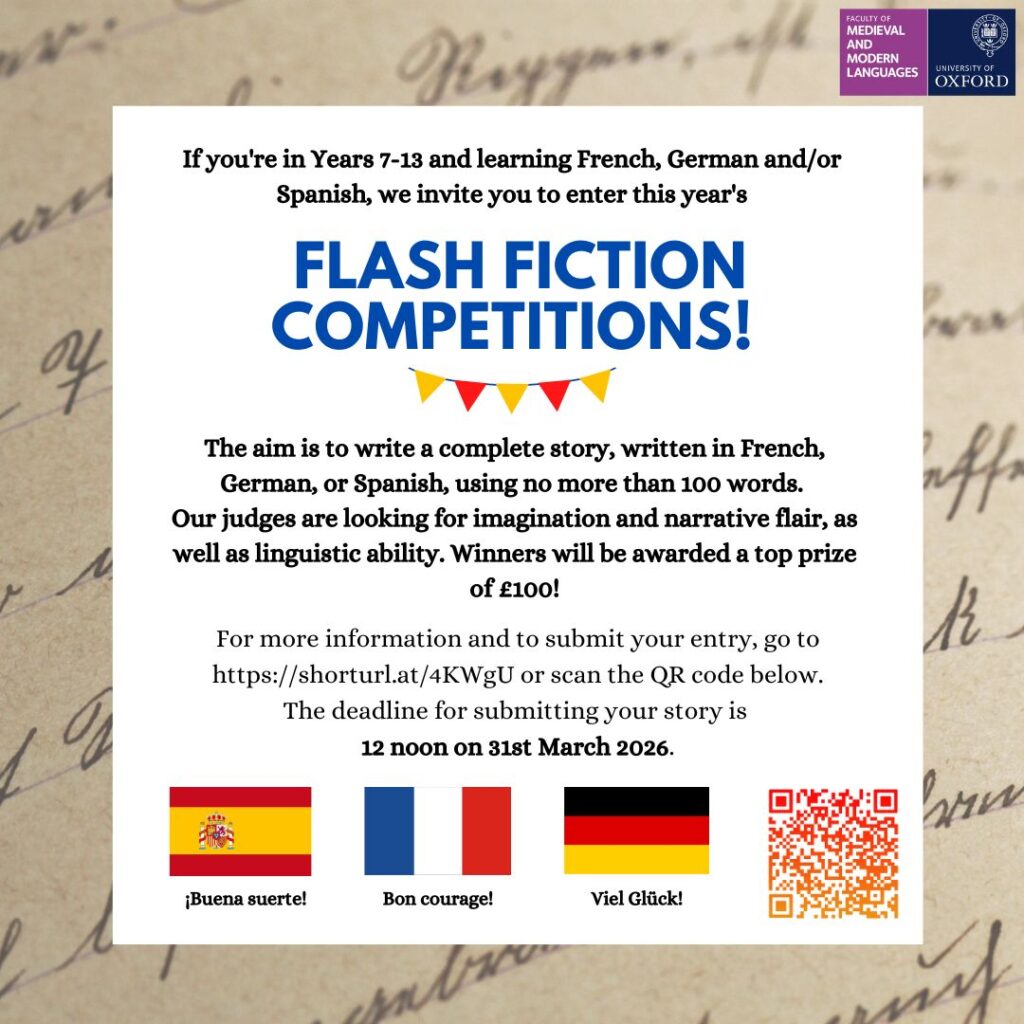
The Faculty of Medieval and Modern Languages is delighted to announce that this year’s Flash Fiction Competitions in French, Spanish and German are now open!

Our annual Flash Fiction Competitions invite secondary school pupils to submit a complete story of no more than 100 words, in French, Spanish, or German, for the chance to win up to £100.

Our 2026 Competition marks the first year in which German will be included and we’re excited to be expanding the Competition after many successful years!

Entries are judged by a panel of academics who are primarily looking for creativity, imagination and narrative flair, as well as linguistic accuracy. Pupils’ language skills will be considered in the context of their age and year group: in other words, we will not expect younger pupils to compete against older pupils linguistically. Each language competition is divided into three age categories:

  • Years 7-9 (ages 11-14)
  • Years 10-11 (ages 14-16)
  • Years 12-13 (ages 16-18)

The judges will award a top prize of £100, as well as prizes of £50 to a maximum of two runners up, in each category. Certificates will also be awarded to pupils who have been highly commended by our judges. Results as well as the winning, runner up, and highly commended stories will be published her on our blog if entrants give us permission to do so.

More information and links to the submission forms can be found on our website. Pupils may only submit one story per language but are welcome to submit a story in two or three languages if they would like to. For some inspiration, they can have a look at last year’s winning entries in French and Spanish.

Please note that pupils must enter the competition themselves: teachers cannot enter on their behalf for reasons of GDPR compliance.

FAQs can be found here and any other questions can be directed to schools.liaison@mod-langs.ox.ac.uk.

The submission deadline is 12 noon on 31 March 2026.

Bonne chance à tous! ¡Buena suerte a todos! Viel Glück euch allen!

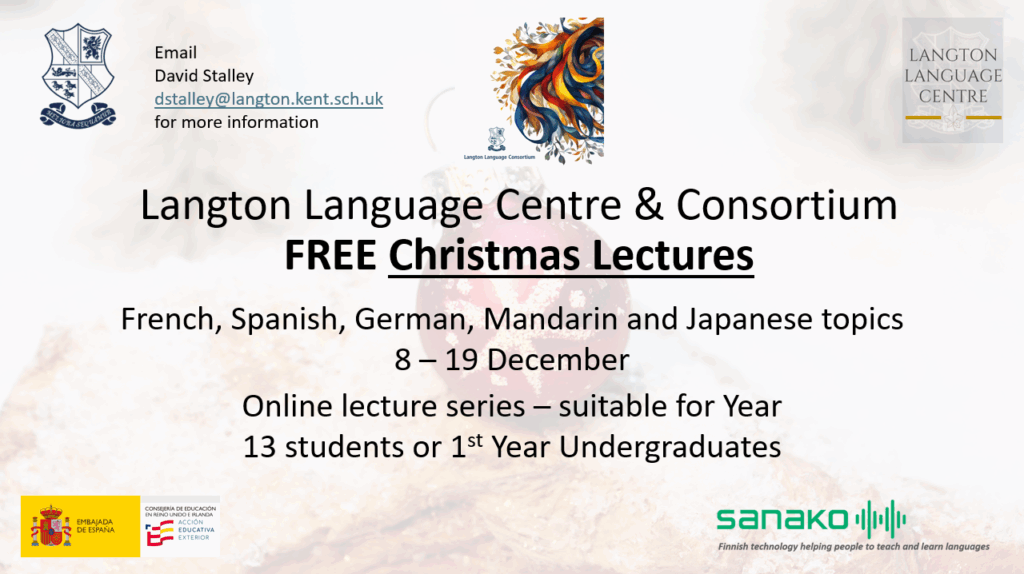
FREE Christmas Lectures for Year 13s

The Langton Language Centre, based at Simon Langton Girls’ Grammar School in Canterbury, is running an exciting series of online lectures aimed at Year 13 languages students.

These are a great opportunity to get a taste of studying languages at university and see if it’s for you!

These lectures are taking place from 8th to 19th December and are completely free. All lectures will take place in the evening, either from 18:00-19:00 or 19:00-20:00.

The programme of lectures can be found here. Lectures cover varied topics, from the French Revolution to Japanese films.

Students need to sign up individually via this form with just their school name. No personal details required!

For safeguarding reasons, microphones and cameras will be muted but students and lecturers will be able to interact via the chat. 

Please email David Stalley (dstalley@langton.kent.sch.uk) with any questions.

GCHQ events and activities for schools

Our friends at GCHQ have lots of exciting events and activities planned for schools over the next couple of months… more details below!

GCHQ Language Outreach Virtual Session

Date: Tuesday 21 October, 10:30-11:30

Registration link: GCHQ Virtual Language Outreach Autumn 2025: Session dates and times

Description: Aimed at Year 9 students, during these one-hour sessions pupils will hear about the importance of languages, GCHQ, and the work our Language Analysts do, and will be given the opportunity to ask questions. They will then move on to a scenario challenge in a language they are currently studying (French, German or Spanish).

GCHQ National Language Competition

Date: 17-21 November 2025

Registration link: The GCHQ National Language Competition – GCHQ.GOV.UK

Description: We are pleased to announce the National Language Competition (NLC) will be returning in November this year. The NLC is open to Year 9 [England/Wales] / Year 10 [Northern Ireland] / S2 [Scotland] students, competing in teams of up to four. There is no maximum number of team entries per school. The NLC challenges vary in difficulty, require no prior language knowledge, and are worth varying amounts of points. We have an exciting new interactive format for your students to take on this year as well.

You can read all about the NLC 2024 winners visit to GCHQ Cheltenham on the GCHQ website.

****

Questions about both opportunities should be directed to languageoutreach@gchq.gov.uk.