Tag Archives: Internship

A summer internship in Mauritius

On the blog this week, second year French and History student, Eleanor, talks about her internship in Mauritius!
This summer, I completed an internship on the beautiful island Mauritius – a wonderful melting pot of different languages and cultures. During Trinity term (the final term of the Oxford year), I, like many other students, was scrolling through Oxford’s careers website to find a meaningful way to spend my summer. At Oxford, we’re really lucky to have access to hundreds of summer internship opportunities, and a supportive careers service who want to help build your professional skills. I came across an advertisement for a children’s NGO, M-Kids Association, who were looking for Humanitarian Interns to come and help with the management of the charity. The advertisement specified that French-speakers were desirable, which also motivated me to apply. As a French student, I am always on the lookout for any chance to use and improve my language skills – especially in a non-European environment. Also having years of experience working with children and volunteering under my belt, I decided to apply. 

After receiving my offer, I contacted the Oxford careers service to discuss funding options. Flights, accommodation, travel to the airport…Mauritius was not going to be cheap. However, I am very fortunate to be a receiver of Oxford’s Crankstart scholarship – a bursary which awards up to £3,200 to low-income students for unpaid or poorly paid internships. Oxford’s generous funding made this internship possible, which I am deeply grateful for.

I was initially really worried about travelling so far. I’d never been out of Europe alone, so a long-haul flight with a layover felt daunting. To calm my nerves, I spoke to members of staff at the airport, and asked them for help with checking in my bags correctly, finding the departure lounges and finding my seats on the planes. They were all more than happy to help me, which made me feel a lot more comfortable.
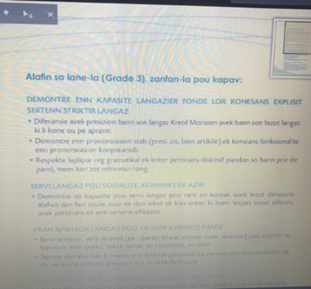
The charity is located near Port Louis, the capital of the country. Upon my arrival, I was instantly struck by the use of different languages. Officially, three languages are spoken in Mauritius: Créole (the most widespread), French and English. Out of French and English, my colleagues and the children I worked with tended to be most comfortable in French. 

I was given my work tasks the day after arriving. I would be working with another Oxford intern to research the Mauritian curriculum and attainment levels to design a new programme of remedial classes for children in the local area. The other intern and I decided to focus on teaching maths and English, and we created engaging games to keep the children interested. We focussed on reinforcing the foundations of these subjects, such as common vocabulary in English and basic multiplication in maths. 

The first twelve weeks of our programme would be a trial period to assess whether our games were working well. This included ‘maths hopscotch’ and drawing pictures to match up with English words. I taught mainly in French, but also encouraged some of the older children to speak English. This meant that my lessons were often a Franglais mix!
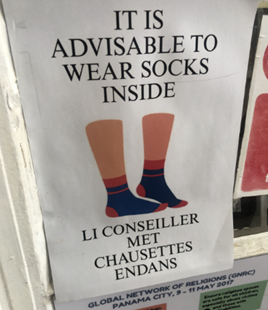
Any language learner would find working in Mauritius absolutely fascinating. My colleagues at the charity taught me basic phrases in Créole, such as ‘Ki manyèr ?’, which means ‘how are you?’. Tracking the developments in Mauritian Créole from French (for example, the phrase ‘Ki manyèr’ has developed from the French phrase ‘de quelle manière ?’) made me fully appreciate just how complex language can be. Language is always changing, and the way that languages are used today has been formed through historical events, such as colonisation

One of the key projects of the association is their ‘Share a Meal’ programme, in which they give free, hot and healthy meals to local children from low-income households. I really enjoyed taking part in this programme, as I felt fully integrated into Mauritian culture. The adults and children all prayed and ate together, and we carried out the Sunnah practice of sitting down to eat. I felt really lucky to be part of such a welcoming community and enjoyed learning from the children about their religious practices.

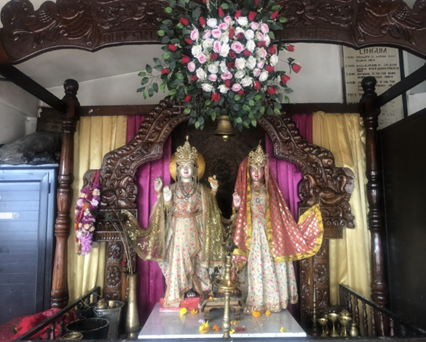
All religions exist in harmony in Mauritius. I visited Hindu temples, cathedrals and mosques whilst there. The colleagues at the charity were primarily Muslim, but they were still excited to show us other important places of worship. I really admired the respect between religions and how this makes up such a bright and interesting culture.
The experiences I’ve described make up only a fraction of my time in Mauritius – participating in an MMA lesson in Créole, meeting the British High-Commissioner to Mauritius and travelling widely were also highlights. My time here was one I will never forget, and my understanding of and love for other languages and cultures has grown significantly.
My Internship at the Digital Humanities Project

cesr (2)

posted by Jessica Allen

When looking for an internship for your Year Abroad, definitely think outside the box and never be afraid to approach a company or organisation you might like to work for on the off chance they might be able to take you. As my time at Montaigne’s Château drew to a close last summer, my thoughts turned to the two month long Easter Vacation I would have from my German university. I knew I wanted to spend this in France but at that point, I was starting to doubt whether anywhere would take me for that amount of time.


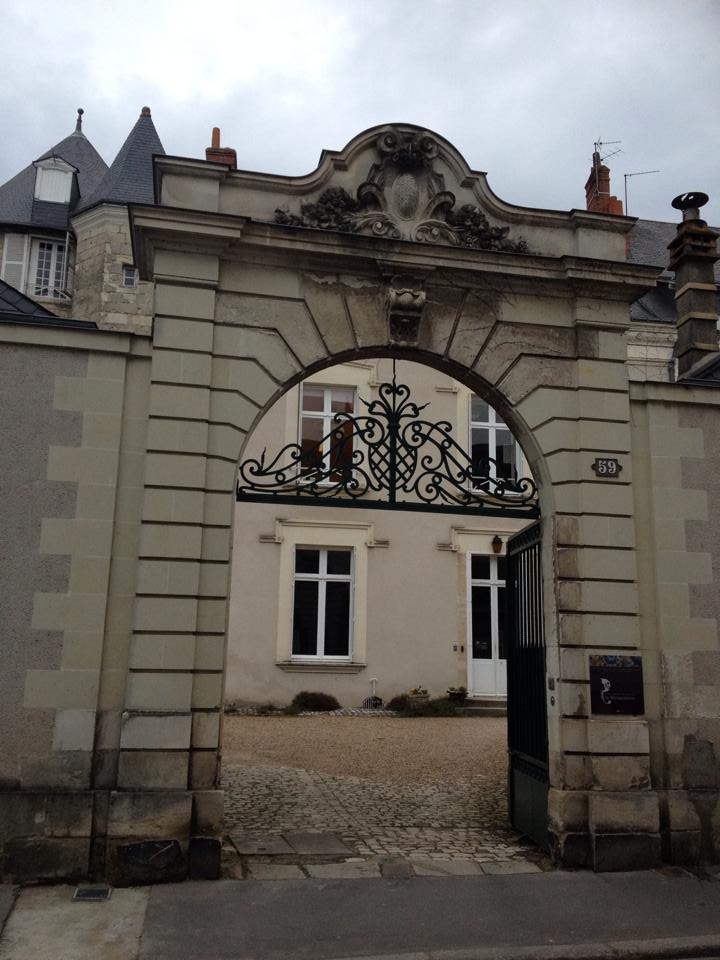
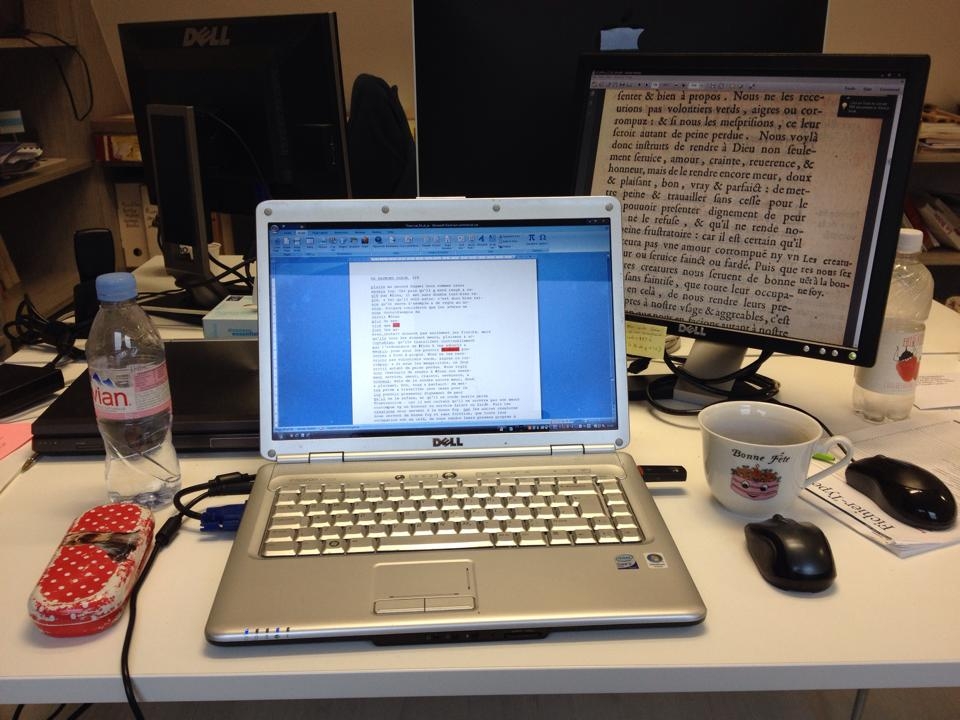
However my fears were left unfounded and I quickly managed to secure the internship of my dreams. I mentioned to my boss at the château that I needed to find another placement and she knew that I’d spend much of my free time whilst I was there enjoying the books about Montaigne. One of my favourites focuses on the famous beams in Montaigne’s library, known for their Latin and Greek inscriptions. My boss then suggested that I contact Alain Legros, a frequent visitor to the château and the author of the book. So I quickly translated my CV into French and wrote a letter outlining my interests in 16th Century French literature, my future career plans, and my need for an internship. Within two days I had a reply. He couldn’t offer me anything himself, but he is an associate researcher at the CESR (Centre d’Etudes Supérieures de la Renaissance – the Centre for Renaissance Studies) attached to the University of Tours, so he passed my CV onto someone who could: Marie-Luce Demonet, a Professor of Renaissance French Literature and director of the BVH, the project on which I worked. Within three days, I had a positive response and everything was confirmed after a brief meeting in Oxford in September to discuss practicalities: I had a seven week internship in Digital Humanities in Tours!

Digital books

But before I could get too excited, I had to find somewhere to stay. Finding accommodation in France can be tricky at the best of times due to the huge amount of bureaucracy, and for a two month stay, I didn’t fancy that. Admittedly I started panicking when the university accommodation   website was incredibly unhelpful and looked at Tripadvisor on a whim. I managed to find a studio in the centre of Tours, a ten minute walk from where I would be working and which cost only a fraction more than the university accommodation. I could hardly believe my luck and spent eight wonderful weeks living an almost surreal grown-up existence in the city centre.

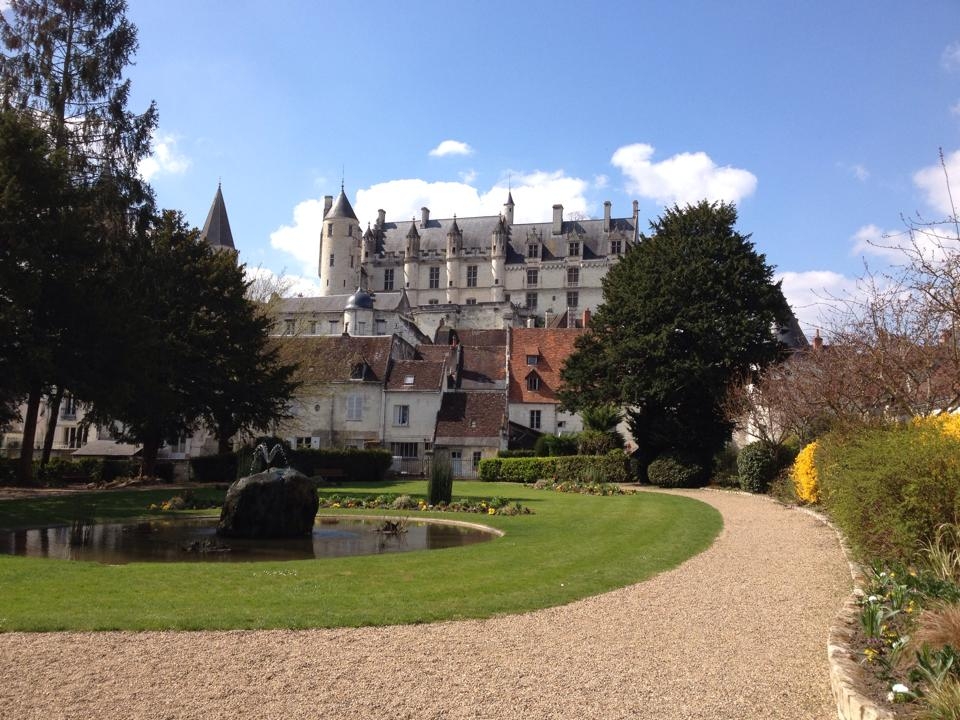
Loches chateau (2)

My daily life in Tours was similarly exciting. As an undergraduate who hopes to have a career in academia, I got the chance to experience life at a research centre. I worked on the Digital Humanities project MONLOE < http://www.bvh.univ-tours.fr/Montaigne.asp> (MONtaigne à L’Œuvre), which aims to publish digital versions of the sixteenth century philosopher’s essays as well as the books which were once in his library or the sources of his essays. I spent most of my time learning how to edit transcripts and use TEI-XML coding, two transferable skills which were completely new for me, so it was a very intense and beneficial experience. I was trusted to work on a real project, the digitisation of this book, http://www.bvh.univ-tours.fr/Consult/index.asp?numfiche=1136&url=/resrecherche.asp?ordre=titre-motclef=theologie%20naturelle-bvh=BVH-epistemon=Epistemon, which, after further editing and several control checks by other members of the team, will eventually appear online as part of the virtual library. It was very rewarding knowing that what I was doing was actually useful and part of a real project, something which can be rare in the world of internships. I also had the opportunity to go to conferences held at the CESR, looks at rare books in the reserve, use the extensive library, and meet professors working on the things which interest me. The other members of the team were friendly, welcoming, and easy to talk to – it’s always good to work in an environment where there are others who share your interests.

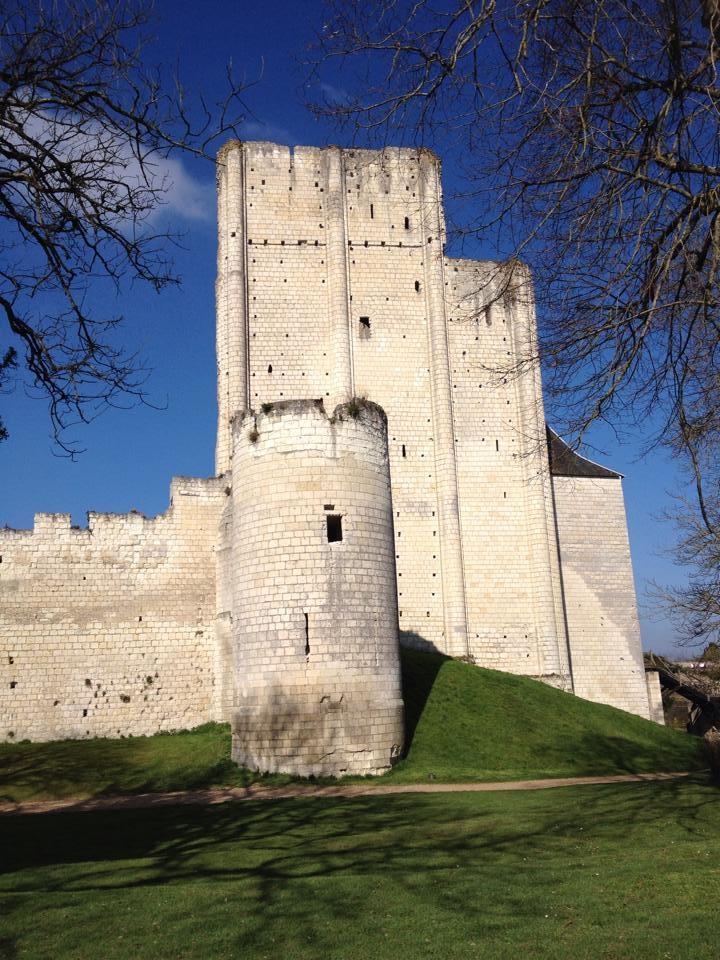
Loches donjon

I worked five days a week from nine until six with an hour for lunch. On Fridays, we would go out for lunch as a team, but on the other days I would go and read by the Loire, try out the cafés around the centre, or browse the nearby shops: you can achieve a surprising amount in an hour. Staring at a computer screen all day and doing everything in French was quite tiring, so after work I often just spent the evening relaxing. When I had more energy, Tours was a great city to be in. The cinema, theatre, ice rink, swimming pool, and other attractions, were all within walking distance and every week the university holds events for people interested in languages, so it was easy to meet new people.


Located in the Centre region and in the Loire Valley, Tours was an ideal place for weekend excursions. With a Carte Jeune (the equivalent of a Young Person’s Railcard), I went to Paris three times, Versailles, Orléans, Angers, and also numerous chateaux all over the region, without ever paying more than fifteen euros for a train ticket. At times it felt like I really was in the Renaissance.

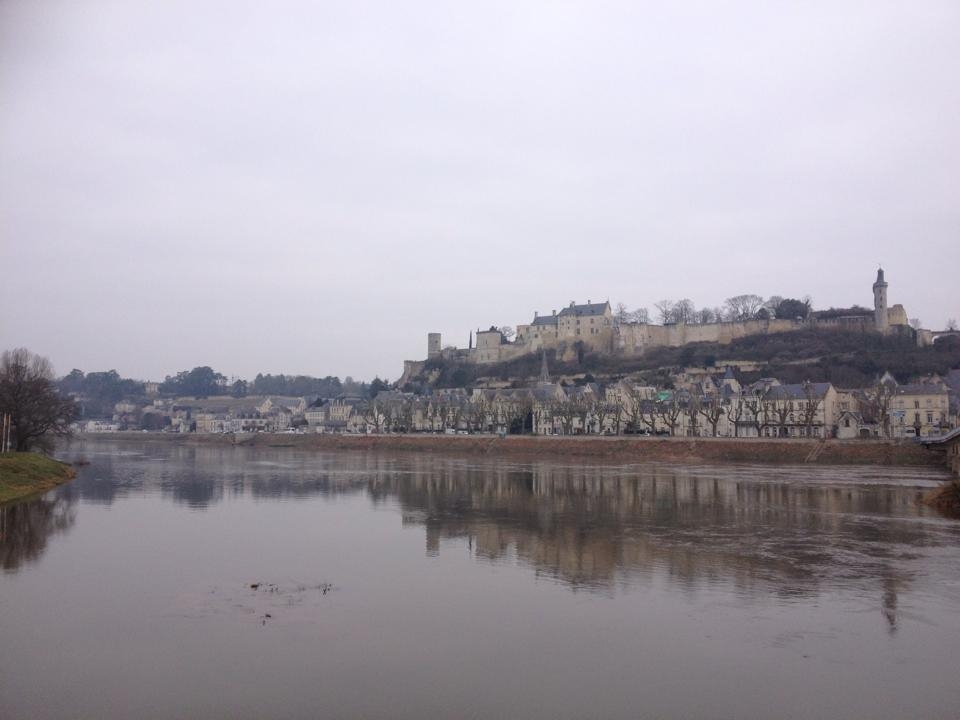
Chinon

Overall, this internship was thoroughly enjoyable, opened my mind to the possibilities offered by an academic career, and had relatively few disadvantages. Obviously an interest in the literature of the French Renaissance was essential and, having spent so many of my waking hours editing 16th Century French, I now often find myself spelling like a Renaissance person, although this is easily rectified. This kind of internship might not be suitable for someone who would prefer to be with lots of people their own age. I enjoy spending time with people older than me, so being the youngest in the office and the centre itself didn’t phase me, but it might not be for you if this would bother you. If there is somewhere you would really like to work but they don’t seem to offer internships, I would always suggest sending that speculative letter…you never know where that might take you!