Tag Archives: Competitions

A German Classic Prize 2026

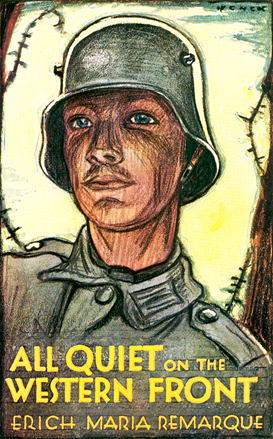
The Oxford German Network are delighted to announce the launch of this year’s ‘A German Classic’- our annual essay competition for sixth-form students. This year we would like to invite you to read with the novel All Quiet on the Western Front by Erich Maria Remarque’s (1898 – 1970), regarded by some as one of the greatest (anti-) war novels of all time.

We have put together a free study pack, including a set of multimedia materials, that will help you delve into this fascinating text. We will guide you through topics ranging from the novel’s first person narrator Paul Bäumer, to depictions of nature and a disconnect between a younger and an older generation.

We also encourage all students interested in entering the competition to sign up for a free study pack (including the physical book in both German and English) by 12 noon on 1st July via this link.

Up to three prizes will be awarded: For the essay competition, we will award a first prize of £500, a second prize of £300, and a third prize of £100 (Prizes may be awarded jointly, in which case the prize money will be split). Prizes will only be awarded if work is of sufficient merit. All entrants will receive a Prize Certificate or a Certificate of Participation.

All details about eligibility, study packs, essay questions, submission, judging criteria and more, can be found here.

The deadline for submission is 12 noon on Wednesday 9th September 2026.

If you have any questions, please email the Prize Coordinator Marlene Schilling at germanclassic@mod-langs.ox.ac.uk.

2026 Flash Fiction Competitions: The results

In December 2025, we launched our annual Flash Fiction competitions, which closed at the end of March. The competitions were open to students in Years 7 to 13, who were tasked with writing a short story of no more than 100 words in French, German and/or Spanish.

We had an incredible response, with entries coming in from all areas across the country! In total, we received over 1100 submissions across the three languages!

We would like to thank everyone who entered the competitions and commend you all for your hard work and creativity in writing a piece of fiction in a different language. This is a challenging exercise, and a significant achievement – congratulations all!

We are delighted to be able to announce the winners, runners up, and highly commended entries for each language below. We will be publishing the stories here on the blog over the summer so you can read them for yourselves.

French

In the Years 7-9 category, the winner is Cindy Li. The runners-up are Esme Pritchard and Shanzeh Masood.

The judges also identified the following entrants as highly commended: Ema Danileviciute; Mahek Amjad; Elisabetta Margherita Federici; Heritage Agbaje; Anah Imran; Iqra Zaheen; Veer Khanna; Eva Madan; Ayaan Banerjee; and Kimberley Woollard.

In the Years 10-11 category, the winner is Ranvir Sharma. The runners-up are Joseph Nebel and Honorée Wallis.

The judges also identified the following entrants as highly commended: Nandana Dhanabal; Henry Bodal Hansen; Myrtle  Mitchell; Yakshita Ramdhony; Victoria Wang; Chloe Shin; Djihane Ounissi; Aarush Lala; Aadi Jhawar; and Jack Bolton.

In the Years 12-13 category, the winner is Julia Lee. The runners-up are Salome Gvindadze and Francesca Bardou.

The judges also identified the following entrants as highly commended: Isla Thurlow; Jude Shalaby; Ines Amraoui; Isabelle Lake; Erin Grimsey; Alexander   Andrews; Caterina Ciniselli; Sherisa Johnson Rock; Henrietta Coningsby; and Sophie Agmen-Smith.

The French judging panel commented the following about all the entries:

We have been really impressed by the inventiveness, courage, and linguistic flair shown by this year’s Flash Fiction Competition entrants. The winners, runners up, and commended entries demonstrated imagination, advanced vocabulary, and precise grammar to craft engaging, moving, or suspenseful narratives, all within the limits of 100 words.

We encountered a crime-fighting guinea pig, a rebellious swarm of insects, time capsules, apocalypses, many Mona Lisas, croissants, Monet’s garden, sentient bacteria, Nemo’s adventures abroad, talking teddy bears, battlefields both metaphoric and real, acrobats, celebrity frogs, airport encounters, surprise birthday cakes, atmospheric descriptions of the moon, and divinely ordained bins.

Your entries were a pleasure to read, and we are delighted to commend each one of you for your hard work and creativity. Our warmest congratulations to everyone for taking part! 

German

In the Years 7-9 category, the winner is Rynad Mohudeen. The runners-up are Heritage Agbaje and Sophia Pfrang.

The judges also identified the following entrants as highly commended: Donald Kuhn; Eva Monica Buckingham; Eva Davies; Habibur Kazi; Kayden Jace Miraflor; Kenji Ronan; Lili May Kuhn; Muhammad Anwaar Ul Haq; Thomas Lawrance; and Vakish Indrajith.

In the Years 10-11 category, the winner is Mariia Slobodyanyuk. The runners-up are Amelia Sinclair and Anonymous.

The judges also identified the following entrants as highly commended: Ananya Patrick; Ananya Subramonian; Ariel Xu; Eleanor Ziegler-Tan; Elsa Rauschenbach; Eva Howells; Evelyn Roberts; Flora Boney; India Davie-Thornhill; and Luca Goolamali.

In the Years 12-13 category, the winner is Leah Holmes. The runners-up are Edith Taussig and Uma Ahluwalia.

The judges also identified the following entrants as highly commended: Alexander Howell; Alexandra Hampton; Ayaan Jilani; Charlotte Kenyon; Chloe Louet; Elisabeth Tillett; Ellis Underwood; Florence Datta; Isabella Young; and Tarannum Jayaswal.

The German judging panel commented the following about all the entries:

We were delighted to have received so many entries across a range of topics. Some stories led us into mystical realms and fairy-tale-like settings, while others offered new dimensions and dystopian glimpses at a future where robots and AI had taken over. At heart of all these often quite poetic stories was a deep emotional connection with the world, encompassing questions around the self and relationships with others, memories, hopes and dreams as well as the perspectives of animals. It was clear to see many entrants thinking carefully about the vocabulary and grammar structures they had been learning, and about how they could take risks with these to creative, poignant, or amusing effect. We found it heartening to see so many young Germanists engaging with fiction in such a palpably enthusiastic way, asking themselves how we narrate, how we connect with each other, and what we learn about German – and ourselves – in the process.

Spanish

In the Years 7-9 category, the winner is Alessia Jain. The runners-up are Rishaan Sharma and Lilac Eis.

The judges also identified the following entrants as highly commended: Lucio Angeli Stella; Anonymous; Anonymous; Ashvy Sasikumar; Ekamjot Kaur; Denis Rodriguez Sanmartin; Anonymous; Tara Hayhoe; and Ruby Ayetigbo.

In the Years 10-11 category, the winner is Alfie Bailey. The runners-up are Amelie Rahman and Maya Maimaris.

The judges also identified the following entrants as highly commended: Jemima Tapp; Clothilde Salord; Alexandros Pallett; Jasmin Leong; Malena Sievers Mayo; Maria Chowdhory; Sophie Blundell; Siena Gurjar; Anagha Abrol; and Aisha Balde.

In the Years 12-13 category, the winner is Lila Rock. The runners-up are Celia Guasch Bloomer and Nicole Kilby.

The judges also identified the following entrants as highly commended: Katerina Garcia; Olivia Slater; Paul Olusegun; Richard Hall; Sienna O’Keefe; Alexa Lewis-Banks; Ava Spillane; Anonymous; Bella Trafford-Barton; and Charles Romeu-Villalobos.

The Spanish judging panel commented the following about all the entries:

As in previous years, there were lots of very interestingly organized and thought-provoking entries. This year, we noticed quite a different at the level of theme – some were very funny, others, more sobering reflections on modern life. It was very difficult to decide the overall winners and runners up and there were a number of other stories that we would have liked to have commended too. The level of the Spanish seemed a little stronger than in previous years, which is testament to your hard work. ¡Seguid estudiando y escribiendo!

Huge congratulations everyone – you should be very proud of your achievement!

German Olympiad Round 2

Following our post about Oxford’s annual German Olympiad, we are delighted to announce that Round 2 of the Competition is now open for entries!

There are three new exciting tasks for pupils in Years 8 to 12, as well as our prestigious Camden House Book Proposal for postgraduates and early-career researchers at a UK university.

To clarify: Round 1 and Round 2 are separate competitions. You may enter both, but do not need to have entered Round 1 in order to enter Round 2.

Entries should be submitted via the online form. Please note that we cannot accept postal or email entries. Entries received by post, by email or after the deadline will not be considered.

The deadline to submit your entries is 26 March 2026 at 12 noon.

Results will be published on our website in June 2026. Winners and runners-up will be contacted by email and invited to a prize-giving ceremony at the Bodleian Library, University of Oxford, in June 2026.

 If you have any questions please contact the Olympiad Coordinator at  olympiad@mod-langs.ox.ac.uk.

P.S. There’s still time to also enter Round 1 of the Oxford German Olympiad 2026!

2026 Flash Fiction Competitions now open!

The Faculty of Medieval and Modern Languages is delighted to announce that this year’s Flash Fiction Competitions in French, Spanish and German are now open!

Our annual Flash Fiction Competitions invite secondary school pupils to submit a complete story of no more than 100 words, in French, Spanish, or German, for the chance to win up to £100.

Our 2026 Competition marks the first year in which German will be included and we’re excited to be expanding the Competition after many successful years!

Entries are judged by a panel of academics who are primarily looking for creativity, imagination and narrative flair, as well as linguistic accuracy. Pupils’ language skills will be considered in the context of their age and year group: in other words, we will not expect younger pupils to compete against older pupils linguistically. Each language competition is divided into three age categories:

  • Years 7-9 (ages 11-14)
  • Years 10-11 (ages 14-16)
  • Years 12-13 (ages 16-18)

The judges will award a top prize of £100, as well as prizes of £50 to a maximum of two runners up, in each category. Certificates will also be awarded to pupils who have been highly commended by our judges. Results as well as the winning, runner up, and highly commended stories will be published her on our blog if entrants give us permission to do so.

More information and links to the submission forms can be found on our website. Pupils may only submit one story per language but are welcome to submit a story in two or three languages if they would like to. For some inspiration, they can have a look at last year’s winning entries in French and Spanish.

Please note that pupils must enter the competition themselves: teachers cannot enter on their behalf for reasons of GDPR compliance.

FAQs can be found here and any other questions can be directed to schools.liaison@mod-langs.ox.ac.uk.

The submission deadline is 12 noon on 31 March 2026.

Bonne chance à tous! ¡Buena suerte a todos! Viel Glück euch allen!

Anthea Bell Prize for Young Translators

The 2025-26 edition of the Anthea Bell for Young Translators has commenced!

The Queen’s College Translation Exchange launched the Anthea Bell Prize for Young Translators in 2020. The competition is inspired by the life and work of the great translator Anthea Bell. It aims to promote language learning across the UK and to inspire creativity in the classroom. By providing teachers with the tools they need to bring translation to life, they hope to motivate more pupils to study modern foreign languages throughout their time at school and beyond.

The Anthea Bell Prize is free to enter and open to pupils aged 11-18 at all schools across the UK. The Prize currently offers French (into Welsh and English), German, Italian, Mandarin, Russian and Spanish.

The Translation Exchange wanted to make sure that this wasn’t a one-off event, but something that could be integrated into the year’s teaching. Before entering the competition, we invite you to prepare your students using their free teaching resources. Registered teachers receive teaching packs throughout the year, in the build up to the competition.

Register here to receive updates about the Prize, as well as access to free creative translation teaching resources.

The 2025-2026 Prize launched on 19 September 2025, in time for European Day of Languages (26 September) and International Translation Day (30 September). The 2025-2026 competition will run from 2 February to 27 March 2026. You can find the names of the 2024-2025 competition winners, runners-up and commendees here.

Information about the Anthea Bell Prize for Schools in Wales is also available in Welsh.

The Anthea Bell Prize left me wanting to delve further into the world of translation and the possibilities that come with it.

– Year 12 student participant, 2024 competition

Find more information and resources via the Translation Exchange website here.

GCHQ Christmas Challenge 2025

It’s back! Get ready to solve the latest GCHQ puzzles and brainteasers, as the Christmas Challenge returns on Wednesday 10 December!

Photo by Eyestetix Studio on Unsplash

The Christmas Challenge is designed by GCHQ’s own codebreakers to give your brain a festive workout. Packed with fiendish puzzles and brainteasers, the Challenge inspires school students aged 11-18 to think creatively, work together, and discover the skills they might need to become a spy.  

The puzzles aren’t meant to be solved alone – students will need to work together, each bringing their unique perspective to the challenge. At GCHQ, we believe the right mix of minds means we can solve seemingly impossible problems. 

Schools can sign up from now using the GCHQ Christmas Challenge sign up form.

Teachers who sign up early will get: 

  • Exclusive access to the challenge the day before the public launch 
  • Bonus lesson planning materials, to help their pupils prepare and learn more about GCHQ. 

The challenge goes live to the public on Wednesday 10 December.

Reckon you’ve got what it takes? 

OXFORD GERMAN OLYMPIAD 2026

The Oxford German Network have launched the 13th edition of its annual German Olympiad! The competition will run between now and March 2026 with winners being announced in the summer.

This year’s topic is “Immer unterwegs – Mobilität und Reiselust“. 

There are a variety of different challenges aimed at pupils in Years 5 and 6 all the way to Years 12 and 13. Some are for individuals to enter, others are aimed at groups. There is even a taster competition for pupils who have never studied German before! From creating maps and cartoons, to recording a podcast, there’s something for everyone!

Take a look at the Olympiad website for further practical information and more details about the tasks.

The closing date for all entries is Thursday 12 March 2026. Any questions can be directed to the Olympiad Coordinator, Eva, at: olympiad@mod-langs-ox.ac.uk

We are looking forward to receiving lots of entries!

GCHQ events and activities for schools

Our friends at GCHQ have lots of exciting events and activities planned for schools over the next couple of months… more details below!

GCHQ Language Outreach Virtual Session

Date: Tuesday 21 October, 10:30-11:30

Registration link: GCHQ Virtual Language Outreach Autumn 2025: Session dates and times

Description: Aimed at Year 9 students, during these one-hour sessions pupils will hear about the importance of languages, GCHQ, and the work our Language Analysts do, and will be given the opportunity to ask questions. They will then move on to a scenario challenge in a language they are currently studying (French, German or Spanish).

GCHQ National Language Competition

Date: 17-21 November 2025

Registration link: The GCHQ National Language Competition – GCHQ.GOV.UK

Description: We are pleased to announce the National Language Competition (NLC) will be returning in November this year. The NLC is open to Year 9 [England/Wales] / Year 10 [Northern Ireland] / S2 [Scotland] students, competing in teams of up to four. There is no maximum number of team entries per school. The NLC challenges vary in difficulty, require no prior language knowledge, and are worth varying amounts of points. We have an exciting new interactive format for your students to take on this year as well.

You can read all about the NLC 2024 winners visit to GCHQ Cheltenham on the GCHQ website.

****

Questions about both opportunities should be directed to languageoutreach@gchq.gov.uk.

SPANISH FLASH FICTION 2025: THE HIGHLY COMMENDED ENTRIES (Y12-13)

Following the publication of the winning and runner up entries, we are excited to present the highly commended entries for the Year 12-13 category of this year’s Spanish Flash Fiction competition!

A huge well done to all of our highly commended entrants!

****

El tren estremeció, y un trozo de pintura se desprende del muro; cae lentamente, revelando una capa más antigua, pintada hace años por empresarios entusiastas. Un hombre cruza el andén y pisa el fragmento. Se deshace al instante, dejando solo polvo y una mancha desnuda. Otro tren pasa rápidamente, desprendiendo más. Pronto, esta estación desaparecerá, y nadie recordará sus paredes blancas. Los ladrillos rojos resurgirán tras décadas para contar historias olvidadas, mientras la pintura blanca se desprende, capa por capa. Por ahora, un hombre camina hacia la salida, con un pedazo del pasado pegado a la suela de su zapato.

– Heloise Morel, Year 12

¿Sabes como el cuerpo humano elimina los virus que nos matan?

Con una fiebre.

El cuerpo se calienta, lentamente matando, deformando y destruyendo los patógenos que nos afecta. El calor abrasador lo limpia de la basura tóxica y odiosa. Es el ultimo sistema desperado de defensa del cuerpo, y si no funciona, morimos.           

¿Y ahora te pregunto, porque nuestro planeta se calienta?

– Mahi Sainani, Year 12

Cuando los ábroles bailaron

Ese día, conocí el sol. Debajo de las acacias que bordeaban el camino a mi escuela. El cielo bostezó, anunciando también que la guerra terminó. Los aplausos del pueblo cayeron en una comunión armónica con la canción del cálao decorado.

“Tumeona mkono ya Bwana! Imba!Imba!” Cantaron…

Corrí hacia Mama. Corrí a casa. Corriendo. Corriendo, sonriendo, orando y llorando  a través los muchos morados de los jacarandás; porque las explosiones ya no paralizaron mis extremidades. Ese fue el día –

Ese será el día que el viento ordenará a los ábroles bailar.

– Melissa Muthama, Year 12

La Búsqueda (The Search)

Buscamos respuestas en un mar insondable de palabras. Cada interrogante nos hunde más, pero seguimos avanzando, anhelando algo que ni siquiera sabemos nombrar. “A mal tiempo, buena cara,” me enseñó mi abuela, y ahora lo comprendo. La fe es como un río que nunca para de fluir, siempre presente, inquebrantable, un faro de luz en medio de la tormenta. Es la estructura que nunca cae, la esperanza que ilumina el alma. En ella encontramos la verdadera alegría, una alegría que otros anhelan, pero que solo la fe puede otorgar.

– Monica Singh, Year 12

Gato de la Tempestad

Se dice que eres bendito si lo has conocido. Todos oyen hablar de él, sienten su cola de viento gélido, ven su pelaje de nubes tupidas. Cuando llega la tempestad, llega la mirada dorada del gato. La luna se parte en dos. Dos ojos te contemplan. Parpadean una vez. Despacio, lánguidamente. La niebla que te rodea estrecha su abrazo y sientes cómo el aire húmedo se convierte en suave pelaje. Sin aviso, el cielo se llena de luz blanco, rociando como azúcar derramado sobre una encimera. Rayos! No te das cuenta de que se va hasta que es demasiado tarde.

– Thea Spackman, Year 12

El mundo ha sido infectado con una extraña enfermedad, una plaga que nos ha adormecido a todos. Nuestros oídos permanecen, pero son sordos a los gritos de los que sufren. No oímos más que el ruido de nuestra indiferencia. Nuestros ojos existen, pero son ciegos a la agonía grabada en las calles. Nuestros corazones laten, pero han olvidado cómo sentirse. La esperanza se marchita bajo la sombra de la apatía. Sin embargo, en medio del silencio, se eleva una voz – desafía a los sordos a escuchar, a los ciegos a mirar y a los desalmados a sentir una vez más.

– Yuet Ching Gabrielle Kam, Year12

Reflejo

A la niña se le cae el peluche. Lo recojo meticulosamente, concienzuda de que lo que para mí es un muñeco banal, impasible, para ella es un confidente sin igual. Al acercarle el amiguito, nuestros dedos se entrelazan, y observo cómo acaricia el pelaje del animalejo, irreconocible de tantos mimos, concediendo libremente el cariño que aprendí a mantener bajo llave. Me ofrece un gesto de oreja a oreja, y me avergüenzo al devolver una mueca mecánica, ensayada. Pero por un segundo, viendo mis ojos vacíos de preocupación alguna, se me escapa una sonrisa que aprendí a contener cuando era niña.

– Samiah Iqbal Kausar, Year 12

La muerte es una cosa intangible, 

la tuya incluso más incomprehensible. 

En los pasillos de un convento francés, 

me imagino por un momento que puedo oír 

tu risa,

esta alegría infecciosa que tenés— 

pero cuando volteo veo solo 

el viento, 

                                    una cortina blanca que susurra,

me doy cuenta de que tenés es 

tenías.

Tu sonrisa es una cosa de fantasías 

y tus pasos solo ecos, cosas que oigo 

solo en los picos secos de Argentina, 

los que mirabas con maravilla 

cuando eras una chica; 

ahora nada más que un fantasma 

rondando las tumbas galeses, 

una ausencia que nada explica.

– Luke Roberts, Year 13

La Matasteis
Quiero volver a casa, pero no existe. Me la quitaron, me sacaron mientras se empujaban hacia adentro. Ahora soy fantasma, floto fuera de mi cuerpo. Sigo encadenada a la Tierra; sus manos son raíces que envuelven los tobillos y me arrastran bajo el magma. Quemaron mi piel. Me hicieron negra, lo hicieron porque era negra. Además yo era mujer.
Fue por eso también. Traté de gritar; tiraron de la cuerda roja de mi voz. Cuelga en el aire, sangrienta y magullada como el cuerpo que ya no es mi hogar. ¿Por qué me odian cuando sangro como ellos? Cuando sangré.

– Gagani Katugampala, Year 12

Palabras preciosas

No sé qué escribir. Es como si mi mente fuera un guion de pensamientos constantes. Cada decisión que tomo, una voz al fondo, haciéndome dudar de mí misma.

¿Qué tal si no es lo suficiente creativo, si parece una tontería?

¿Cómo puedo elegir las palabras adecuadas, cuando hay tantas, como granos de arena, cada una única? La marea sigue subiendo para llevármelas, fuera de mi alcance.

¿Qué tal si simplemente no intentas buscar, por si las moscas?

Pero el mundo es tan vasto; podría haber algunos diamantes, escondidos en alguna playa, esperando a que alguien los encuentre.

Empiezo a escribir…

– Amelie Pugsley, Year 12

FRENCH FLASH FICTION 2025: THE HIGHLY COMMENDED ENTRIES (Y12-13)

Following the publication of the winning and runner up entries, we are excited to present the highly commended entries for the Year 12-13 categories of this year’s French Flash Fiction competition!

A huge well done to all of our highly commended entrants!

****

La bise

La panique fleurit dans mon estomac. J’essayais désespérément de me souvenir de ce que Madame avait dit ; il fallait que je paraisse français. Était-ce la gauche ou la droite d’abord ? Deux, trois ou quatre ? Je frappai à la porte, chaque bruit sourd étant un glas qui exacerbait ma peur.
« Bonjour ! Il était tout ensoleillé et souriant. J’ai respiré, soulagée, et je me suis penchée, tout irait bien enfin…
Un silence vide. Un rire gênant. Il a tendu la main. Oh, mon Dieu. La France et ses salutations incompréhensibles. La bise n’est pas une blague.

– Sofia McAllister, Year 12

Le petit fifre

L’oiseau regarde d’en haut, il s’envole au-dessus des troupes en marche. L’armée sur le terrain défile en cadence, chaque pas avec le battement d’un tambour. Le petit fifre joue en tête de la bande, l’esprit fixé sur ses doigts. Son rythme agile erre à travers la foule, soulevant la botte de chaque soldat un peu plus haut. Le petit fifre heurte une pierre, sa jambe se dérobe et son fifre échappe à son emprise – mais la mélodie du fifre sautille encore dans l’air. Elle sonne aux oreilles des soldats et danse vers le haut pour rejoindre l’oiseau en vol.

– Dominica Kay-Shuttleworth, Year 12

Dans les ruelles sinueuses de Montreval, une brume spectrale s’élevait, tissant des filaments d’ombre entre les pavés moussus. Léandre, un antiquaire aux mains tâchées d’encre, découvrit un grimoire scellé d’un sceau d’obsidienne. Intrigué, il brisa le cachet d’un geste fébrile.

 À peine eut-il murmuré les premières lignes que la pièce se métamorphosa : les murs suintèrent un encre abyssale, et une silhouette éthérée s’extirpa des pages, murmurant des secrets interdits. Trop tard. Le livre ne contenait pas un savoir ancien, mais une malédiction séculaire. Un cri déchira la nuit, et Montreval sombra dans l’oubli.

– Eddie Henderson, Year 12

Les derniers moments à la mort d’un cygne

La harpe étincelante m’entoure, la mélodie du violoncelle tournoyant par-dessus ma peau comme de l’eau, alors que mes bras tourbillonnent en haut, en bas. Une arabesque. J’imagine que la musique soit la seule chose qui me soutient, qui permet à mon cœur de continuer. Je baisse la tête, et-

‘Excusez-moi Madame, il ne faut pas être ici.’

Je lève les yeux. Je vois la salle de concert vacante, les chaises poussiéreuses. Toute-seule. Mes derniers souffles résonnent sous forme de la mélodie ; la mort de mon cygne.

‘Pardon’, je réponds, ‘j’ai dû me perdre.’

– Eva Saunders, Year 12

Je me souviens d’être assis devant le grand écran, me cachant de ma mère quand j’étais enfant. Et comment je me faufilais dans le cinéma avec les quelques francs que je pouvais rassembler chez nous, glissant devant le guichet comme une ombre. La lumière vacillait sur nos visages juvéniles tandis que la voix d’Arletty résonnait dans nos têtes, tissant des rêves d’un monde au-delà de la guerre. Dans ces salles obscures, nous oublions les rations, les couvre-feux, la peur. C’était notre rébellion. Un acte de défi contre le chaos de la guerre, un moment de magie volée dans un monde brisé.

– Preona Mohan, Year 12

L’Océan en Moi

Les chirurgiens m’ont ouverte.
Pas de cœur. Pas de poumons. Seulement un océan. Les vagues se brisaient contre mes côtes, un phare clignotait près de ma colonne vertébrale. Un navire voguait entre mes veines.
« Elle n’est… pas humaine », murmura l’un d’eux.
Je me suis redressée, les points de suture défaits. La marée montait, déversant de l’eau salée sur le sol.
« Je vous l’avais dit », ai-je dit, d’une voix résonnant comme une tempête. « Je n’étais pas faite pour ce monde. »
Puis le courant m’entraîna, au-delà des os, au-delà du souffle, jusqu’à ce que je me dissolve dans les vagues.
Le navire a poursuivi sa route.

– Gia Namoa, Year 12

Jardins crépusculaires, jardins qui rêvent…

jardins où l’espoir me grimpe à la gorge,

ta pommette un sacrilège peint en

lilas aqueux dans la lumière déclinante

du jour mourant; jardins de chaleur

essoufflé et tremblant.

Les étoiles s’affaissent dans

le ciel cobalt, elles détournent les yeux

de ce moment qu’elles ont vu avant,

ce moment où ta main pèse entre nous

comme une chose morte, tes os étranges

et spectrales dans les reflections pâles

des platanes; ce moment où je pense

que tu vas m’embrasser, 

que tu vas dire les mots

que tu ne diras jamais.

– Luke Roberts, Year 13

La Notre Dame

Je vous tois, les meufs et les keums, ils me regardent tous. Ce matin, Paris a le cafard, ça se voit. Elle attend son keum qui lui a posé un lapin – quel dommage. Elle se creuse la tête, elle semble vénère: “Suis-j’ouf ou est-il chelou?” Quand on parle du loup, on ne voit la queue. Un mec apparait, il porte un bouquet. Elle est si heureuse qu’elle a presque tombé dans les pommes. J’en ai vu des cœurs d’artichaut et ces événements font toujours chaud aux pierres.

– Amelia Richardson, Year 12

Je la cherche dans les souvenirs, dans les vieux albums qui se cachent, capturés par la poussière.
Je la vois dans les gens que je rencontre, et quand je vois la femme devant moi, je me souviens de l’infirmière distante qui tenait ma petite main fragile dans la sienne et qui m’emmenait chez nous.
Elle était une femme forte avec un cœur faible et en difficulté, mais elle a aidé des centaines de nécessiteux, juste pour que, pendant la dernière scène de sa vie bleue, ils disent qu’ils ne pouvaient pas l’aider.
Son cœur empoisonné, son corps fatigué, ses cheveux dorés qui tombent—tout disparu.
Et pourtant, je la cherche.

– Andreea-Denisa Taranu, Year 12

Jouant ses gammes

Initialement, ses gammes sont ternes, plates; ses doigts, raides et rigides. Bien qu’elle lutte pour les contrôler, ils accomplissent leurs mutineries mesquines. Les notes ricochent sur les murs. Le métronome marche sans cesse. Après mille et un tics et encore plus d’erreurs, elle commence à se perdre dans la monotonie apaisante de frapper les touches encore et encore.

Do majeur, un collier éclatant de perles, comme le sourire qu’elle montre le monde. Fa♯ mineur, legato, tombant délicatement comme les larmes qu’elle ne versera pas. En les jouant, elle ressent un plaisir simple. Une gamme, au moins, est facile à fixer.

– Annabelle Lavin, Year 12