On the blog this week, second year French and History student, Eleanor, talks about her internship in Mauritius!
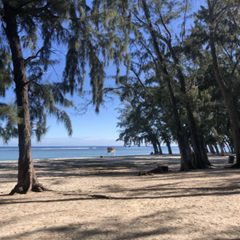
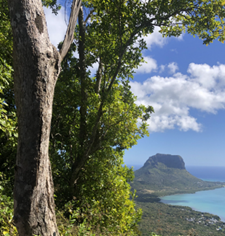
This summer, I completed an internship on the beautiful island Mauritius – a wonderful melting pot of different languages and cultures. During Trinity term (the final term of the Oxford year), I, like many other students, was scrolling through Oxford’s careers website to find a meaningful way to spend my summer. At Oxford, we’re really lucky to have access to hundreds of summer internship opportunities, and a supportive careers service who want to help build your professional skills. I came across an advertisement for a children’s NGO, M-Kids Association, who were looking for Humanitarian Interns to come and help with the management of the charity. The advertisement specified that French-speakers were desirable, which also motivated me to apply. As a French student, I am always on the lookout for any chance to use and improve my language skills – especially in a non-European environment. Also having years of experience working with children and volunteering under my belt, I decided to apply.
After receiving my offer, I contacted the Oxford careers service to discuss funding options. Flights, accommodation, travel to the airport…Mauritius was not going to be cheap. However, I am very fortunate to be a receiver of Oxford’s Crankstart scholarship – a bursary which awards up to £3,200 to low-income students for unpaid or poorly paid internships. Oxford’s generous funding made this internship possible, which I am deeply grateful for.
I was initially really worried about travelling so far. I’d never been out of Europe alone, so a long-haul flight with a layover felt daunting. To calm my nerves, I spoke to members of staff at the airport, and asked them for help with checking in my bags correctly, finding the departure lounges and finding my seats on the planes. They were all more than happy to help me, which made me feel a lot more comfortable.
The charity is located near Port Louis, the capital of the country. Upon my arrival, I was instantly struck by the use of different languages. Officially, three languages are spoken in Mauritius: Créole (the most widespread), French and English. Out of French and English, my colleagues and the children I worked with tended to be most comfortable in French.
I was given my work tasks the day after arriving. I would be working with another Oxford intern to research the Mauritian curriculum and attainment levels to design a new programme of remedial classes for children in the local area. The other intern and I decided to focus on teaching maths and English, and we created engaging games to keep the children interested. We focussed on reinforcing the foundations of these subjects, such as common vocabulary in English and basic multiplication in maths.
The first twelve weeks of our programme would be a trial period to assess whether our games were working well. This included ‘maths hopscotch’ and drawing pictures to match up with English words. I taught mainly in French, but also encouraged some of the older children to speak English. This meant that my lessons were often a Franglais mix!
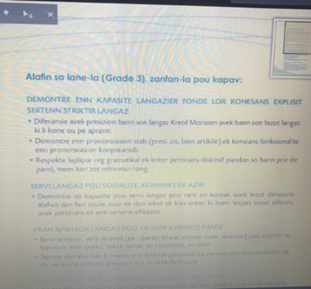
Any language learner would find working in Mauritius absolutely fascinating. My colleagues at the charity taught me basic phrases in Créole, such as ‘Ki manyèr ?’, which means ‘how are you?’. Tracking the developments in Mauritian Créole from French (for example, the phrase ‘Ki manyèr’ has developed from the French phrase ‘de quelle manière ?’) made me fully appreciate just how complex language can be. Language is always changing, and the way that languages are used today has been formed through historical events, such as colonisation
One of the key projects of the association is their ‘Share a Meal’ programme, in which they give free, hot and healthy meals to local children from low-income households. I really enjoyed taking part in this programme, as I felt fully integrated into Mauritian culture. The adults and children all prayed and ate together, and we carried out the Sunnah practice of sitting down to eat. I felt really lucky to be part of such a welcoming community and enjoyed learning from the children about their religious practices.
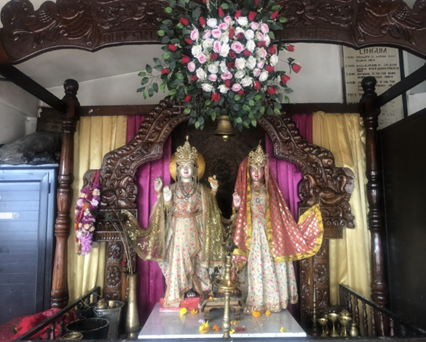
All religions exist in harmony in Mauritius. I visited Hindu temples, cathedrals and mosques whilst there. The colleagues at the charity were primarily Muslim, but they were still excited to show us other important places of worship. I really admired the respect between religions and how this makes up such a bright and interesting culture.
The experiences I’ve described make up only a fraction of my time in Mauritius – participating in an MMA lesson in Créole, meeting the British High-Commissioner to Mauritius and travelling widely were also highlights. My time here was one I will never forget, and my understanding of and love for other languages and cultures has grown significantly.
In late November, Oxford welcomed the writer Ari Gautier and his translator into English, Prof. Blake Smith, for a discussion about Francophone Indian Literature and about Gautier’s writing in particular. Part of the ‘World Literatures’ strand of the Creative Multilingualism programme, this event was convened by Prof. Jane Hiddleston and Sheela Mahadevan. Here we reflect on a few highlights…
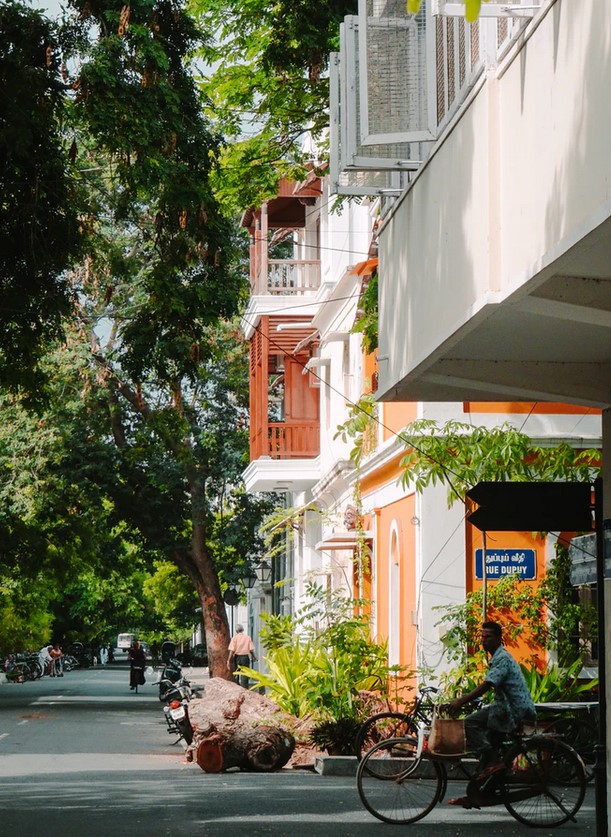
Currently based in Oslo, Ari Gautier spent his childhood in
former French colony Pondichéry, India. He is the author of Carnet Secret de Lakshmi and Le Thinnai, two novels which creatively
intersperse Tamil, Hindi, Créole and English with French, reflecting the
multilingual identities of those living in Pondichéry. His works give an
insight into the impact of the French rule on the lives of Pondichéry citizens,
their constantly vacillating identities, the multicultural aspect of the city,
the Indian caste system, and the history of Pondichéry.
The ‘World Literatures’ strand of Creative Multilingualism
is interested in texts where multiple languages brush up against one another,
prompting questions about the boundaries of what a language is. This research
wants to explore how worldliness and cultural transfer is present within a text
from the moment of its inception, and how multilingualism speaks to
multiculturalism. The research aims to expose interactions between different
languages within a text, not just by examining the different languages in which
a text is written, but also seeking out the traces of other languages through
allusions to them or even by the notable absence of certain languages in a
text. Gautier’s novels, with their interspersing of at least five languages, therefore
seem like a perfect fit.
Prof. Smith gave a useful overview of the status of Francophone Indian Literature. To begin with, he acknowledged that it’s not necessarily something the general English reader will be aware of. When we think of Francophonie, we perhaps automatically think of certain countries in West Africa, Canada, or French-speaking East Asia or Oceania. However, France had a colonial presence in India from the seventeenth century. That said, Francophone Indian Literature was only really published from the late nineteenth century onwards and, during the twentieth century, French acted as a secondary language for many writers who were primarily writing in other languages. Academic interest in the French colonial legacy within Indian writing is fairly recent, and Prof. Smith recommended an anthology of Francophone Indian short stories for anyone who wishes to explore further: Écriture indienne d’expression française, edited by Vijaya Rao (Yoda Press & La Reunion par Le GERM, 2008).
The panel then turned to a discussion of how multilingualism operates within Gautier’s writing. Here is an extract from Gautier’s novel, Le Thinnai:
— Gilbert, va m’acheter un Suruttu à la boutique. Il te reste encore de la monnaie, n’est-ce pas ? Voyant Gilbert fouiller désespérément ses poches, mon père lui dit d’aller chez Karika Bhai et d’acheter un paquet de Suruttus sur son compte. — Oh, je suis à la retraite depuis une bonne dizaine d’années. J’ai fait le strict nécessaire sous les drapeaux pour pouvoir bénéficier de la retraite et je suis retourné au pays, répondit mon père après s’être allumé une cigarette. — Pourquoi vous n’y êtes pas resté ? Vous ne vous plaisiez pas en métropole ? — Ce n’est pas une question de s’y plaire ou pas. J’avais juste envie de revenir parmi les miens. Même si je m’étais fondé une famille là-bas, il me paraissait tout à fait naturel de rentrer chez moi. — Mais la France, c’est aussi chez vous ! Vous êtes citoyen français. Papa laissa échapper une bouffée de fumée ; il tapotait la cigarette sur le bord du cendrier et parut réfléchir. — Oui, je suis français. Mais je suis indien en même temps. C’est ici que je suis né, mes ancêtres sont d’ici. Mes racines sont là. Même si j’ai vécu en métropole pendant quelque temps, il m’a paru normal de rentrer chez moi. Il n’y a aucune différence entre moi et un Breton ou un Normand qui aurait envie de retourner chez lui après avoir passé du temps en dehors de sa région natale. Sauf que moi, c’est un peu plus loin… Il marqua un temps d’arrêt pour tirer une bouffée. Mais vous connaissez aussi bien que moi l’histoire de notre pays ; surtout, l’histoire de Pondichéry. Ma famille est française depuis deux générations et je fus le premier à partir en métropole. Jusqu’ici nous n’avions que le statut de Français sur les documents ; mais nous étions profondément indiens. Enfin, nous le sommes toujours. Comment pouvez-vous vous sentir français, sans avoir jamais mis les pieds dans ce pays. Mes parents viennent d’un milieu modeste et n’ont pas eu accès ni à la langue ni à la culture française. L’univers français nous était totalement étranger. La seule chose qui nous rapprochait des Européens était le culte de la religion catholique. À part ça, nous vivions dans deux mondes différents. Notre allégeance à la France se trouvait enfermée dans une vieille malle en ferraille dans l’espoir qu’un jour, un des descendants l’ouvrirait et utiliserait ce morceau de papier. Pendant longtemps, nous ne fûmes pas considérés comme citoyens français ; nous n’étions que des sujets de la nation. —Mais, toute ces années passées dans l’armée française n’ont pas su éveiller en vous un sentiment d’appartenance à ce pays ? Mon père écrasa la cigarette au fond du cendrier et se versa une nouvelle rasade. Il se leva pour aller servir le vieil homme et vint s’asseoir sur le petit thinnai. Il tenait le verre de whisky dans sa main droite et regardait les bulles de soda qui remontaient à la surface du verre. Il reprit la parole en se passant la main gauche sur les cheveux d’avant en arrière ; geste qu’il avait l’habitude de faire quand il réfléchissait longuement. — Je ne connais pas votre histoire, l’ancien, mais vous avez l’air de quelqu’un qui connaît la vie. Vivre en exil est une énorme malédiction. Certes, mon éloignement fut volontaire ; mais à mon époque, nous n’avions pas beaucoup de choix. Partir était le seul moyen d’échapper à une vie indigente. Nos parents et grands-parents qui avaient opté pour la nationalité française avaient fait de nous une génération d’immigrés dans notre pays qui était la France. Indigènes de la nation, nos vies n’ont connu que les tranchées, les coups de feu et les rations militaires. Inconscients et aveugles ignorants, nous sommes partis combattre nos frères malgaches, indochinois et algériens. À aucun moment, la notion que nous étions coupables de complicité involontaire aux massacres d’un pouvoir colonial ne nous a effleurés. Nous nous battions contre des ennemis de notre Mère patrie. Nous en étions fiers. Mais malgré notre fidélité envers elle, l’idée du retour fut plus instinctive. Après tout, nous n’étions que des indigènes des Troupes Coloniales ; la France n’a jamais été notre patrie. Cet attachement ambivalent que nous avons envers elle est une anomalie de l’histoire.
And here it is
in Prof. Smith’s English translation:
“Gilbert, go buy me a suruttu at the shop. You still have money, don’t you?” Watching Little Gilbert fumble despairingly in his pockets, my father told him to buy a suruttu from Karika Bhai, and add it to the soldier’s account. “Oh, I’ve been retired for twelve years now. I did the absolute minimum to earn my pension, and now I’m back.” My father answered, lighting a cigarette. “Why didn’t you stay? You didn’t like it in France?” “It wasn’t a question of liking it or not. I just wanted to come back to my own people. Even if I started a family there, it seemed natural to come back home.” “But France, that’s home too! You’re a French citizen.” My father exhaled a puff of smoke. He tapped the cigarette on the edge of the ashtray and seemed to think it over. “Oh, I’m French. But Indian, too. I was born here. So were my ancestors. My roots are here. And after spending some time outside their own province, even a Breton or a Norman wants to go home. It’s the same with me. But my home is a little farther… you must know the history of Pondicherry as well as I do. My family has been French for generations, but I was the first one to go to France. Until then we were just paper Frenchmen; really we were Indians. Really we still are. How can you feel French, if you’ve never set foot there? My parents came from nothing; they didn’t know French or French culture. The only thing that connected us to the Europeans was the church. Besides that, it was two different worlds.” “But all those years in the French army, didn’t they make you feel like you were part of the nation?” My father crushed his cigarette in the ashtray and poured another drink. He got up to fill the old man’s glass and sat back down. He held his whisky in his right hand, watching the soda bubbles rise to the surface. He ran his left hand through his hair, which he always did when he had to think hard about something. “I don’t know your story, old one, but you seem like you know a thing or two about life. Living in exile is a curse. Sure, I chose it, but back then there wasn’t much to choose from. Leaving was the only way out of poverty. Trenches, gunshots, and rations, that was all we knew. We fought our brothers in Madagascar, Indochina and Algeria. We never thought we might be guilty of anything. We felt nothing, saw nothing, understood nothing. We fought the enemies of the motherland. We were proud. But in spite of our faithful service, we wanted to come home. We were just colonial soldiers. France was never our country. What we had with it was just a quirk of history.”
The question
of French culture and how far it can coexist alongside an Indian identity is
central to this passage, a fact that is emphasised and complicated by the fact
that the novel is written largely in French. But, of course, this passage is
not entirely in French. What about that reference to a suruttu? A suruttu is a
cigar, what we would call in English a ‘cheroot’, from the French cheroute, which itself comes from the
Tamil curuttu/churuttu/shuruttu/suruttu. In this way, a single word, referring
to an everyday item, can illuminate a complicated multilingual interaction.
Similarly
the reference to the Tamil word thinnai
is an example of what we might think of as an untranslatable word. A thinnai is
a raised platform built adjacent to the main entrance of a house. It is common
in Tamil Nadu, a state in the south of India. Traditionally, it was a place
where elders could rest to talk to neighbours and friends, and where strangers
could stop for respite when passing through the town. Thus, in a text written
mostly in French we see how a reference to another language can evoke a whole
set of cultural values – hospitality, community, conversation. The porous
borders between languages can facilitate and reveal the coexistence of multiple
cultures.
Gautier
talked about his own multilingual background, explaining that he spoke French
with his father but Tamil with his uncle. Growing up in Pondicherry, he said
that every street seemed to have its own language and he moved around a lot:
his universe evolved with languages. When asked about the fact that his first
novel included footnotes to explain Tamil words to non-Tamil speakers, but his
second novel did not, Gautier confirmed that this was a deliberate decision.
Footnotes could be seen as a form of linguistic colonisation – an attempt to
make the Tamil words fit more comfortably within a French-language text. By
deciding not to explain the Tamil in his second novel, Gautier refused to
compromise Tamil. He said that using footnotes made him feel alien to his own
language.
The wide-ranging discussion moved on to cover many aspects of Gautier’s writing, including its cinematic quality, the role of received memory in constructing his narratives and the question of mythology. While we don’t have room to touch on all those topics here, we will end by mentioning one further question that was raised, and which again highlights the porous potentiality of multilingualism: the use of Creole in Gautier’s novels.
Le Thinnai includes a character called
Lourdes, a servant who speaks in Creole. One of the important roles Creole
plays in a novel written largely in French is to recognise a community that has
been overlooked. Gautier explained that in Pondicherry there is a problematic
hierarchy between what is known as ‘haut-créole’ and ‘bas-créole’. Someone who
is ‘haut-créole’ is of mixed French and Indian descent, whereas someone who is ‘bas-créole’
is not of French descent but nonetheless speaks a creolised form of French. The
character Lourdes is ‘bas-créole’. She insists that she speaks French but other
characters think she is speaking in Creole. The inclusion of Creole in this
novel therefore performs the difficulties of thinking about translingualism:
how far is it a language in its own right? How far is it a corrupted form of
French? Might we think of it as an enhanced form of French?
These are just a few of the questions raised by the notion of multilingualism and translingualism in World Literatures. You can dig a little deeper into Francophone Indian literature by reading Prof. Smith’s piece ‘Indian Literature speaks French‘ or follow Ari Gautier on Twitter.
A blog for school students and teachers and anyone else with an interest in Modern Languages and Cultures, written by the staff and students of Oxford University. Updated every Wednesday!
Data Protection: Like most websites, this site collects some user data in order to function properly.
In order to use this site we need you to consent to this by clicking I agree. I AcceptTell Me More
Privacy & Cookies Policy
Privacy Overview
This website uses cookies to improve your experience while you navigate through the website. Out of these, the cookies that are categorized as necessary are stored on your browser as they are essential for the working of basic functionalities of the website. We also use third-party cookies that help us analyze and understand how you use this website. These cookies will be stored in your browser only with your consent. You also have the option to opt-out of these cookies. But opting out of some of these cookies may affect your browsing experience.
Necessary cookies are absolutely essential for the website to function properly. This category only includes cookies that ensures basic functionalities and security features of the website. These cookies do not store any personal information.
Any cookies that may not be particularly necessary for the website to function and is used specifically to collect user personal data via analytics, ads, other embedded contents are termed as non-necessary cookies. It is mandatory to procure user consent prior to running these cookies on your website.