The Oxford application process can look very complicated at first. Unlike other universities, we collect a lot of different information about applicants so that our admissions tutors can make informed decisions about who will be best suited to our courses. We recommend that prospective applicants familiarise themselves with the Oxford admissions timeline and what each step entails – the earlier the better!
As our degrees are so competitive, one of the things that we get asked most often is how can I stand out against other applicants? The simple and honest answer is that in your personal statement and during your interview, our modern languages admissions tutors are most interested in reading/hearing about:
- why prospective students love the subject(s) for which they are applying;
- what it is that they find particularly engaging and exciting about the subject(s); and,
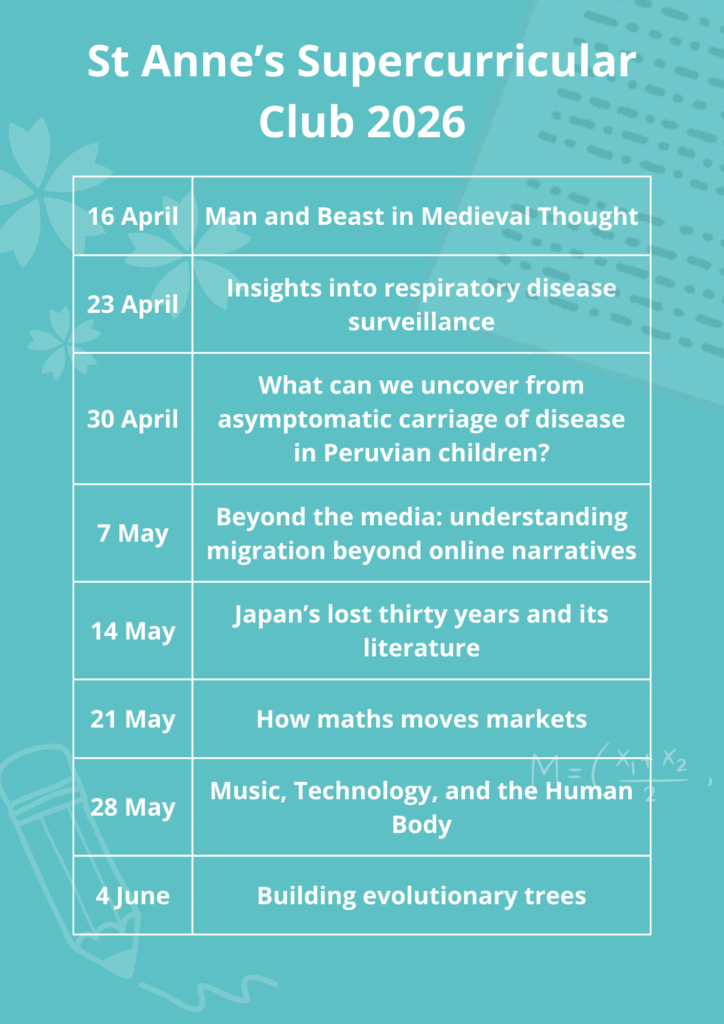
- how they have furthered these interests through super-curricular activities.
What does ‘super-curricular’ mean?
‘Super-curricular’ activities are educational activities which go above and beyond the school curriculum to expand your knowledge and understanding of the subjects you are studying. This can be anything from podcasts, documentaries, trips to a museum, books, magazines, online programmes and more.
If you’re not sure where to start, don’t panic! We recommend talking to your teachers or your school librarian about finding additional reading, but we’ve also included some resources below that might also be useful for furthering your interest in language and cultural studies.
Podcasts
- Linguamania podcast
Produced by researchers from Oxford University-led Creative Multilingualism, the series explores some fascinating perspectives on languages and language learning, asking: Do we really need human translators? Why do we use metaphors and what do they teach us about other languages and cultures? Can languages help protect the natural environment? And so much more… So stop what you’re doing and start exploring the wonderful world of multilingualism!
- Les Liaisons dangereuses podcast
Choderlos de Laclos’s eighteenth-century epistolary novel, Les Liaisons dangereuses, has been intriguing audiences since 1782, and has been adapted into different media many times. It is also one of the core texts studied by students of French in their first year of an Oxford degree. In this podcast series, Prof. Catriona Seth, Marshal Foch Professor of French Literature at All Souls College, and Catriona Oliphant, founder of Chrome Radio, delve into the text, covering a variety of topics.
- Oxford Spanish Literature Podcast
Listen in on our conversations with Spanish tutors at Oxford to find out what’s so fascinating about the literature they teach, why they love teaching it, and why they think you might love it too.
In Our Time
Radio 4’s flagship series, In Our Time, hosted since the beginning by author, TV presenter and critic Melvyn Bragg, has become the BBC’s most downloaded weekly podcast globally, as well as one of the most popular for people under the age of 35.
The winning formula is a recorded conversation, over 45 minutes, in which Bragg quizzes academic specialists about almost any subject of interest in human life, including history, science, philosophy, religion and the arts.
In terms of modern languages and cultures, here are some episodes (featuring our very own academics) that we would recommend (not that we’re biased!):
- This episode on Olympe de Gouges, advocate for women’s rights during the French Revolution, featuring Professor Catriona Seth;
- This episode on the great Portuguese poet Fernando Pessoa, featuring Professor Cláudia Pazos-Alonso;
- This episode on eclectic German philosopher and cultural critic, Walter Benjamin, featuring Professor Carolin Duttlinger.
Videos
Each year, the Faculty runs a Literary Masterclass for local state sixth formers studying French, Spanish and German, designed to support them with reading and critically analysing literature in the target language. During the pandemic, this event was delivered online, and the pre-recorded videos are still available to view on our YouTube channel here.
The Oxford German Network runs an annual essay prize for sixth formers on a classic work of German literature. In the past, they have often created and collected a series of videos connected to the work in question. Click here for a playlist about Goethe’s Faust, here for a playlist about Schiller’s Maria Stuart, and here for a playlist about Hoffmann’s ‘Der Sandmann’.
*****
We hope these resources are helpful and provide a good starting point for you to develop your academic interests – don’t forget the importance of super-curricular activities for your UCAS application!
Please note: If you’re in Year 13 or equivalent, there’s still time to apply for Oxford! You need to make sure you have registered for your admissions test by 29th September (this Friday!) and have submitted your UCAS application (which includes your personal statement) by 6pm on 16th October.
If you’re in Year 12 or equivalent, the resources above will hopefully complement and develop your A-level/IB/Advanced Highers MFL studies and provide some excellent for your future personal statement.