A German Classic Prize 2026

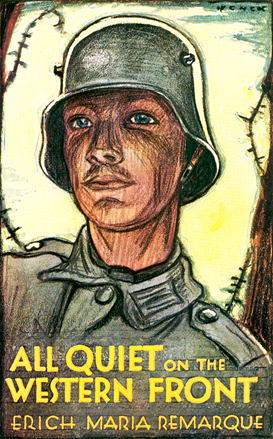
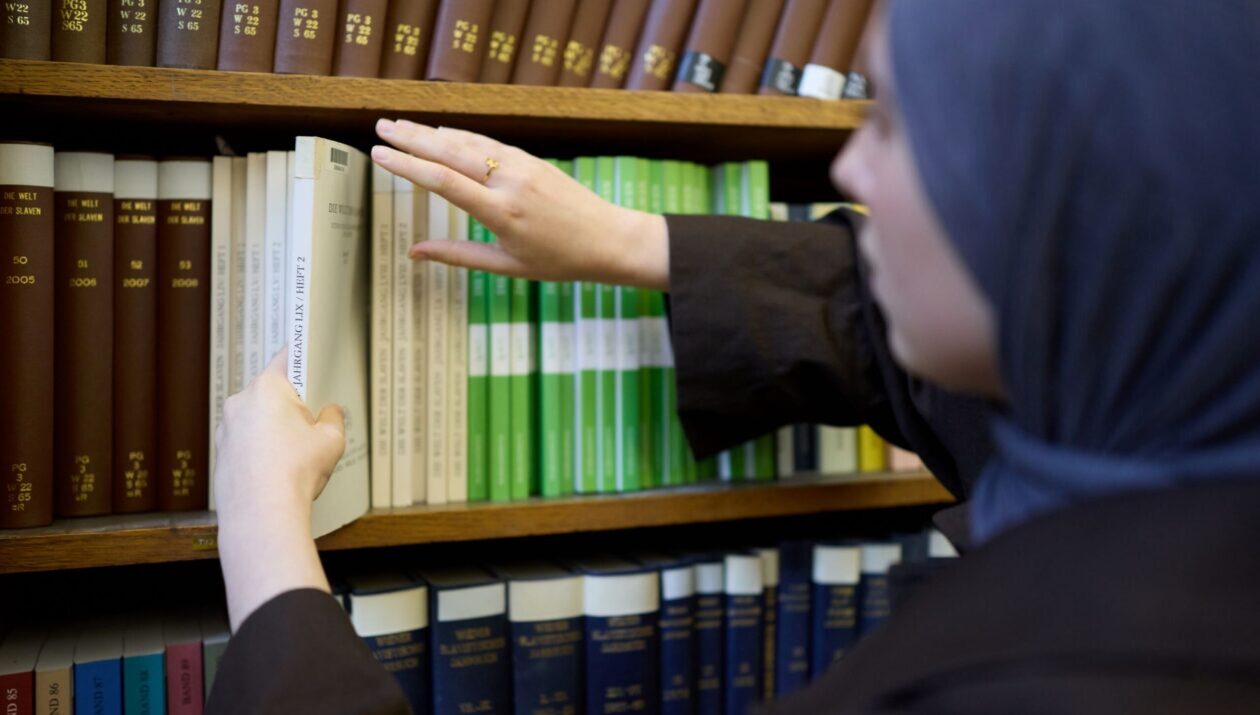
The Oxford German Network are delighted to announce the launch of this year’s ‘A German Classic’- our annual essay competition for sixth-form students. This year we would like to invite you to read with the novel All Quiet on the Western Front by Erich Maria Remarque’s (1898 – 1970), regarded by some as one of the greatest (anti-) war novels of all time.

We have put together a free study pack, including a set of multimedia materials, that will help you delve into this fascinating text. We will guide you through topics ranging from the novel’s first person narrator Paul Bäumer, to depictions of nature and a disconnect between a younger and an older generation.

We also encourage all students interested in entering the competition to sign up for a free study pack (including the physical book in both German and English) by 12 noon on 1st July via this link.

Up to three prizes will be awarded: For the essay competition, we will award a first prize of £500, a second prize of £300, and a third prize of £100 (Prizes may be awarded jointly, in which case the prize money will be split). Prizes will only be awarded if work is of sufficient merit. All entrants will receive a Prize Certificate or a Certificate of Participation.

All details about eligibility, study packs, essay questions, submission, judging criteria and more, can be found here.

The deadline for submission is 12 noon on Wednesday 9th September 2026.

If you have any questions, please email the Prize Coordinator Marlene Schilling at germanclassic@mod-langs.ox.ac.uk.

2026 Flash Fiction Competitions: The results

In December 2025, we launched our annual Flash Fiction competitions, which closed at the end of March. The competitions were open to students in Years 7 to 13, who were tasked with writing a short story of no more than 100 words in French, German and/or Spanish.

We had an incredible response, with entries coming in from all areas across the country! In total, we received over 1100 submissions across the three languages!

We would like to thank everyone who entered the competitions and commend you all for your hard work and creativity in writing a piece of fiction in a different language. This is a challenging exercise, and a significant achievement – congratulations all!

We are delighted to be able to announce the winners, runners up, and highly commended entries for each language below. We will be publishing the stories here on the blog over the summer so you can read them for yourselves.

French

In the Years 7-9 category, the winner is Cindy Li. The runners-up are Esme Pritchard and Shanzeh Masood.

The judges also identified the following entrants as highly commended: Ema Danileviciute; Mahek Amjad; Elisabetta Margherita Federici; Heritage Agbaje; Anah Imran; Iqra Zaheen; Veer Khanna; Eva Madan; Ayaan Banerjee; and Kimberley Woollard.

In the Years 10-11 category, the winner is Ranvir Sharma. The runners-up are Joseph Nebel and Honorée Wallis.

The judges also identified the following entrants as highly commended: Nandana Dhanabal; Henry Bodal Hansen; Myrtle  Mitchell; Yakshita Ramdhony; Victoria Wang; Chloe Shin; Djihane Ounissi; Aarush Lala; Aadi Jhawar; and Jack Bolton.

In the Years 12-13 category, the winner is Julia Lee. The runners-up are Salome Gvindadze and Francesca Bardou.

The judges also identified the following entrants as highly commended: Isla Thurlow; Jude Shalaby; Ines Amraoui; Isabelle Lake; Erin Grimsey; Alexander   Andrews; Caterina Ciniselli; Sherisa Johnson Rock; Henrietta Coningsby; and Sophie Agmen-Smith.

The French judging panel commented the following about all the entries:

We have been really impressed by the inventiveness, courage, and linguistic flair shown by this year’s Flash Fiction Competition entrants. The winners, runners up, and commended entries demonstrated imagination, advanced vocabulary, and precise grammar to craft engaging, moving, or suspenseful narratives, all within the limits of 100 words.

We encountered a crime-fighting guinea pig, a rebellious swarm of insects, time capsules, apocalypses, many Mona Lisas, croissants, Monet’s garden, sentient bacteria, Nemo’s adventures abroad, talking teddy bears, battlefields both metaphoric and real, acrobats, celebrity frogs, airport encounters, surprise birthday cakes, atmospheric descriptions of the moon, and divinely ordained bins.

Your entries were a pleasure to read, and we are delighted to commend each one of you for your hard work and creativity. Our warmest congratulations to everyone for taking part! 

German

In the Years 7-9 category, the winner is Rynad Mohudeen. The runners-up are Heritage Agbaje and Sophia Pfrang.

The judges also identified the following entrants as highly commended: Donald Kuhn; Eva Monica Buckingham; Eva Davies; Habibur Kazi; Kayden Jace Miraflor; Kenji Ronan; Lili May Kuhn; Muhammad Anwaar Ul Haq; Thomas Lawrance; and Vakish Indrajith.

In the Years 10-11 category, the winner is Mariia Slobodyanyuk. The runners-up are Amelia Sinclair and Anonymous.

The judges also identified the following entrants as highly commended: Ananya Patrick; Ananya Subramonian; Ariel Xu; Eleanor Ziegler-Tan; Elsa Rauschenbach; Eva Howells; Evelyn Roberts; Flora Boney; India Davie-Thornhill; and Luca Goolamali.

In the Years 12-13 category, the winner is Leah Holmes. The runners-up are Edith Taussig and Uma Ahluwalia.

The judges also identified the following entrants as highly commended: Alexander Howell; Alexandra Hampton; Ayaan Jilani; Charlotte Kenyon; Chloe Louet; Elisabeth Tillett; Ellis Underwood; Florence Datta; Isabella Young; and Tarannum Jayaswal.

The German judging panel commented the following about all the entries:

We were delighted to have received so many entries across a range of topics. Some stories led us into mystical realms and fairy-tale-like settings, while others offered new dimensions and dystopian glimpses at a future where robots and AI had taken over. At heart of all these often quite poetic stories was a deep emotional connection with the world, encompassing questions around the self and relationships with others, memories, hopes and dreams as well as the perspectives of animals. It was clear to see many entrants thinking carefully about the vocabulary and grammar structures they had been learning, and about how they could take risks with these to creative, poignant, or amusing effect. We found it heartening to see so many young Germanists engaging with fiction in such a palpably enthusiastic way, asking themselves how we narrate, how we connect with each other, and what we learn about German – and ourselves – in the process.

Spanish

In the Years 7-9 category, the winner is Alessia Jain. The runners-up are Rishaan Sharma and Lilac Eis.

The judges also identified the following entrants as highly commended: Lucio Angeli Stella; Anonymous; Anonymous; Ashvy Sasikumar; Ekamjot Kaur; Denis Rodriguez Sanmartin; Anonymous; Tara Hayhoe; and Ruby Ayetigbo.

In the Years 10-11 category, the winner is Alfie Bailey. The runners-up are Amelie Rahman and Maya Maimaris.

The judges also identified the following entrants as highly commended: Jemima Tapp; Clothilde Salord; Alexandros Pallett; Jasmin Leong; Malena Sievers Mayo; Maria Chowdhory; Sophie Blundell; Siena Gurjar; Anagha Abrol; and Aisha Balde.

In the Years 12-13 category, the winner is Lila Rock. The runners-up are Celia Guasch Bloomer and Nicole Kilby.

The judges also identified the following entrants as highly commended: Katerina Garcia; Olivia Slater; Paul Olusegun; Richard Hall; Sienna O’Keefe; Alexa Lewis-Banks; Ava Spillane; Anonymous; Bella Trafford-Barton; and Charles Romeu-Villalobos.

The Spanish judging panel commented the following about all the entries:

As in previous years, there were lots of very interestingly organized and thought-provoking entries. This year, we noticed quite a different at the level of theme – some were very funny, others, more sobering reflections on modern life. It was very difficult to decide the overall winners and runners up and there were a number of other stories that we would have liked to have commended too. The level of the Spanish seemed a little stronger than in previous years, which is testament to your hard work. ¡Seguid estudiando y escribiendo!

Huge congratulations everyone – you should be very proud of your achievement!

A year abroad in Tbilisi

This week’s blog post is written by Rania, an English and Russian student who reflects honestly on her time in Tblisi as part of her year abroad experience...

Initially, the post-A level Russian year abroad is quite a daunting prospect. After the invasion of Ukraine in 2022, many countries are seeing influxes of Russian immigrants on a level they are not necessarily prepared for or (understandably) receptive to. Russian-speaking countries generally suffer a reputation in the West as simply ‘post-Soviet’, but the year abroad really lets you engage with local cultures firsthand and understand just how untrue that conception is. When speaking to people, I found myself often having to strike a balance between wanting to get Russian practice in and not being disrespectful by speaking a coloniser’s language. In all honesty, this is inevitable when studying a language that carries such painful connotations for so many; as awkward as it might have felt, every time I spoke to people I felt like I was getting closer to truly comprehending Russia’s legacy.

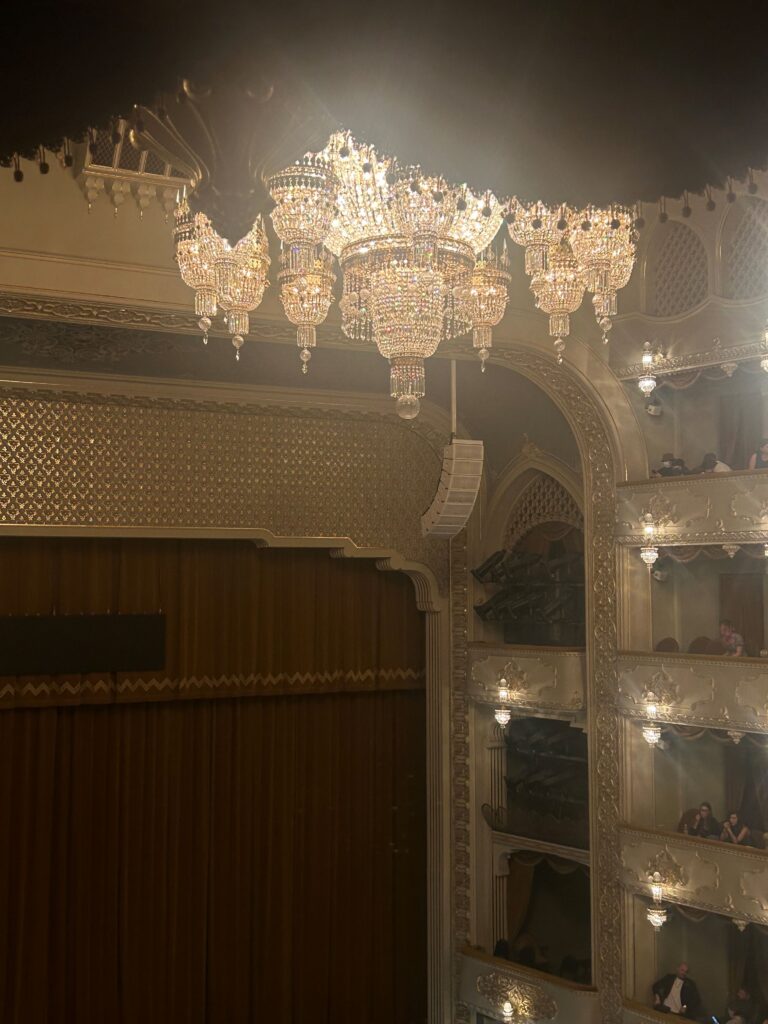
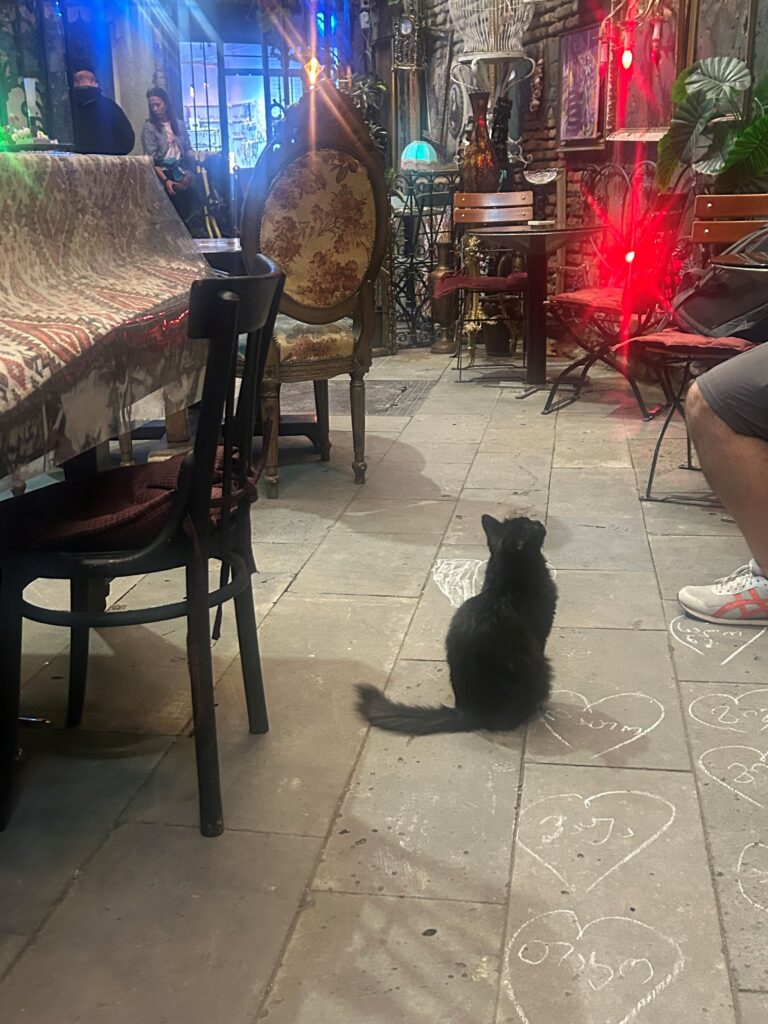
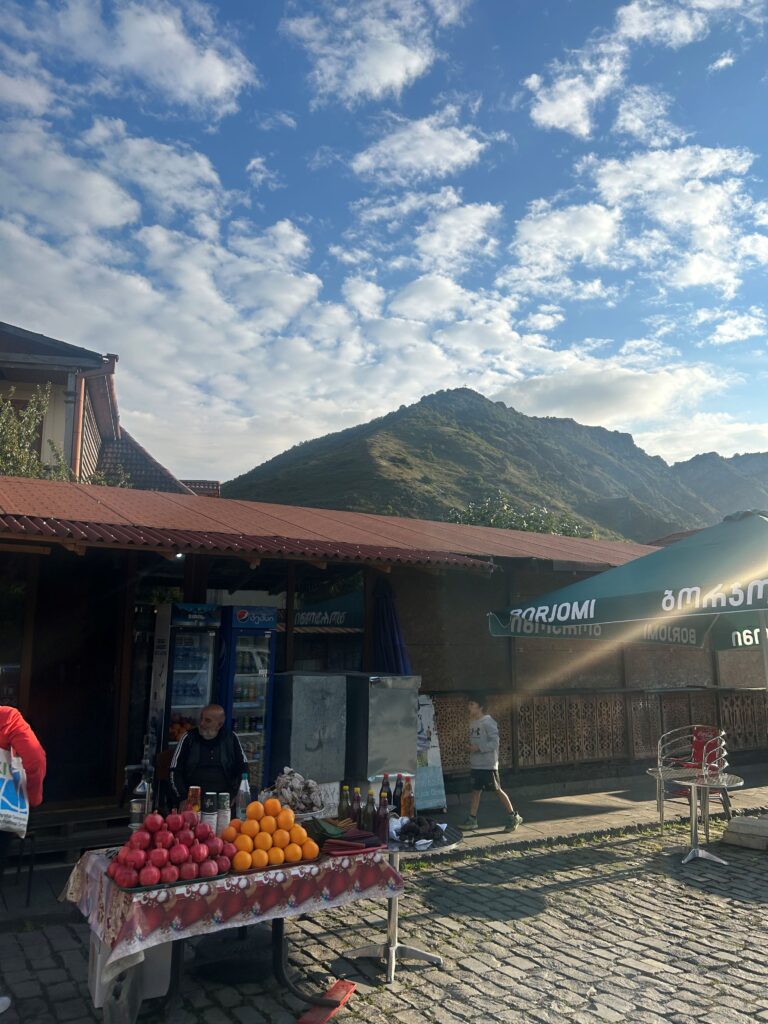
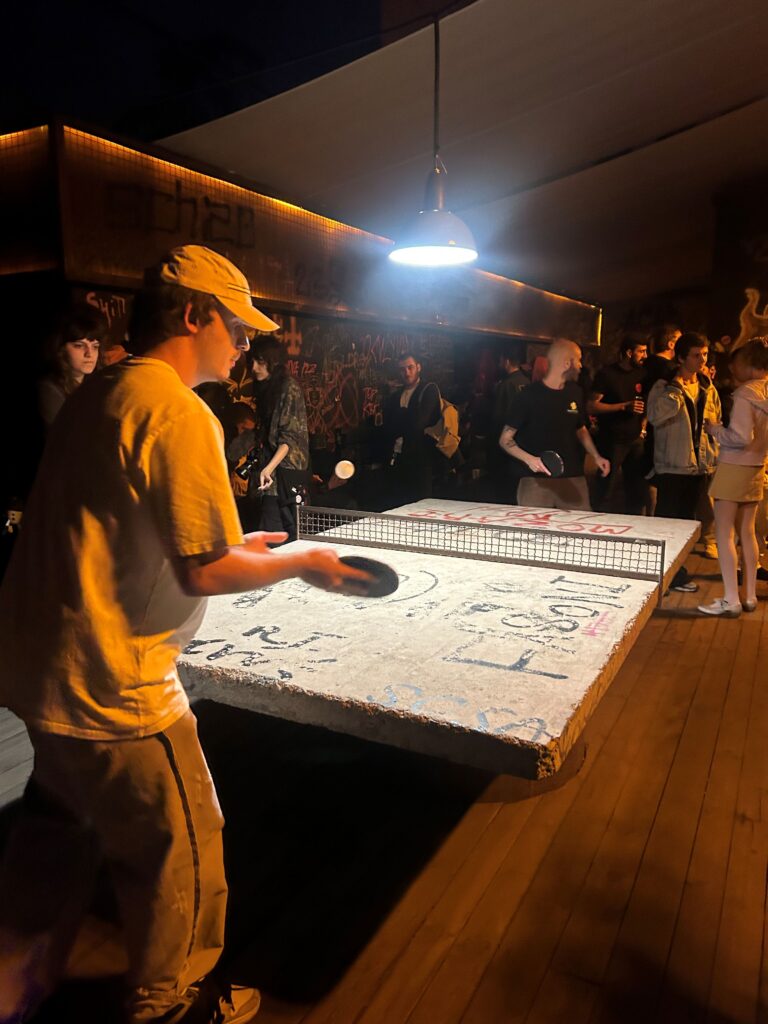
For the first part of my year abroad, I got to spend 2 months in Tbilisi, Georgia studying at a language school in the centre. The city itself is gorgeous, and my classmates and I often took marshrutkas (mini vans) to local cities (like Stalin’s birthplace Gori and the old capital Mtskheta) and hiking trails. Tbilisi itself is one of the most beautiful and lively cities I’ve ever been to; the architecture is a mix of Georgian, Byzantine, Russian, Soviet influences, with many gorgeous Art Nouveau buildings. On my days off I often just walked around admiring buildings, popping into greengrocers with incredibly fresh produce, and petting the (very well-fed) stray cats and dogs that are all over the city.

The food was delicious, but worth noting that walnuts are pretty much inescapable when it comes to Georgian cuisine. As someone with around 11 allergies, I was petrified about the year abroad: for this reason I chose to rent an apartment rather than stay with a host family. But my landlady kindly provided me with allergen-safe laundry detergent and fruits when I arrived which was my first experience of Georgian hospitality. In Georgia, they believe that a guest is a gift from God, and I can confidently say that people there are so unbelievably hospitable and open. I’ve heard lots of people say that Georgians aren’t friendly because they don’t smile to strangers, but this is just a cultural difference. Most places you might go for the Russian year abroad won’t have the kind of “smiling culture” that we do.

As lively and exciting as the city was, with clubs and cafes being real community centres for young people, especially queer young people, the political situation is quite tense. Young people in the city for the most part speak English and Georgian, and don’t appreciate conversations started in Russian. With Abkhazia and South Ossetia being Russian-occupied territories in the north of the country, the 2008 invasion still in recent memory, and the current Russia-aligned puppet government, Georgia, like many other near eastern countries, has to assert itself against assimilation into Russia. There are many Russian speakers in the city, but they are generally recent emigres and keep to their own cultural pockets.

Georgian is a difficult and complicated language, and in all honesty I only managed basic phrases in my time in Tbilisi. But making the effort shows a genuine interest in the country, and not that you just went because Russia wasn’t an option. Selfishly, purely for the sake of language practice, I wish I could have gone to Russia; as I didn’t interact with the language as much as I wanted to, spending my time learning Georgian and chatting with locals in English. But in regards to understanding the modern Russophone world, I feel that I have a much more real and nuanced understanding now than I ever could have without this year abroad. It has taught me so much in ways I didn’t anticipate when I first applied to university.