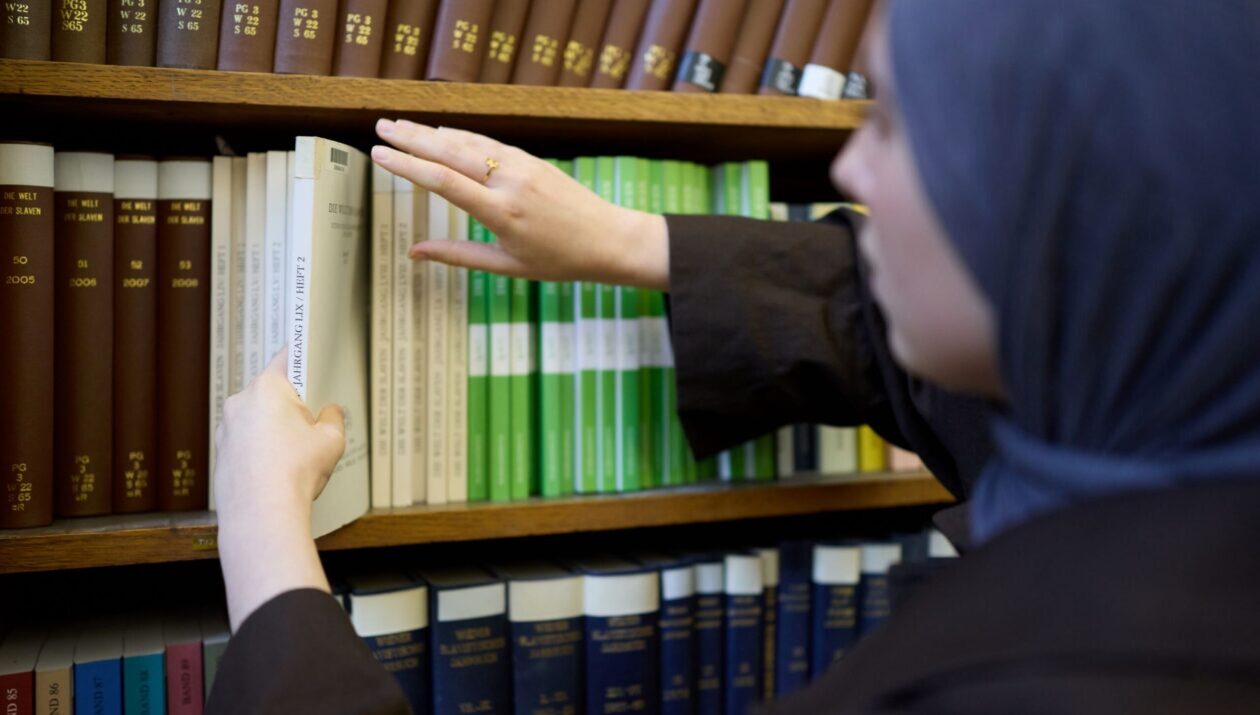
This week’s blog post is written by Rania, an English and Russian student who reflects honestly on her time in Tblisi as part of her year abroad experience...
Initially, the post-A level Russian year abroad is quite a daunting prospect. After the invasion of Ukraine in 2022, many countries are seeing influxes of Russian immigrants on a level they are not necessarily prepared for or (understandably) receptive to. Russian-speaking countries generally suffer a reputation in the West as simply ‘post-Soviet’, but the year abroad really lets you engage with local cultures firsthand and understand just how untrue that conception is. When speaking to people, I found myself often having to strike a balance between wanting to get Russian practice in and not being disrespectful by speaking a coloniser’s language. In all honesty, this is inevitable when studying a language that carries such painful connotations for so many; as awkward as it might have felt, every time I spoke to people I felt like I was getting closer to truly comprehending Russia’s legacy.
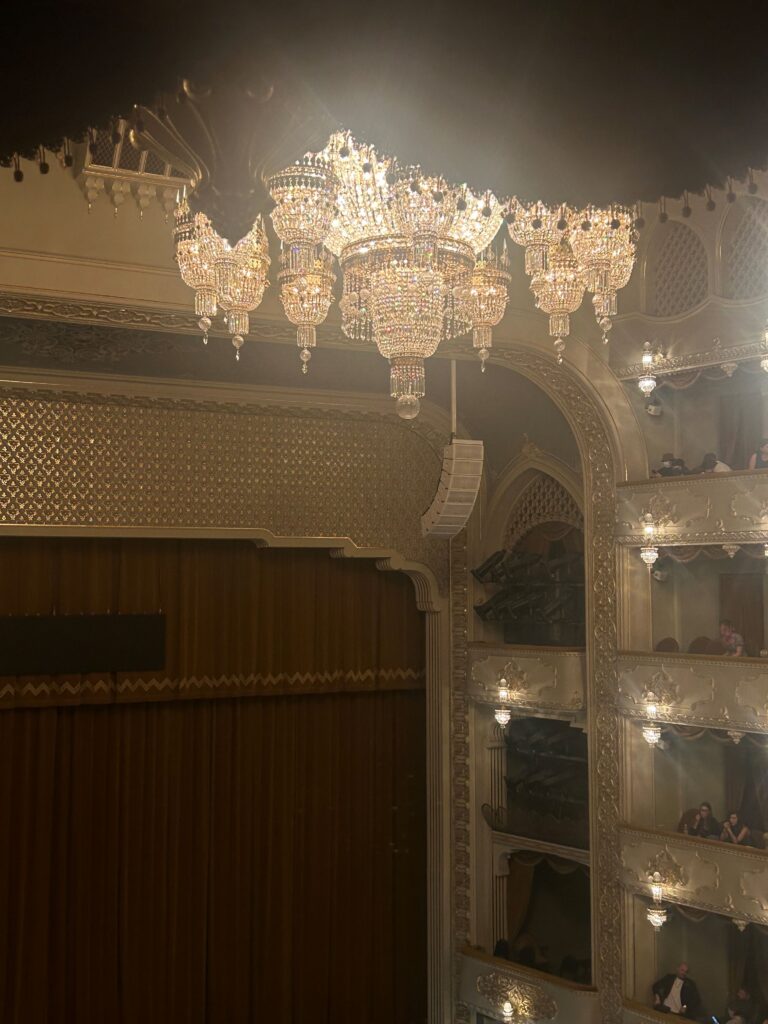
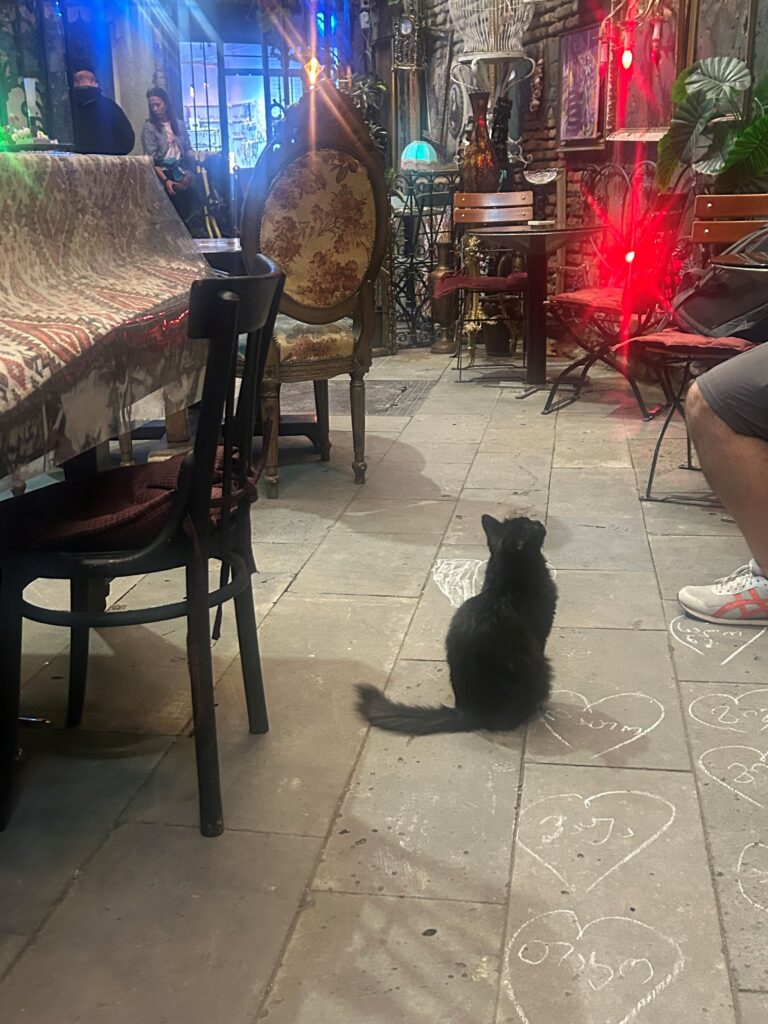
For the first part of my year abroad, I got to spend 2 months in Tbilisi, Georgia studying at a language school in the centre. The city itself is gorgeous, and my classmates and I often took marshrutkas (mini vans) to local cities (like Stalin’s birthplace Gori and the old capital Mtskheta) and hiking trails. Tbilisi itself is one of the most beautiful and lively cities I’ve ever been to; the architecture is a mix of Georgian, Byzantine, Russian, Soviet influences, with many gorgeous Art Nouveau buildings. On my days off I often just walked around admiring buildings, popping into greengrocers with incredibly fresh produce, and petting the (very well-fed) stray cats and dogs that are all over the city.
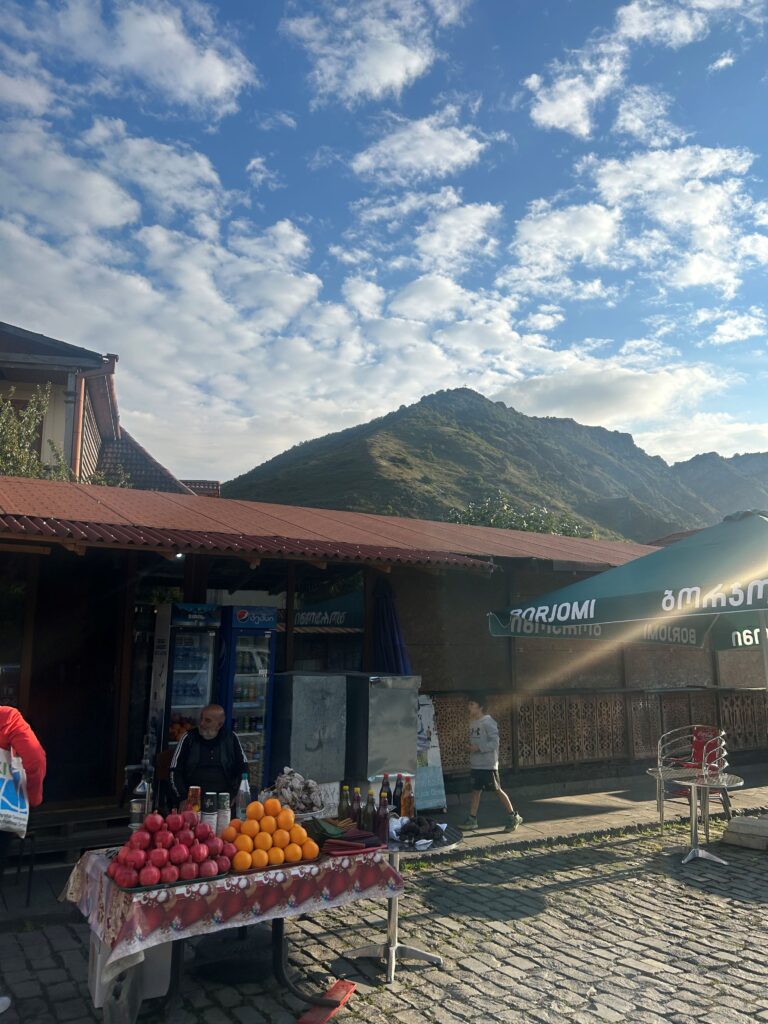
The food was delicious, but worth noting that walnuts are pretty much inescapable when it comes to Georgian cuisine. As someone with around 11 allergies, I was petrified about the year abroad: for this reason I chose to rent an apartment rather than stay with a host family. But my landlady kindly provided me with allergen-safe laundry detergent and fruits when I arrived which was my first experience of Georgian hospitality. In Georgia, they believe that a guest is a gift from God, and I can confidently say that people there are so unbelievably hospitable and open. I’ve heard lots of people say that Georgians aren’t friendly because they don’t smile to strangers, but this is just a cultural difference. Most places you might go for the Russian year abroad won’t have the kind of “smiling culture” that we do.
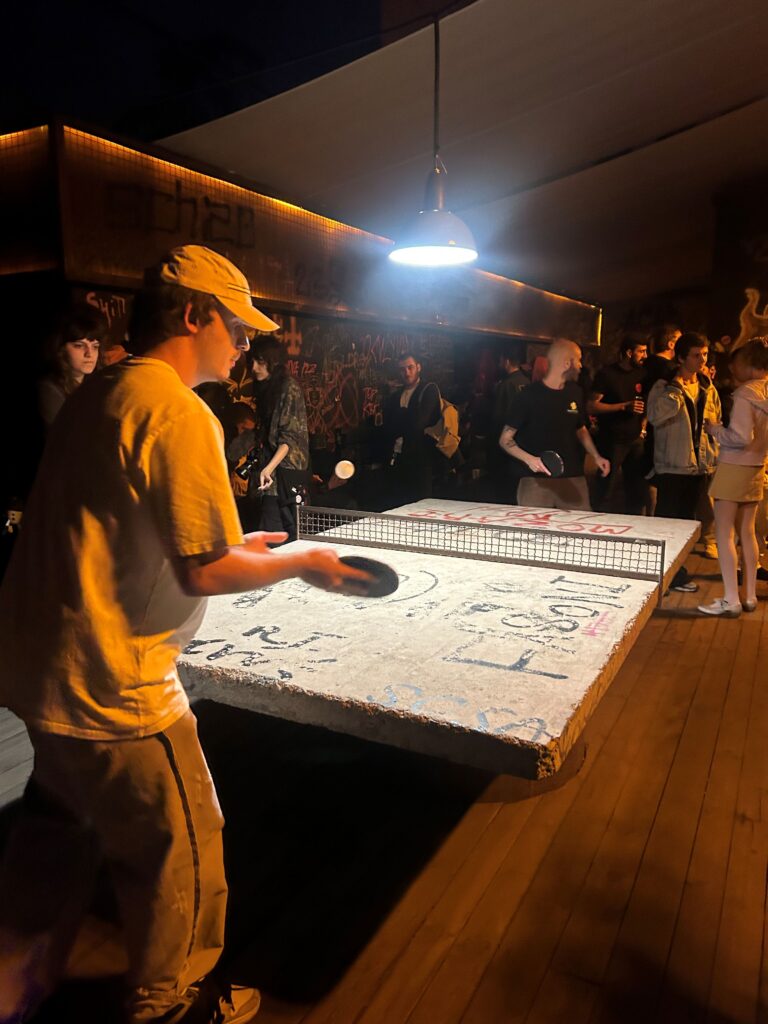
As lively and exciting as the city was, with clubs and cafes being real community centres for young people, especially queer young people, the political situation is quite tense. Young people in the city for the most part speak English and Georgian, and don’t appreciate conversations started in Russian. With Abkhazia and South Ossetia being Russian-occupied territories in the north of the country, the 2008 invasion still in recent memory, and the current Russia-aligned puppet government, Georgia, like many other near eastern countries, has to assert itself against assimilation into Russia. There are many Russian speakers in the city, but they are generally recent emigres and keep to their own cultural pockets.
Georgian is a difficult and complicated language, and in all honesty I only managed basic phrases in my time in Tbilisi. But making the effort shows a genuine interest in the country, and not that you just went because Russia wasn’t an option. Selfishly, purely for the sake of language practice, I wish I could have gone to Russia; as I didn’t interact with the language as much as I wanted to, spending my time learning Georgian and chatting with locals in English. But in regards to understanding the modern Russophone world, I feel that I have a much more real and nuanced understanding now than I ever could have without this year abroad. It has taught me so much in ways I didn’t anticipate when I first applied to university.