Former Spanish and German student, Eliza, looks back at her year abroad experience.
I’m not sure I’ve ever felt as apprehensive about the “unknown” as I did while waiting to board the flight that marked the beginning of my year abroad. Looking back, what strikes me most is the peculiarity of putting down roots in a foreign country, only to dig them up again a few months later. You navigate paperwork you thought you’d completed twice before, new phone contracts and bank accounts, tours for visiting friends and family, unfamiliar supermarket layouts, and mini culture shocks of “we don’t do that in the UK” – only to return to “normal” university life a few months later.
Before I scare anyone, I should say that as an introvert who loved second year at Oxford and felt settled, moving abroad wasn’t the easiest. It’s tempting to scroll through idyllic photos and gloss over the fact that a year abroad is a character-building experience. Yes, it’s a once-in-a-lifetime opportunity, but it’s not a year-long holiday. That said, the real-world experience, the places I visited, and the renewed respect for anyone moving abroad, have shaped me profoundly.
Vienna had been on my bucket list for years, so I jumped at the opportunity of an eight-month British Council placement. In the wake of Brexit and the visa chaos that followed, I was attracted not only by the destination but by the stability and support the British Council offered. Austria also offered a competitive salary and relatively few working hours (13 per week), leaving ample time for travel. On one memorable occasion, I spent a couple of days on a boat hotel overlooking the Hungarian Parliament in Budapest, only to take the wrong bus back and somehow end up in eastern Slovakia! Again, character building.
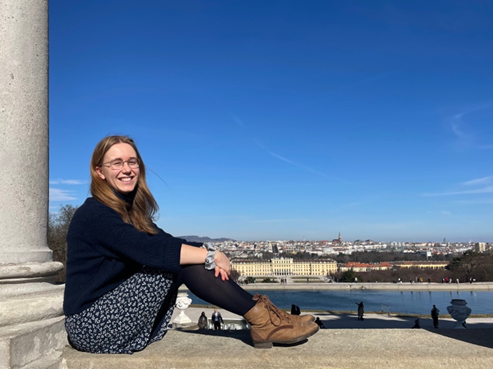
I chose to live in student accommodation about 45 minutes from the schools where I taught English. That way, I could be closer to the city centre and in housing where I could easily make friends. The placement itself was invaluable: I taught 3-4 upper school classes a day and, unless given a specific topic, had the freedom to design my own lessons. We covered everything from British dialects and traditions to globalisation and the environment. I also formed meaningful relationships with teachers: one even invited me to boat trips and Christmas wreath-making with her family.
One challenge, however, was the lack of formal opportunities to speak German. Teachers often introduced me to their students as having no speaking ability to prevent students from defaulting to German. As a result, I struggled with the unsolvable question: “How much should I be speaking?” My advice to anyone considering British Council would be to plan ways to increase language exposure, whether through hobbies, volunteering, tutoring, or, as I did, taking a language course alongside your placement.
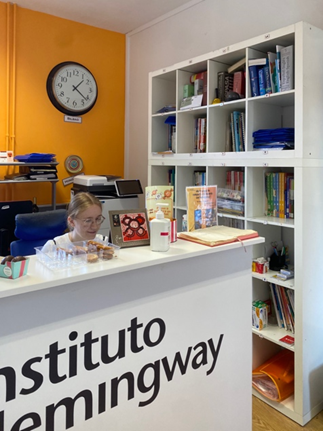
By contrast, my three-month internship in the office/reception of a language school in Bilbao was a Spanish-speaking baptism of fire. Within a week, I was answering client phone calls in Spanish, and the combination of administrative tasks and face-to-face interaction rapidly improved both my fluency and confidence. My internship probably doesn’t sound the most exciting, but speaking Spanish confidently in a professional environment was incredibly satisfying. The school’s activities schedule also meant regular boat trips and excursions to pintxos (Basque tapas) bars, churros cafés, and museums. So in short, I really can’t complain!
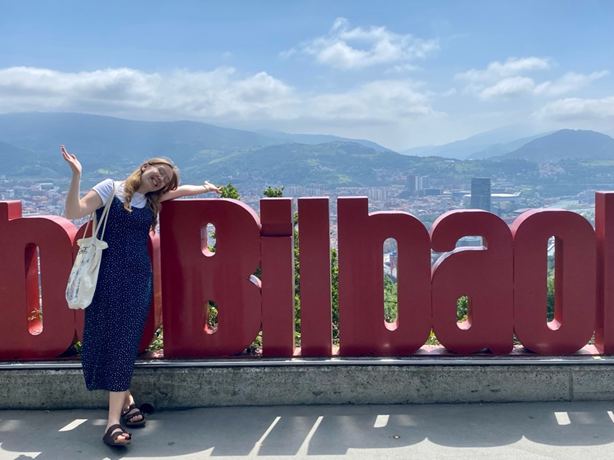
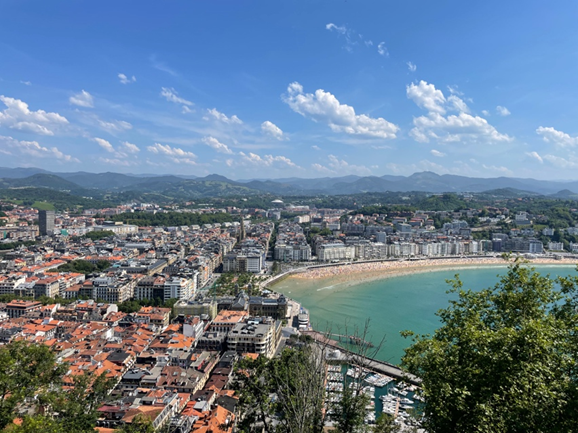
I was fortunate enough to find a central shared flat, complete with balcony overlooking a colourful Basque street. From June to August, I explored museums, beaches, and surrounding towns – San Sebastián and San Juan de Gaztelugatxe were particular favourites. In August, the annual Aste Nagusia (“The Great Week”) festival provided endless entertainment, with a nightly international firework competition which felt like a fitting way to end my year abroad chapter.
My advice for prospective year abroad students is to think carefully about the type of environment in which you thrive. Consider your personality, interests, and goals. Do you want an experience that strengthens your CV? Do you need structured opportunities to practise the language? Would you feel more comfortable living with locals, students, or alone?
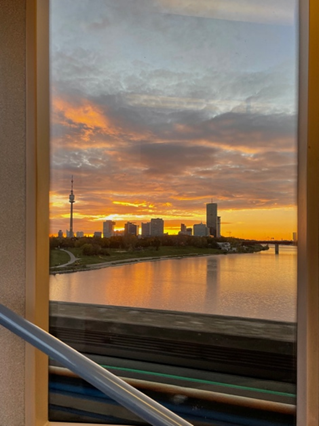
That said, the memories that have stayed with me were the unplanned ones: the view over the Danube on my morning commute, a crowd of dancing Bolivians celebrating 199 years of independence, debutantes at a Viennese ball. Wherever you go, and however you find your experience, I guarantee you’ll come away with memories like these too.