
Final-year student, Reuben, reminisces about his year abroad in Guadalupe during final exam preparations. Written in April 2026.
My name is Reuben and I’m a finalist student of French and Modern Greek at the University of Oxford. It’s currently exam season and so naturally I’m reminiscing about my year abroad (2024/25) and feeling very nostalgic indeed. In addition to my time in the Greek capital Athens, I was fortunate enough to spend 8 months in Guadeloupe – a French « département » like no other – and I’d like to discuss some of the highs and lows of this genuinely life-changing experience, with a view to encourage and inform potential students.
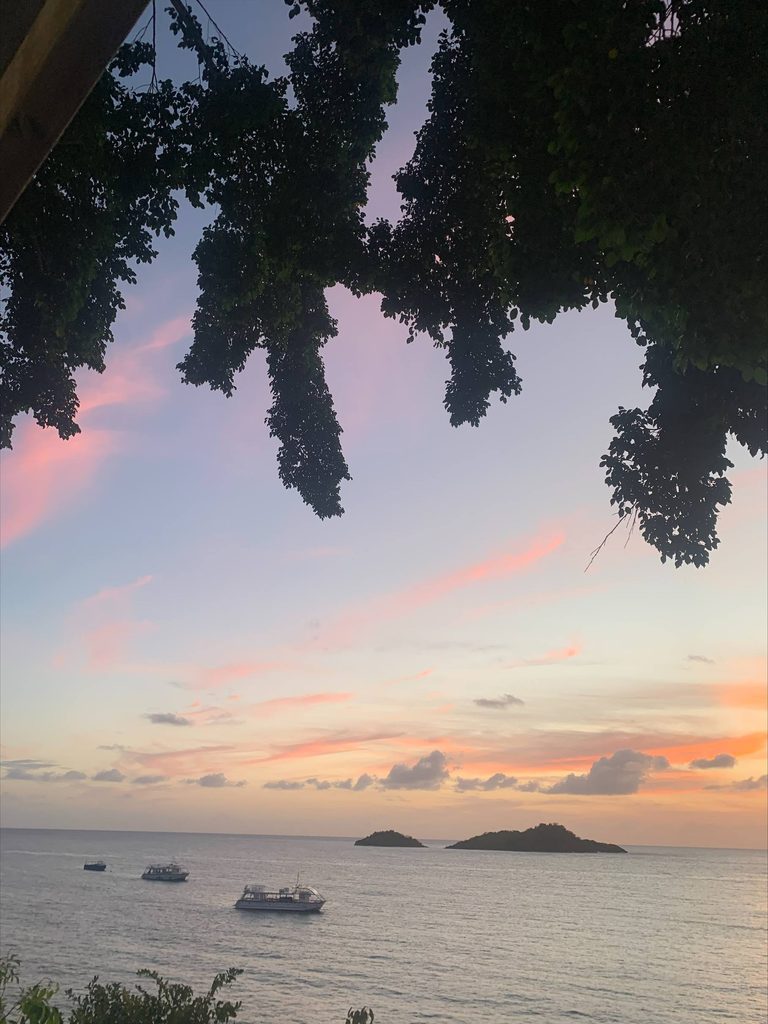
My ticket to Guadeloupe came in the form of a British Council assistantship : a temporary job as an English language teaching assistant. The British Council is a UK-based company with partnership schools in a number of Europeans countries, allowing me to break the cycle of “you can’t get a contract without a visa, and you can’t get a visa without a contract” which I had encountered when looking for a job for the year abroad. I wrote a personal statement, in which I described in some detail my interest in Caribbean culture and desire to visit Guadeloupe – a former French colony situated in the Caribbean but presently having the same administrative status as Lyon or Paris. The British Council system does not allow you to choose your region per se, rather you list a number of general preferences, but I was lucky enough to be deployed to the island I had dreamed of.
The visa situation was nonetheless not as straightforward as I had imagined. The third party website which France has outsourced the application process was a little confusing but I managed to acquire my visa just in time to make the trip at the end of September. I found
accommodation online via Facebook marketplace and was given some contacts at the schools where I was going to be working. I had been assigned to a small village called Port Louis, in the North of Grande-Terre, the Eastern part of the Archipelago.
I was absolutely terrified. I still remember saying goodbye to my parents at Birmingham airport before catching a flight to Paris and then the connection to Pointe à Pitre. But already I was surrounded by the French language and this was very exciting to me, the journey had begun. The owners of my accommodation – a couple who owned a yoga studio and rented out a room – came to collect me at the airport. They were gregarious and I found myself quickly engaged in serious conversation; a real challenge for my French. But French was not the only language of the island: I had already begun to overhear my first conversations in creole, the vibrant language with a tragic history rooted in the island’s colonial past which remains the L1 (first language) of much of Guadeloupe’s population today.
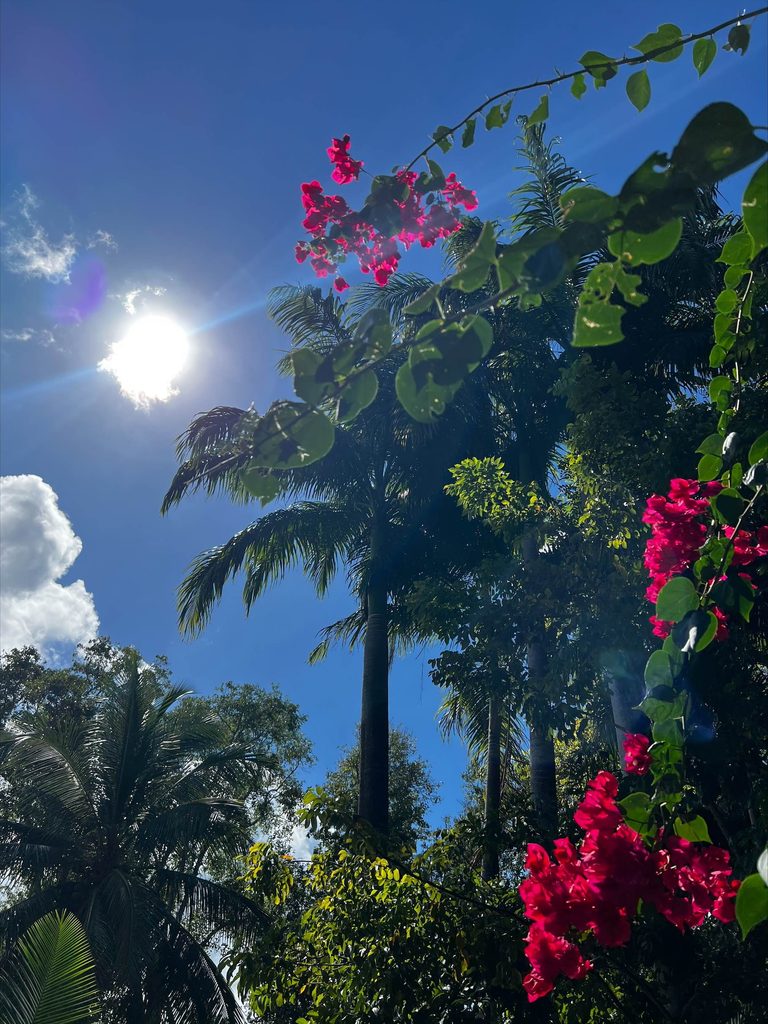
We stepped outside the airport and I was struck by the humidity, the sweet smell of the warm air and the immense banana trees which I glimpsed even in the darkness: I had made it to the Caribbean. It was my first time outside of Europe and yet technically I was still in Europe: voilà the paradox of Guadeloupe.
After a few weeks of finding my feet, I had grown to love the morning swims in the sea, the intense luminosity and greenery, the omnipresent chorus of insects and frogs, and especially the warm smile and “byen bonjou” (a creole greeting) from the inhabitants of Port Louis. The work was enjoyable: the children were enthusiastic about meeting this strange foreigner and their almost complete ignorance of the English language was quite endearing to me. Others had an advanced level, usually those who had family members from one of the nearby Anglophone countries like Dominica, just a few miles South. It seemed strange to me that they would bring in an Englishman to teach these children about anglophone culture and language when they had an entire country right on their doorstep, but that’s once again the paradox of the French system.
I remember walking into supermarkets and being struck by the monopoly of French products. Monoprix, Carrefour, Canal+, the facade of the island was unmistakably French, but transposed into a Caribbean island. This had some positive effects: young people had the option of going to university in Paris and infrastructure was noticeably better than the independent Caribbean countries which I had the chance to visit during my stay. But people were not ignorant of the colonial past, of the legacy of slavery, nor of the modern day consequences. People would tell me about their distrust of the French state and desire for independence: I was touched by how willingly people would open up to me – a white person – about their hopes and dreams for their island and their traumas from the past. From a cultural point of view, this was an experience I will
never forget.
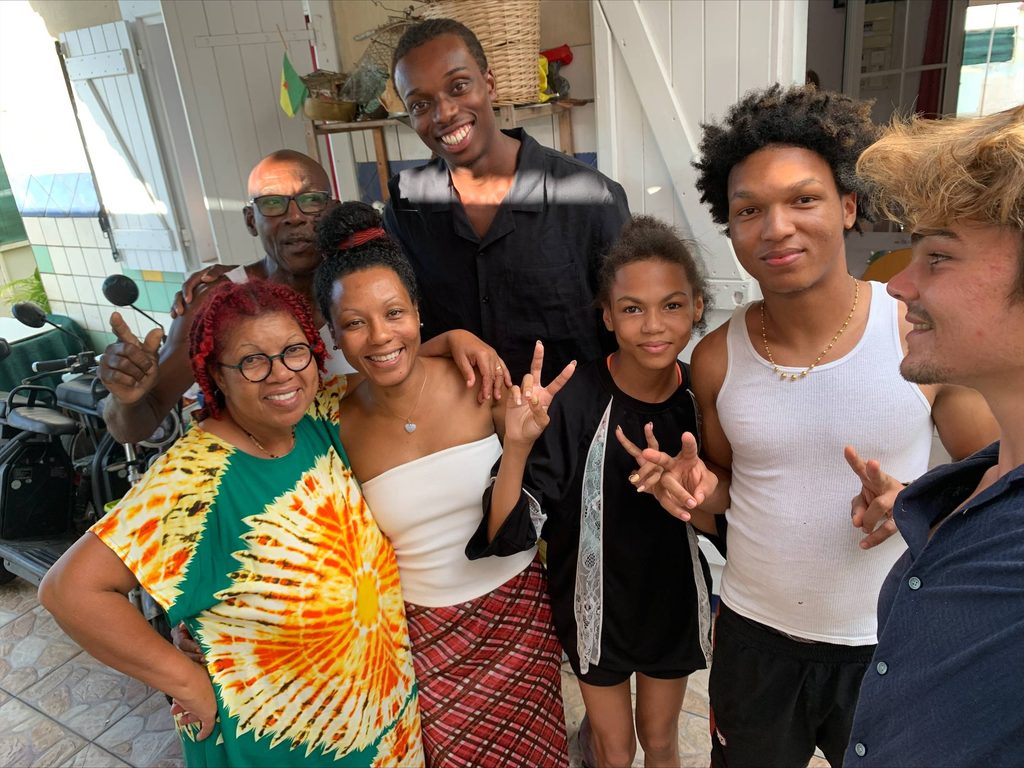
The island was extremely beautiful and the people extremely welcoming. The work was enjoyable and not too taxing, with plenty of holidays to explore the island and its culture. But not everything was perfect for me personally. In late October, a dear friend and fellow Oxford student who was also working in Guadeloupe tragically died. I miss my friend, and occasionally wonder why it was him and not me. It was a powerful reminder that these islands, although beautiful, are hostile environments where humans are at the total mercy of nature. My turn came a few months later in the form of a parasitic stomach infection (likely transported by mosquitos) which left me bed bound for several weeks and has affected my digestive system to this day.
When I think back to my time on the island, it was the most incredible place with the most kind people: I feel almost patriotic to discuss Guadeloupe and tell of my wonderful friends in Port Louis and elsewhere. I lived intensely and created many vivid memories,
full of colour and smell and emotion, and I am glad I got to experience such an adventure, even if it was not all positive. Today I consider myself luckier than ever and know that this experience has changed me both academically and personally.