All posts by Nicola Brown

Dispatches from the Year Abroad: Munich

This week in our occasional series on Year Abroad adventures, third-year undergraduate Beth Molyneux (Lincoln College) reports on her term in Munich.
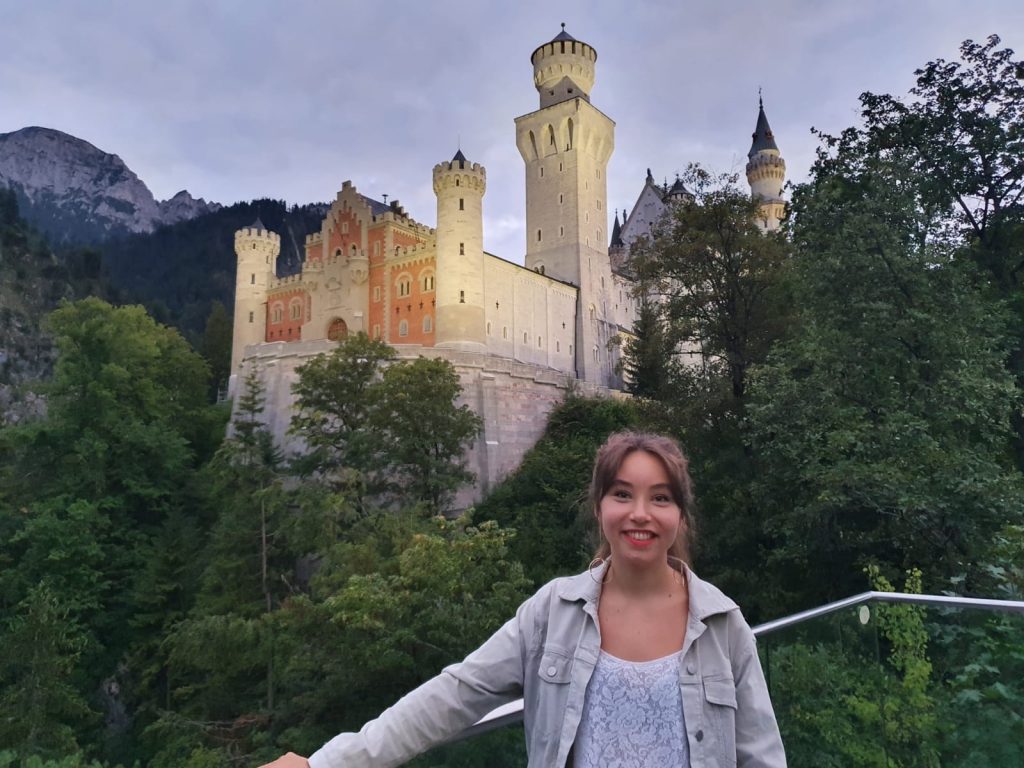
A visit to Neuschwanstein Castle

I’ve known since I first began looking at universities during sixth form that a year abroad would be a part of my degree, wherever it was that I ended up. It was always something there in the background that I’d have to plan at some point, so it was pretty bizarre when the time came to stop romanticising about possibilities and actually decide where I was going to spend the next year of my life. Studying French and German (both post A-level), I knew I wanted to split my time roughly equally between the two countries, but so far that was my only response to the first question everyone asks after you’ve told them you do a languages degree: “Do you know where you’re going on your year abroad yet?”. I’d been faced with this question since the start of my first year and had a standard response: “I’d love to see the Christmas markets in Germany, summer in the south of France would be a dream, and I’d probably like to spend some time in Paris, but I’m not sure about Berlin.” I really hadn’t thought beyond that. In first year it was easy to dismiss the question (almost exclusively posed by non-linguists) as showing friendly interest but no idea of when you actually need to start planning these things. But once it got to midway through first term of second year, people’s curiosity felt more justified and I started to seriously get my thoughts together.

The summer after my first year at Oxford, I decided I wanted to spend a month in each country to feel more comfortable with spoken language, and I thought it would also be a good chance to try out au pairing (this is when you live with a family and in exchange for a given number of hours of childcare a week, they give you accommodation, board, and sometimes will pay for a language course or a travel pass). It’s supposed to be a kind of mutual cultural exchange, as well as an inexpensive and authentic way to travel, or at least those are the reasons it appealed to me. None of the Erasmus options in Germany grabbed me (for France it was another story, but more on that in my next instalment!), and quite honestly the idea of searching for a family to live with appealed to me far more than seeking out an internship, going through various application processes, and then trying to organise where to stay. I had plenty of friends who were doing this, and it is more than manageable, but having tried out life as an au pair, it seemed the right option for me.

The original plan was to spend some time over summer doing shorter placements, before starting my year abroad ‘proper’ around October, at the start of the academic year, and then splitting my time into four roughly three-month chunks, alternating between France and Germany. But 2020 really wasn’t the year for original plans, and once COVID hit, my summer plans were down the drain. Which meant that I was left with a blank canvas, only one term of second year to go, and a global pandemic raging. For someone who likes to plan in advance, this is not how I thought I’d be starting my year abroad!
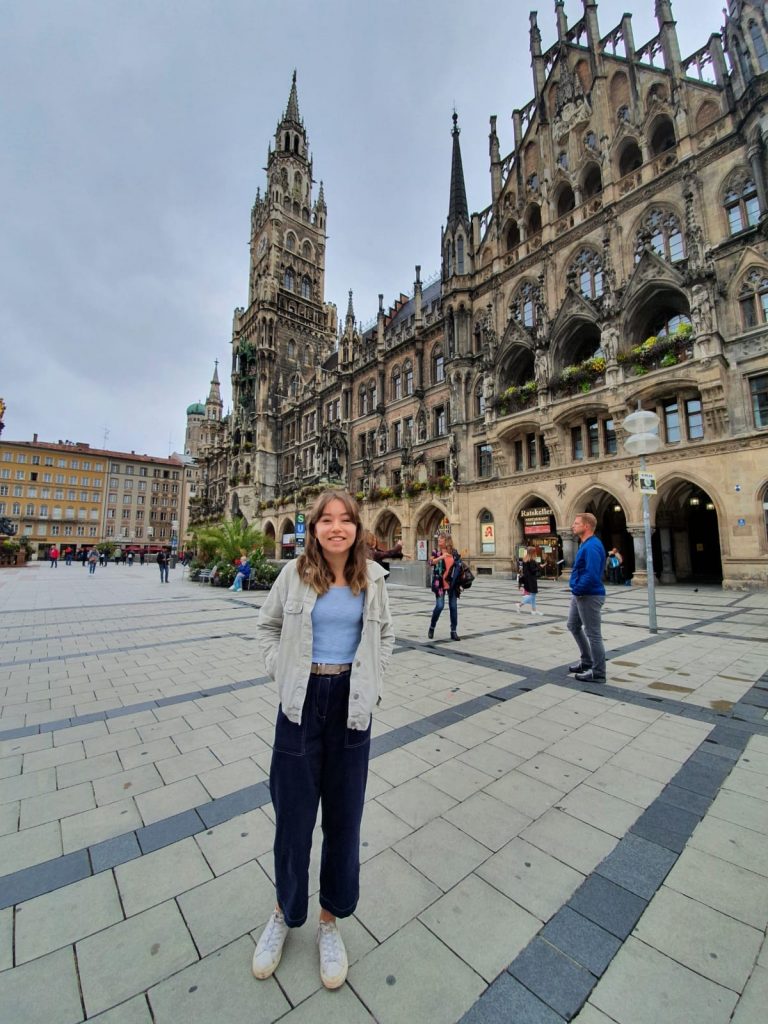
Marienplatz

After that everything is a bit of a blur; I started looking seriously at au pairing options and found a family in Munich who were looking for someone as early as July, and, before I knew it, term was over and I was heading to Bavaria for the first time, to stay for 5 ½ months. At the start, getting out to Germany was something of an escape, because much more was open here, which meant that getting abroad was a chance to regain some of the independence I felt I’d lost at home. Independence is definitely a key word for the year abroad – setting up life in a new country really does require you to do quite a lot of things you’ve never done entirely on your own before, although I always felt well-supported by my friends and family at home. With video calls and messages, I never felt too far away, but it takes some adjustment (especially after lockdown) to not having that close network of familiar faces around you day to day. That’s one of the reasons I chose to au pair: I think it’s less isolating than other experiences could be, because you’re living with a family. At the same time, it’s not your own family, and living in a house with people you’ve only known for a few months presents a different set of challenges. 

On the linguistic side of things, I think I’ve been lucky with German exposure. The family talk to me (and amongst themselves) exclusively in German. Having spent some time abroad last summer, the  learning curve wasn’t too steep when I first got here, and I was actually surprised by how well I coped linguistically in my first few days and weeks. I think this is because the German I’m surrounded by is household German rather than any kind of specialised vocabulary. What definitely has improved is my confidence in the language – I trust myself now (at least more than before I came) to judge whether something ‘sounds’ German, and there’s a certain amount of core vocabulary that I now use without a second thought. There are still obviously gaps in my German, but I have the tools to talk around them better after my time abroad. I think I’ve made most progress in day to day encounters in shops and restaurants: when I first arrived these were the kind of conversations I found most stressful – short, functional, often in busy or noisy places (with masks making things harder to understand!) I’d find myself fumbling for the little phrases that come so naturally in your mother tongue. But I quickly learnt that fluency isn’t some magic process which alters your brain, nor is it a snap moment, it’s a steady process of essentially learning to copy other people. As you hear the phrases native speakers use, and notice which ones come up more often,  once you’ve heard something a few times you then feel confident to use it yourself, and suddenly you sound German!
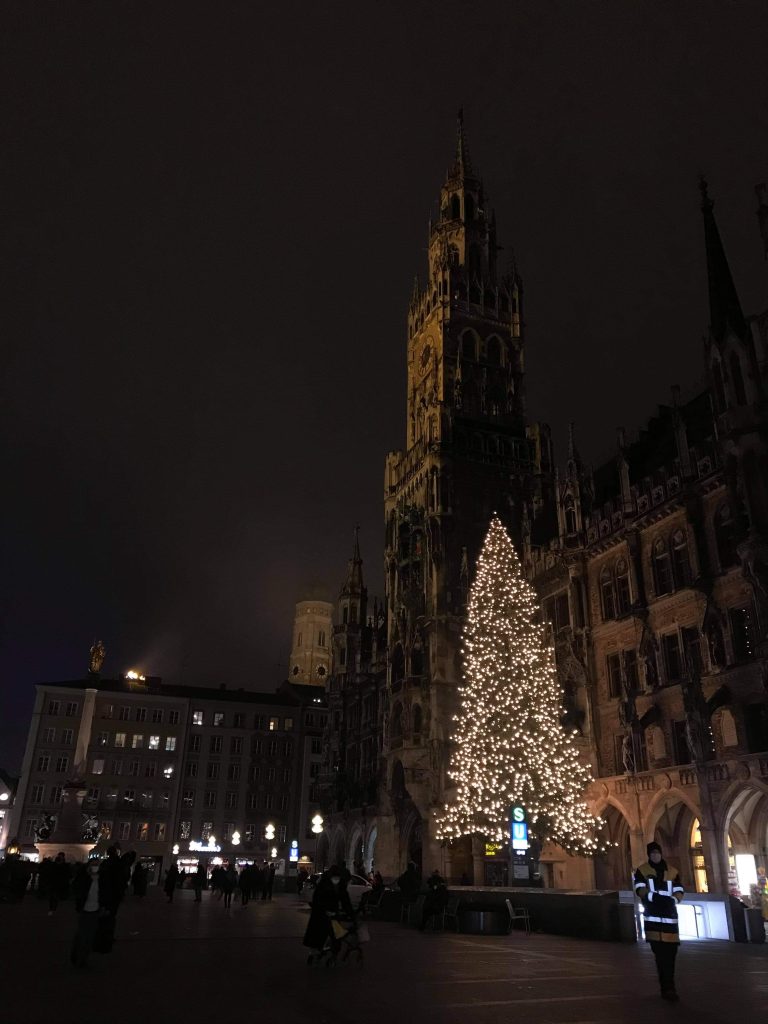
Marienplatz decorated for Christmas

Munich is a really cool city, and I’ve enjoyed exploring it, especially because location wasn’t my main deciding factor. I’ve been able to discover traditional Bavarian culture, as well as some more student-friendly, modern areas of the city, which also has a lot of green space, is walkable, and generally very aesthetically pleasing (this last one counts for the whole region). Munich has served as a great base to explore other towns in the region, and even do a few day trips for hikes and country walks, taking in the Bavarian and Alpine landscapes along the way. Spending almost six months here has given me a view of the city both in summer and in icy-cold winter, and neither has disappointed.
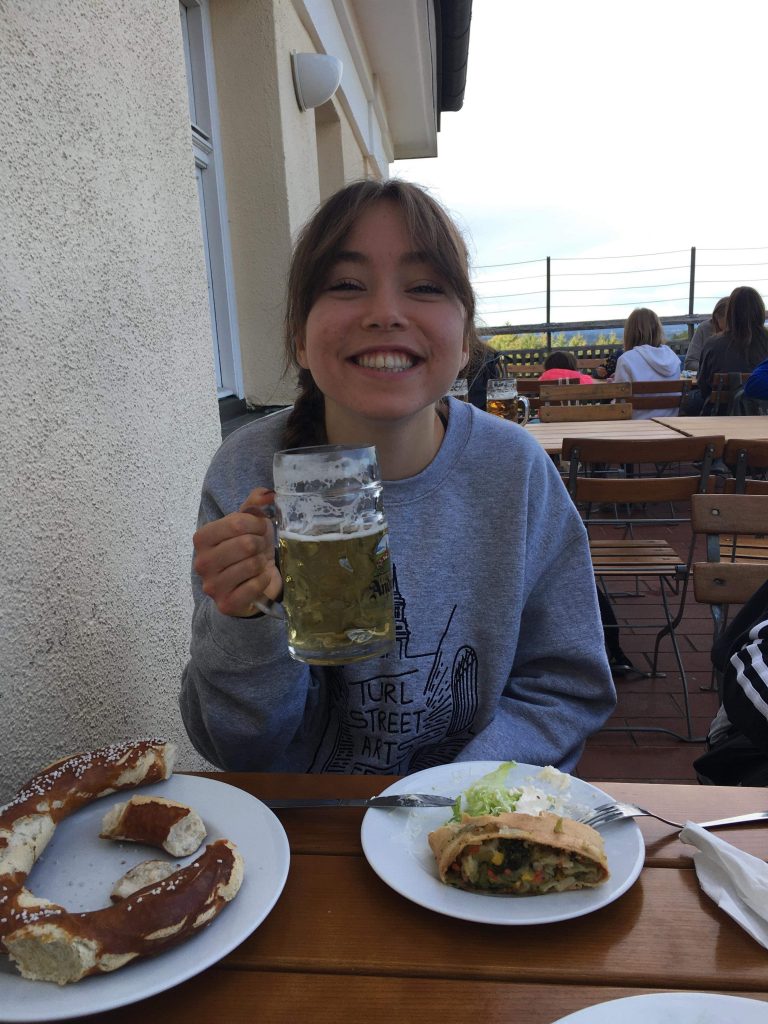
Enjoying my first Bavarian beer!

So I’ve made linguistic progress, I’ve discovered a new city and surrounding region, and I’ve gained practical life skills, but I think the best thing about the year abroad is the pause that it gives you between second and final year. Not only does the pace slow down, giving you time to expand on reading you’ve enjoyed and engage with language in a less academic setting, but it also gives you a chance to do something other than studying for a year. I know that I’ll appreciate my final year at Oxford so much more when I come back after time away, but that I’ll also return having had new experiences which will make my final year at Oxford slightly different to those years when I’d come straight from school. The year abroad gives you the chance to dip into the real world outside of university for a little bit, to get an idea of what you do and don’t enjoy doing, and where you might or might not want to live. It’s definitely more than just a linguistic experience, and for me has managed to balance both personal and academic development.

by Beth Molyneux

Editor’s note: You can follow more of Beth’s adventures abroad over on her personal blog.

Image credits all Beth Molyneux
Dispatches from the Year Abroad: Vienna

In the first in a new series of posts written by undergraduates on their year abroad, third-year Modern Languages student Alice Hopkinson-Woolley (Exeter College) reflects on spending a term in Vienna.

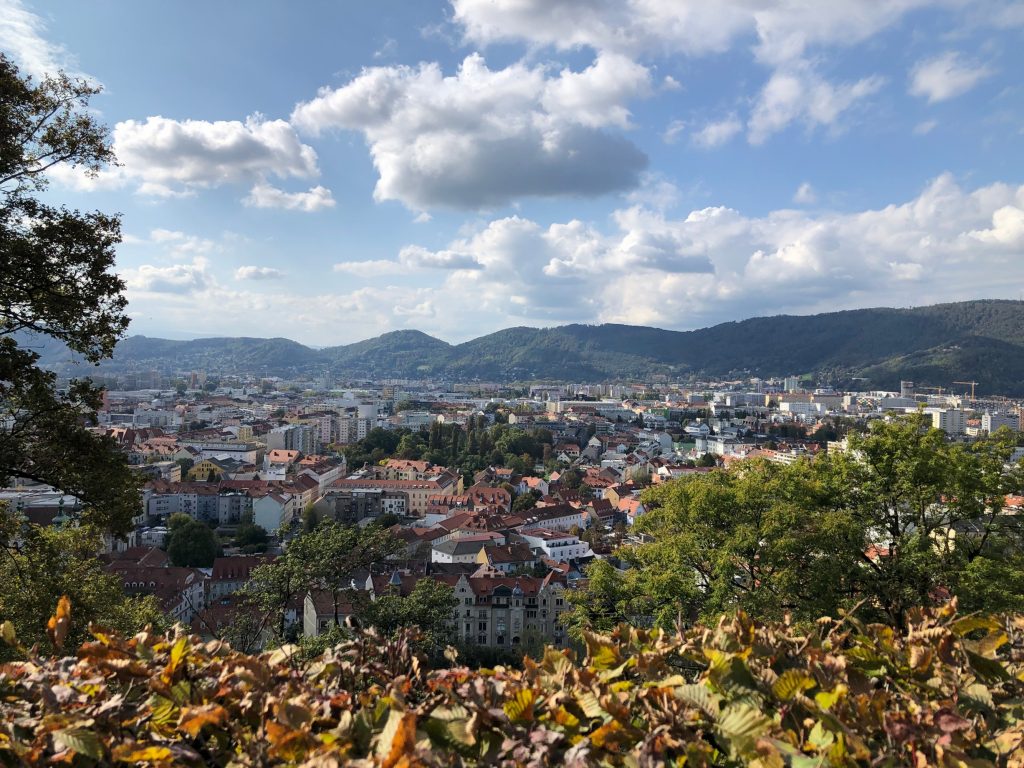
A weekend trip to Graz before lockdown

“Not an ideal year to be abroad, eh?” A question I’ve been met with countless times when people ask what I’m doing here in Vienna in the midst of a global pandemic and one to which I always reply: “Or perhaps it is!”

This year, my third studying French and German, was always going to be memorable – full of novelties, challenges and successes – but given the coronavirus situation, I’m hyper-aware of its transience and this incredible opportunity I have to not only travel but live abroad. Granted, lockdown isn’t ideal when you’re trying to explore a new place, maintain fresh friendships and ultimately, practise German. But after 6 months at home, I came out here so raring to go that I’m pretty sure I did more in the first few, blissfully-free weeks than I would have done in the whole 9 months of my stay in any other, normal year.

My dream to live in Vienna pretty much coincided with my decision to study German at University – I came out here on a school trip a few years ago in December and left with all but a finished personal statement. (Whether the Christmas markets, snow and numerous glugs of Glühwein had a role to play, I’ll never know…!)

Arriving here in early September this year was just as exciting, for I experienced and delighted in the city during summer, then watched as autumn arrived and am now writing by an icy window – winter has properly set in. I was lucky to meet lots of new friends in the first few weeks, through a mix of Erasmus events at the Uni, other language assistants and friends of friends (some of whom are from French-speaking Switzerland, here to learn German, and thus provide me ample opportunity to eavesdrop on their French conversations and learn the odd nugget of Swiss slang).

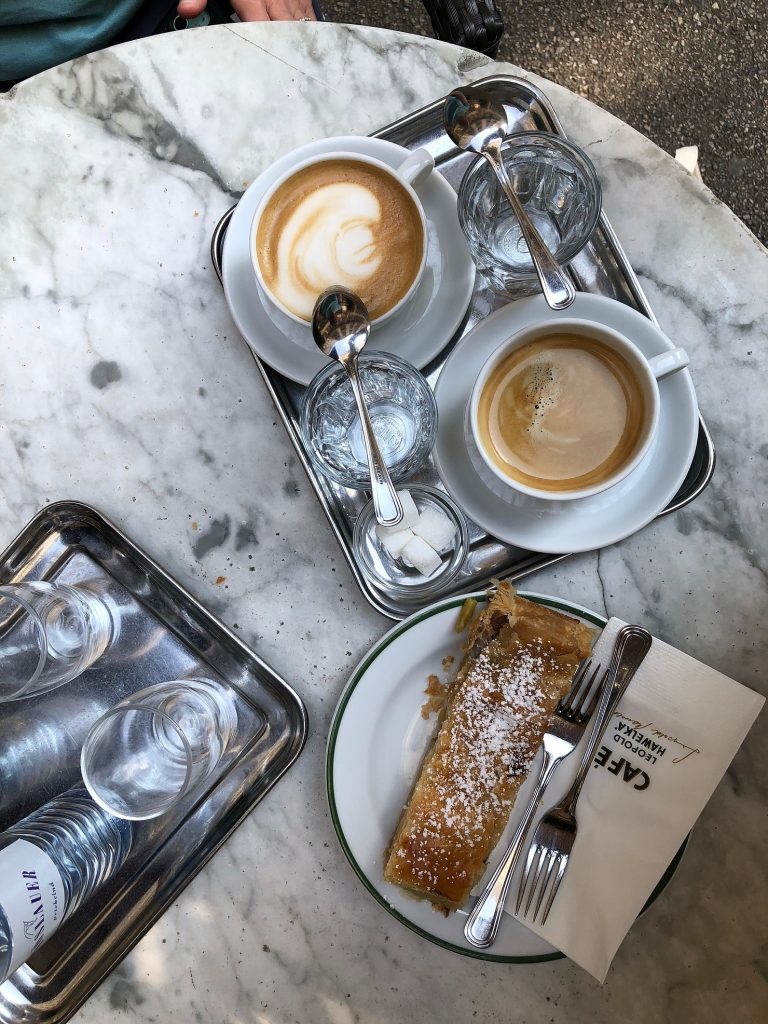
Coffee and Strudel at Cafe Hawelka

Working as a British Council teaching assistant was the best decision I could have made and although I know it varies from country to country, region to region and certainly school to school, I can relay nothing but positives. Apart, that is, from the horrifically early commute. But then lockdown happened and learning moved online, so really – only positives! Some say it’s futile to be teaching English when I myself am meant to be learning German but the truth is, much more time is spent in the staffroom than the classroom and speaking with the other teachers provides great exposure. What’s more, the job is only 13 hours a week, so really does only take up a small part of my life out here.

So, on to language learning.… Before leaving for Austria I was jovially warned by various tutors and multiple fellow German students: “You know you’ll have to relearn Hochdeutsch for exams after speaking Austrian-German for a year?” Truth be told, I didn’t consider this factor at all when applying and assumed they were just exaggerating, jealous not be spending a year in the land of Kaffee und Kuchen themselves. Although lots of people here do in fact speak Hochdeutsch, initial struggles to understand the dialect left me without train tickets for the first few weeks, unable as I was to make out the ticket seller’s words through both his thick accent and obligatory blue face mask. A couple of months later, and learning new pieces of dialect is a highlight of my daily life here – much to the amusement of the Austrian students I’m living with. Never again will I say “cool” as many Germans do but rather, “leiwand” or even better – “urleiwand” for emphasis! My true favourite however is sadly not that useful in everyday interactions; “Fichtenmoped” (literally, fir-tree-moped) is an upper Austrian word for “chainsaw”. At least it provoked hysterics and won me some cred when I announced my newly acquired word to my students!

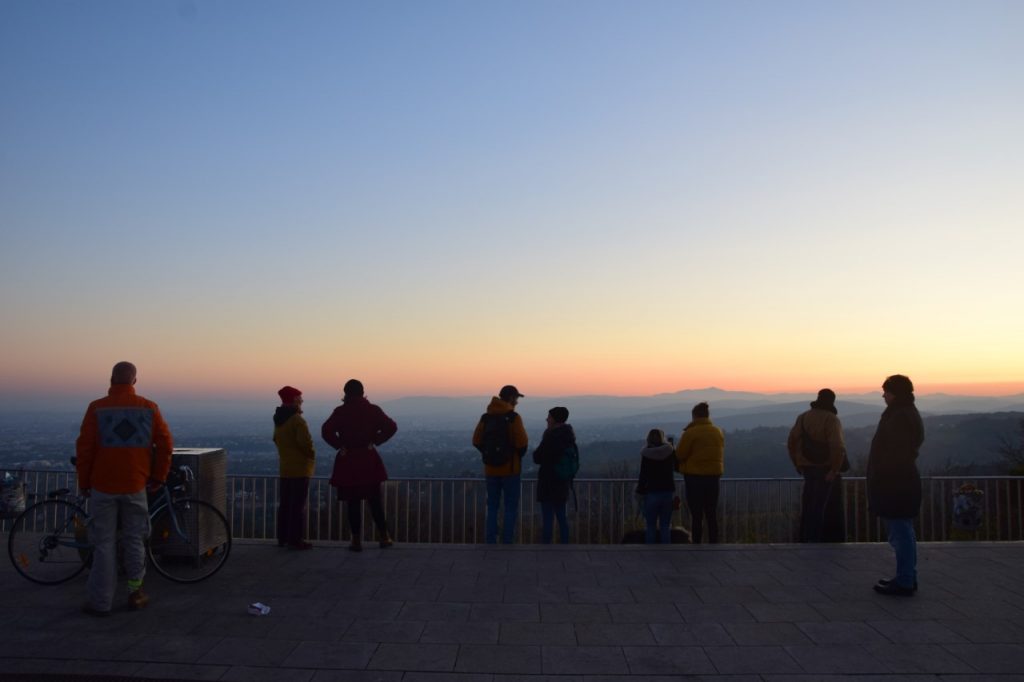
My favourite spot in Vienna, at the top of Kahlenberg

It would be remiss of me not to mention the brutal terror attack of November 2nd, the night before our second lockdown. Along with the rest of the population, my friends and I decided to have one final knees up on Monday evening, opting for a pub just south of the city centre. The choice was quick, lazy and barely thought out – we’d been there before, it’s a short walk from the 1st district but far enough that it would likely have free tables. As our final two friends arrived, reporting police on the streets, it was a matter of minutes before the notifications starting coming in. ‘Stay inside and avoid the Innere Stadt’ was the consistent advice.

That Vienna was the target of a terrorist attack is hard to comprehend. As the saying goes, “When the world comes to an end, move to Vienna because everything happens there twenty years later.” Tuesday’s events have clearly shocked the city but (in a clichéd way) certainly united it. The outpouring of solidarity both within the capital and from abroad goes to show how special this place is and that is something which can never be shaken or destroyed. Tributes now stand to the victims in streets I’d walked almost every day and outside pubs I’d sat in just nights before. The newly born motto which has come to express the city’s reaction, summing up the unique dry wit of the Viennese and their fierce loyalty to the city is the phrase screamed in thick Austrian dialect from a man on a balcony to the attacker below: “Schleich di du Oaschloch!” (I’ll leave you to look up the translation for yourselves…) The days following the attack were naturally strange but the city’s response confirmed my admiration and love for this place. Just one day later the 33m Christmas tree was raised outside the town hall and is, to quote Vienna’s mayor, Michael Ludwig “Ein Zeichen des Friedens” (a symbol of peace).


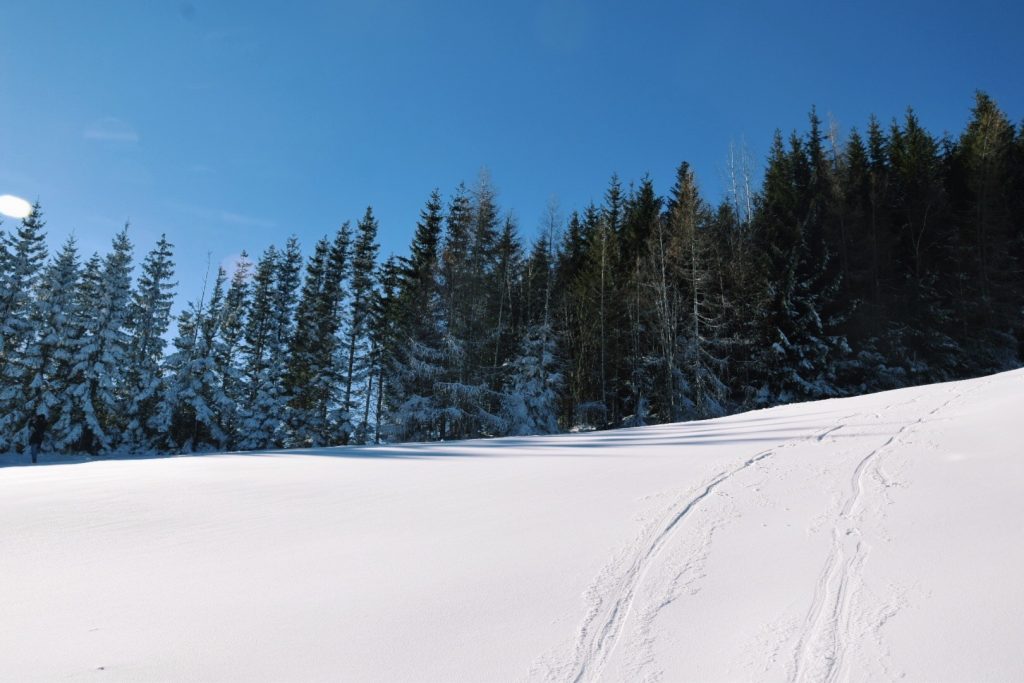
First snow of the year in Stuhleck, 90 minutes by train from Vienna

Austria’s latest lockdown is ending soon and I can’t wait to get back out and explore the city. There are still hundreds of galleries, museums, parks and cafés left on my bucket list, not to mention trips further afield to Salzburg, Hallstatt and Innsbruck to name just a few. A 2020 year abroad was never going to be plain sailing but so far it been pretty urleiwand!

by Alice Hopkinson-Woolley

Editor’s note: You can also follow Alice on her travels by reading her personal blog here.

Image credits all Alice Hopkinson-Woolley.

French and Spanish flash fiction competitions now open!

We’re delighted to announce the return of our ever-popular French and Spanish flash fiction competitions for school students. If you are learning French and/or Spanish in Years 7-13, you are invited to send us a *very* short story to be in with a chance of winning up to £100. Read on to find out more…

What is Flash Fiction?

We’re looking for a complete story, written in French or Spanish, using NO MORE THAN 100 WORDS.

What are the judges looking for?

We’ll be looking for imagination and narrative flair, as well as your ability to write in French or Spanish. Your use of French or Spanish will be considered in the context of your age and year group: in other words, we will not expect younger pupils to compete against older pupils linguistically. For inspiration, you can read last year’s winning entries for French here, and for Spanish here.

What do I win?

There are two categories: Years 7-11 and Years 12-13. A first prize of £100 will be awarded to the winning entry in each category, with runner-up prizes of £25. The winning entries will be published on this blog, if you give us permission to do so.

How do I enter?

The deadline for submissions is noon on Wednesday 31st March 2021. If you would like to submit a story in French please do so via our online submission portal here. If you would like to submit a story in Spanish please do so here.

You may only submit one story per language but you are welcome to submit one story in French AND one story in Spanish if you would like to. Your submission should be uploaded as a Word document or pdf.

Please note that, because of GDPR, teachers cannot enter on their students’ behalf: students must submit their entries themselves.

If you have any questions, please email us at schools.liaison@mod-langs.ox.ac.uk

Spanish Literature Podcast Episode 6: Two Short Stories by Cervantes

Episode 6 of the Oxford Spanish Literature Podcast, the second episode of the second series, is now available to listen to. This episode features Jonathan Thacker (King Alfonso XIII Professor of Spanish Studies) speaking about two short stories by Miguel de Cervantes, Novela del casamiento engañoso and El coloquio de los perros. Listen to other episodes in the podcast series here

International Book Club

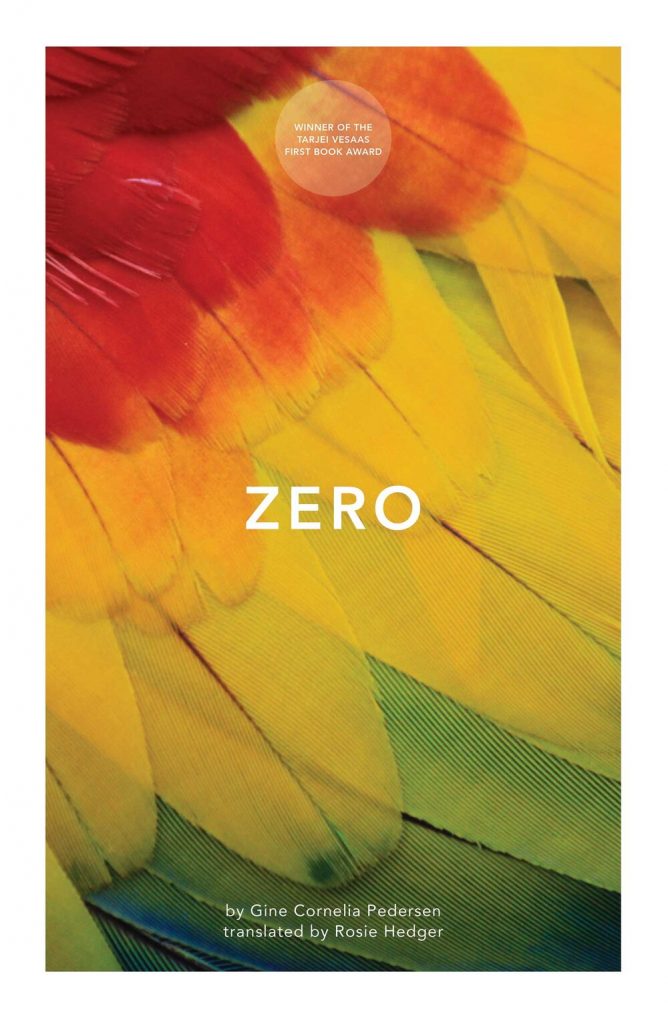
Our colleagues over at the Queen’s College Translation Exchange are once again running their International Book Club this term. The club meets once a term to discuss a novel translated into English from any language. The next event will be held via Zoom on Wednesday 25 November 2020 at 8pm, and the conversation will focus on Gine Cornelia Pedersen’s book, Zero, translated from Norwegian and published by Nordisk Books in 2018. The translator, Rosie Hedger, will also join the discussion.

For more details about how to take advantage of this fantastic opportunity to think about the process of translation, take a look at the International Book Club’s webpage. You’ll also find information there about how to get a special discount from the publisher if you purchase a copy of the book being discussed, and details about the books which have been the subject of previous International Book Club events.

Competitions for Language Learners in Schools

Colleagues across the university are currently hosting several exciting competitions designed to engage school pupils with language learning. First up is a topical competition from the team at the Modern Languages Outreach and Engagement (MLOE) project. Open to Year 9 students (Year 10 in Northern Ireland), ‘Rethinking Languages through COVID-19’ asks entrants to produce a poster reflecting on some of the ways in which COVID-19 has changed language use, or impacted on life, in another country. The closing date for this competition is Friday 18 December 2020: full details for teachers and their pupils are available here.

Alpes de Berchtesgaden (Image credit Wikimedia Commons)

Elsewhere the Oxford German Olympiad (OGN) is now open for entries. This year’s theme is ‘Die Alpen’ (The Alps) and there is a whole range of opportunities for age groups ranging right through from Years 5 and 6 in primary school to Years 12 and 13 to win prizes. The tasks to choose from include opportunities for creative writing and making art, and they don’t all require a prior knowledge of the German language – just an enthusiasm for engaging with the culture, language, and nature of German-speaking countries. Entrants have until Thursday 11 March 2021 to take part, and all of the relevant information can be found on the competition website.

Later this year we’ll also be launching our ever-popular French and Spanish flash fiction competitions. Watch this space for updates: in the meantime you can read the winning entries from 2020 for French here, and for Spanish here.

Spanish Literature Podcast: Lorca’s Bodas de Sangre

Episode 5 of the Oxford Spanish Literature Podcast, the first episode of the second series, is now available to listen to. This episode features Laura Lonsdale (Associate Professor in Modern Spanish Literature) speaking about Bodas de sangre, by Federico García Lorca. As in previous episodes, the first part of the discussion covers the historical and literary context of the work, as well as some more detailed questions about the text itself. The second part of the episode focuses in on a close reading of an extract from Lorca’s play. Listen to other episodes in the podcast series here

Student Snapshot

Over the last few weeks, we have shared with you some of the material we would normally tell you about at an open day. Dr Simon Kemp, Tutor in French and Co-Director of Outreach, gave us a video overview of what it’s like to study modern languages at Oxford… but do the current students agree?

We asked three current undergraduates to tell us a little bit about their experience of studying languages with us: Dalveen is in her first year studing Spanish and Linguistics; Alex is in his second year studying French and History; Charlotte also studies French and History and is in her final year. Here they give us a glimpse of what Oxford has been like through their eyes.

Something New: An Introduction to Linguistics

Linguistics is an increasingly popular area of study amongst our undergraduates, with some opting to study the subject as one half of a ‘joint schools’ degree (a degree where you combine two subjects e.g. ‘Modern Languages and Linguistics’), while others study it within their Modern Languages degree as an optional paper. But, for most people, linguistics is not something they will have had a chance to study at school and the subject will be brand new to them when they start at university.

So what exactly is linguistics? Fortunately, our colleague from the Faculty of Linguistics, Dr Jamie Findlay, has recorded an introduction to the subject. Check it out below and, if you like what you hear, perhaps consider incorporating linguistics into your degree…

French Flash Fiction Competition: Commended Stories

Image by annca from Pixabay

It’s our final flash fiction post of the season and, to wrap up, we bring you some of the brilliant stories from the students in the Years 7-11 category who were commended by the judges. Félicitations!

Comment être un chien

Pour être un chien, il faut être très mignon. Tes yeux sont faits pour dire, « j’ai très faim ! » ou « je veux jouer toute la journée, sans arrêt ! » et ta fourrure est réconfortante à toucher.
« Voilà, Galette. » dira ton maître, et il te câlinera. Tu as, maintenant, une tranche de bœuf magnifique.
Aussi, tu dois manger tout, aller au jardin, jouer tout le temps et marcher sur le tapis avec des pieds sales.
« Non, Galette ! »
Mais surtout, cherche toujours le sourire de ton maître, parce que s’il n’est pas content, ton travail n’est pas fini.

(Carla Lubin, Year 7)

C’est le 6 Juin 1844 à Luc sur Mer, je prépare ma toile pour la peinture. La plage est silencieuse. Je suis perdu dans ma dessin quand brusquement, le ciel devient gris, la pluie couvre le ciel mais mes doigts ne veulent pas s’arrêter. Je peins plus que je peux vois. La mer semble rouge alors que des centaines d’hommes montent la plage de navires et battements métalliques que je n’ai vu jamais auparavant. Tous les hommes portent la même vert vêtements. Ma toile est rempli avec guerre et horreur.

 Mon frère il regarde la toile. ‘Quelle imagination tu as’.

(Lara Hardy-Smith, Year 11)

C’était une journée normale à Londres, en Angleterre, à la fin de l’été 1666. Il faisait chaud et le soleil brillait brillamment sur la Tamise. La place du marché grouillait d’acheteurs et de vendeurs et la boulangerie avait une longue file d’attente; très probablement en raison de l’odeur de pain sortant du four. Au fil du temps, les cris des marchands sont partis et le soleil s’est couché sous l’horizon. Dans la boulangerie, le boulanger emballait ses pains lorsque quelqu’un entra. En fait, c’était un chien! Un petit chien mignon. Un petit chien mignon avec une torche allumée dans sa bouche. Soudain, il jeta la torche au fond de la boulangerie et un terrible incendie se déclara.

C’est vraiment ce qui s’est passé et ce qui a déclenché le grand incendie de Londres.

(Aiden Politiek, Year 10)

Deux mondes

Mes ennemis suivent mon moindre pas, je ne peux pas m’arrêter. Je marche, seul, hanté par une peur invisible et féroce. Je suis un chevalier perdu, épouvanté par ma solitude et craignant de ne jamais revoir mon royaume. Soudainement, une figure pale surgit des bois obscurs : elle s’avance et la lumière révèle un visage grave. “Aidez-moi, s’il vous plait…” ma soif et fatigue sont telles que mes lèvres ne bougent presque plus. Mais l’homme, sans empathie, indique l’horloge. “C’est l’heure, mademoiselle, rentrez chez vous.” Alors, timidement, je ferme le livre et me hâte de laisser la bibliothèque déjà vide.

(Silvia Rossi, Year 10)

L’ombre de Venise

Venise. Le soleil plongeait ses couleurs corail dans le canal. Un jeune garçon longeait les quais, jetant des galets dans l’eau opaque. Il aperçut une ombre, regarda vers le ciel. Rien. Il suivit le fantôme vers des ruelles lugubres et isolées, seules quelques étoiles perçaient le crépuscule. Soudain son pied fut happé à travers les planches tordues dans le canal brumeux. Des bulles jaillirent de sa bouche, ses cheveux se métamorphosèrent en corail argenté, de fines écailles grises transpercèrent sa peau devenue diaphane. Il hurla, regarda ses mains palmées. L’ombre fit un signe. Il s’enfonça dans les profondeurs de Venise.

(Clémence Buffelard, Year 9)

Je ne dormais pas. Je m’appelle Jacques et je ne dormais pas. Depuis que cette chanson a été faite, ma vie a changé. Tous les jours, tout le temps, les enfants chantent la chanson ennuyeuse. Je trouve ça ennuyeux car je ne dormais pas mais je mangeais mon petit déjeuner. J’appréciais ma bouillie mais j’ai alors oublié de sonner les cloches du matin. Donc, je vous en supplie, s’il vous plaît, arrêtez de chanter la chanson.

(Kairav Singh, Year 9)

Je cours

Je cours. Je n’ai pas beaucoup de temps. Je besoin de la faire avant ils réalisent je suis parti. J’arrive à le pont. Il y a les voitures au-dessous de moi. Il y a l’excès de vitesse le long de l’autoroute. J’arrive à la barrière. J’escalade. Je saute. Je me réveille. Je retourne à le pont. J’arrive à la barrière. J’escalade. Je saute. Je me réveille. Je retourne à le pont. J’entends un moteur vrombissement. Un camion vient à moi. Il me frappe. Je ne vois rien. Certain choses vous ne pouvez pas échappé.

(Jonathan Stockill, Year 7)

“Soit dit en passant, Harry,” dit le professeur Dumbledore à mi-chemin du livre six, “une prophétie dit que vous seul pouvez vaincre le mal Lord Voldemort. C’est pour ça qu’il essaie de te tuer. Vous devez détruire les sept morceaux de son â me, et il vous reste un livre pour le faire. Ne vous attendez pas à de l’aide de ma part; Je serai assassiné de façon spectaculaire en deux chapitres. En plus de cela, il ya des examens à passer et des remous hormonaux à composer avec. Maintenant, souhaitez-vous être allé à ce Muggle complet?”

(Ryan Kwarteng, Year 7)

C’était son premier jour. Après que sa carrière musicale n’ait pas fonctionné, Morhange s’est retrouvé à regarder la grande entrée de Fond de L’Etang, un endroit qu’il avait toujours voulu quitter mais qu’il n’avait jamais pu. Il est entré dans l’école et a vu son ancienne salle de classe. à l’intérieur, ses nouveaux élèves attendaient patiemment. Morhange pensa à Clément Mathieu et le remercia avant de prendre une profonde inspiration et d’entrer dans la pièce. Un étudiant a crié: “Qui êtes-vous?” Souriant, Morhange a dit “Bonjour classe. Je m’appelle M. Morhange. Je suis votre professeur de musique.”

(Riya Mistry, Year 9)

(Harriet Preston, Year 9)